
Two cameras, two rulebooks, one convincing argument#
Resident Evil Requiem is the clearest evidence yet that Capcom's RE Engine team has run out of easy problems to solve, so it went looking for a hard one instead. Developed and published by Capcom, it released on 27 February 2026 for PlayStation 5, Xbox Series X|S, PC and Nintendo Switch 2. Rather than pick a camera and commit, as every mainline entry has since the series moved past its fixed-angle roots, Requiem builds two campaigns around two different protagonists and lets the player choose, chapter by chapter, whether to watch the horror over a shoulder or live it through someone else's eyes. It sounds like a marketing bullet point. In practice it is the backbone the rest of the game is built on, and it mostly earns the weight it is asked to carry.
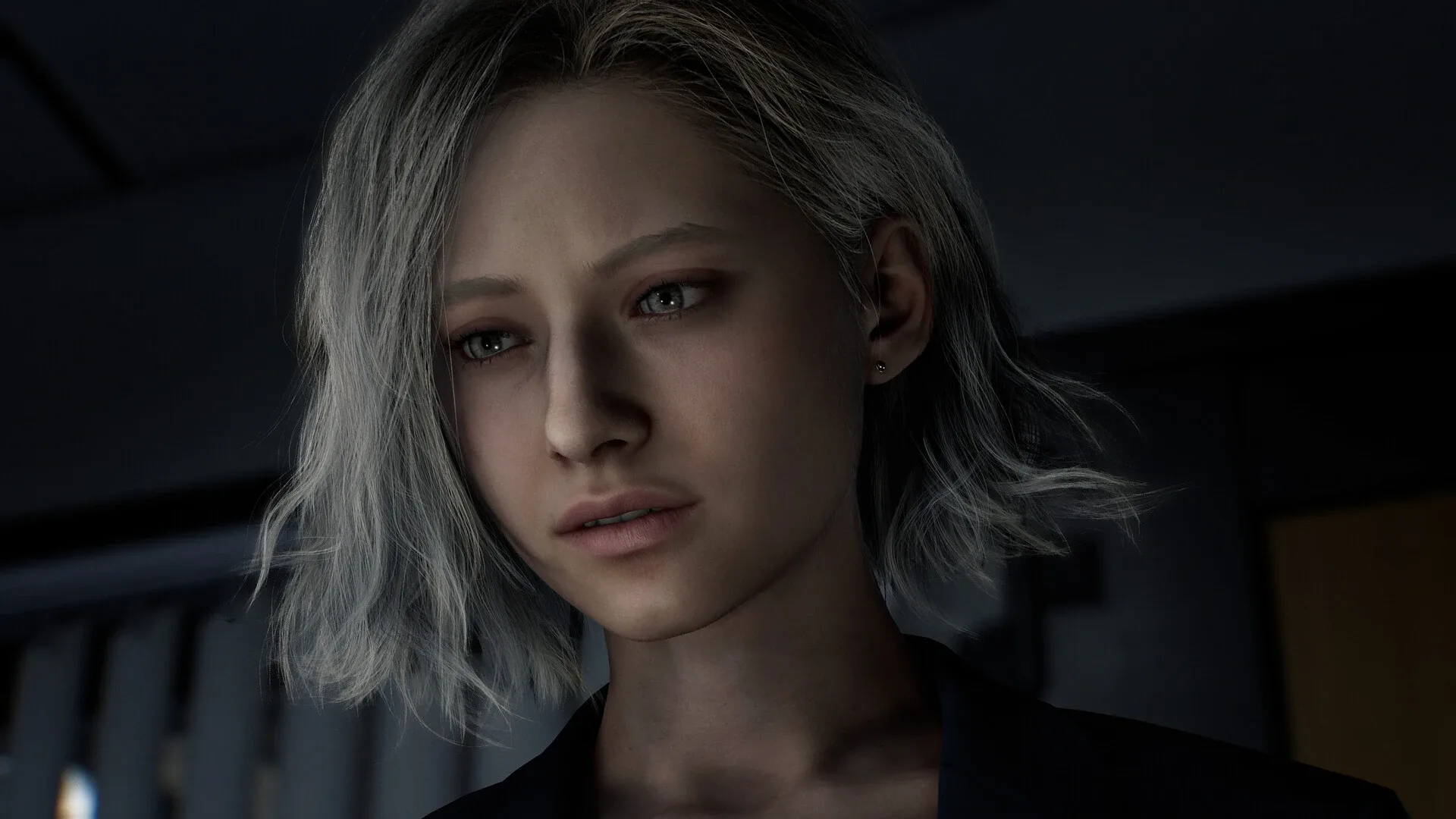
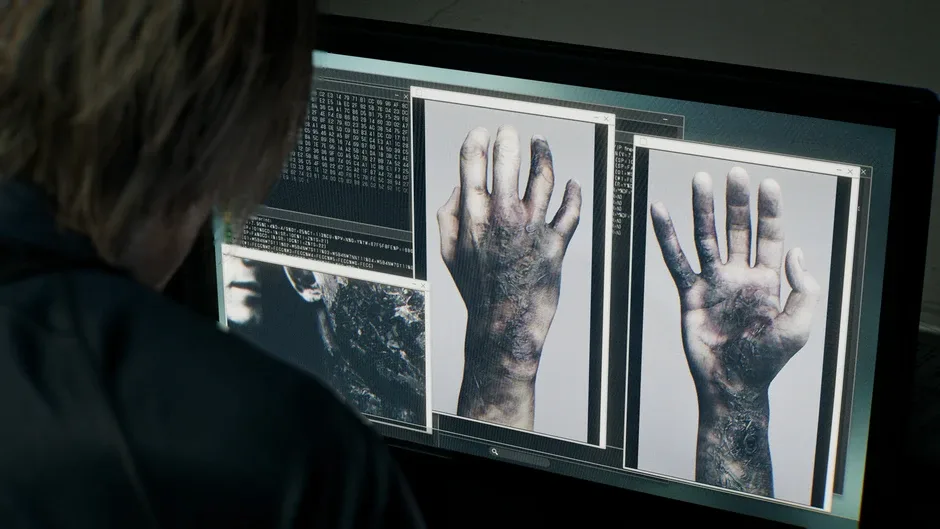
The premise is set roughly three decades after the destruction of Raccoon City, long enough that the incident has become history rather than headline news, but not so long that its survivors have stopped paying for it. Grace Ashcroft, a technical analyst for the FBI, is sent to the Wrenwood Hotel to investigate a body discovered with the same unexplained black bruising found on several other victims connected to Raccoon City survivors. It is also the hotel where her mother, the journalist Alyssa Ashcroft, was murdered eight years earlier while trying to expose what Umbrella had done to the people who lived through 1998. Grace has no combat training and no illusions about that fact, and Requiem asks the player to feel that lack of preparation directly, from a locked first-person view, rather than watching a capable action hero shrug it off. Leon S. Kennedy, older, wearier and pulled into the case as a federal agent, runs the parallel investigation with a very different toolkit: guns, reflexes and thirty years of practice not dying in places like this.
What makes Requiem different#
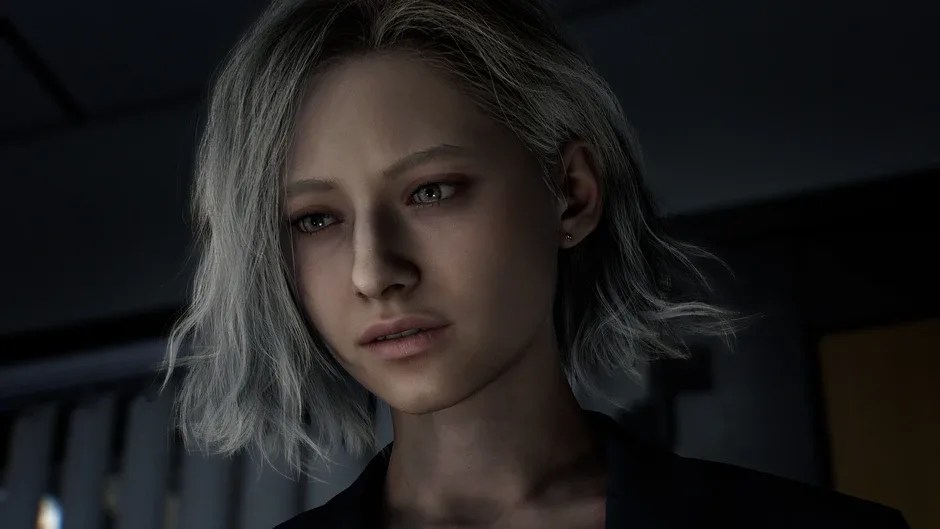
The one idea the whole game is built on is that fear reads differently depending on where the camera sits, and Requiem is the first mainline entry willing to prove it by giving the player both options for both characters rather than locking each to one. The default setting puts Grace in first person and Leon in third, and it is not an arbitrary split. Grace's sections are built around restricted sightlines, a limited field of view and the specific dread of not being able to see what is directly behind you, so first person is less a stylistic flourish than the mechanical point of her half of the game. Leon's sections are built around the over-the-shoulder gunplay the series perfected in Resident Evil 4, where readable spacing and clear silhouettes make his combat function the way the genre expects action combat to function. Both cameras are available to both characters at any time, and the game visibly designs around the switch rather than merely tolerating it: Grace's third-person model stumbles, flinches and visibly loses her footing during panic moments in a way the first-person camera does not attempt to convey, because a full-body terror animation reads as spectacle in third person and as noise in first person. It is a small detail that says a great deal about how carefully the two modes were built rather than bolted together after the fact.
That flexibility matters because it changes what kind of horror game each half of Requiem actually is. Playing Grace in first person turns the Wrenwood Hotel into a genuinely claustrophobic space, where a groan from an adjoining room becomes a navigation problem rather than a jump scare cue, because you cannot glance behind a shoulder-cam corner to check. Switching her to third person for a stretch trades some of that immediacy for readability, useful in the game's rare, tense combat encounters where knowing exactly how much space is between you and a lunging enemy matters more than feeling trapped inside her head. Leon's sections work in reverse: third person is the intended, comfortable default, since it is where his shotgun spread and roundhouse kicks read clearly, but dropping into first person for a stretch turns even his more confident combat into something tighter and more uncertain, useful for the handful of moments Requiem wants Leon rattled rather than in control. Neither camera is a difficulty setting in disguise; each is a different lens on the same underlying encounter, and the game is generous enough to let the player pick which lens fits their mood on a given night.
Grace Ashcroft and the Wrenwood Hotel#
Grace's opening hours are the strongest survival horror Capcom has shipped in years, precisely because the studio commits to her lack of preparation rather than undermining it with a convenient early weapon upgrade. She wakes upside down, strapped to a bed inside the Wrenwood Hotel, and has to work her way out of the building with whatever she can scavenge, because she was never trained to fight and the game never pretends otherwise. Rather than the traditional herb-and-ammo economy the series has used since 1996, Grace's crafting runs on infected blood samples she collects from the dead and the dying, analysed using medical equipment scattered through the hotel that must be found and, in some cases, unlocked with new recipes before they become useful. It reframes resource management as something closer to field triage than shopping list management, and it keeps the tension high because every sample spent on a healing item is one not available for the crude, improvised weapon that might get you past the next room.
Combat, when it happens, is rarely the intended solution. Grace can fight, awkwardly and at real risk, but Wrenwood Hotel is built with the assumption that most players will avoid a direct confrontation whenever a locked door, a vent or a moment of stillness will do instead. That restraint is a deliberate callback to the series' earliest games, where Chris Redfield's dwindling ink ribbons meant every encounter was a resource decision, updated for a modern engine that can actually render the dread of a corridor you cannot see the end of. The hotel itself is a genuinely well-built horror space: a network of guest rooms, service corridors and a flooded basement level that all loop back on each other in ways that reward memorising the map rather than relying on a quest marker, and the black-bruised victims scattered through it, none of them fully explained until well into the campaign, are more unsettling for the ambiguity than a fully rendered monster would be.
Leon Kennedy's return and the shift into action#
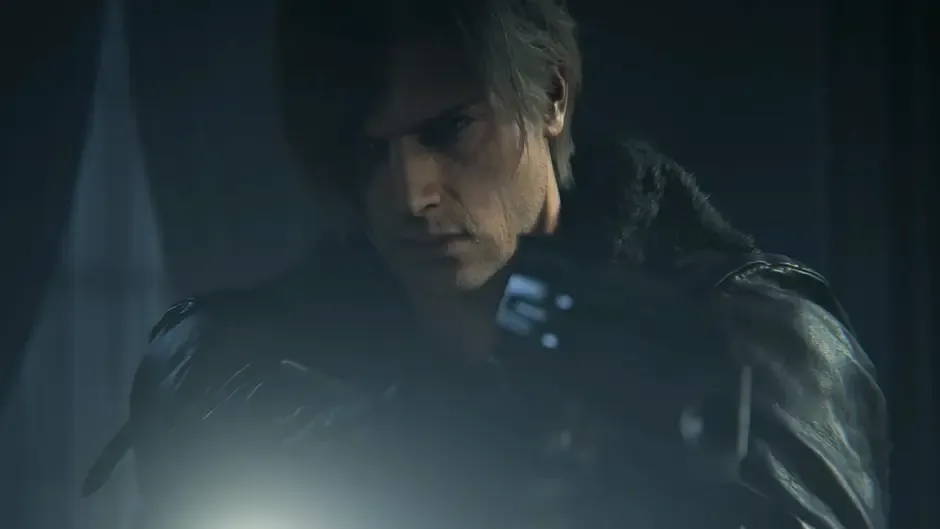
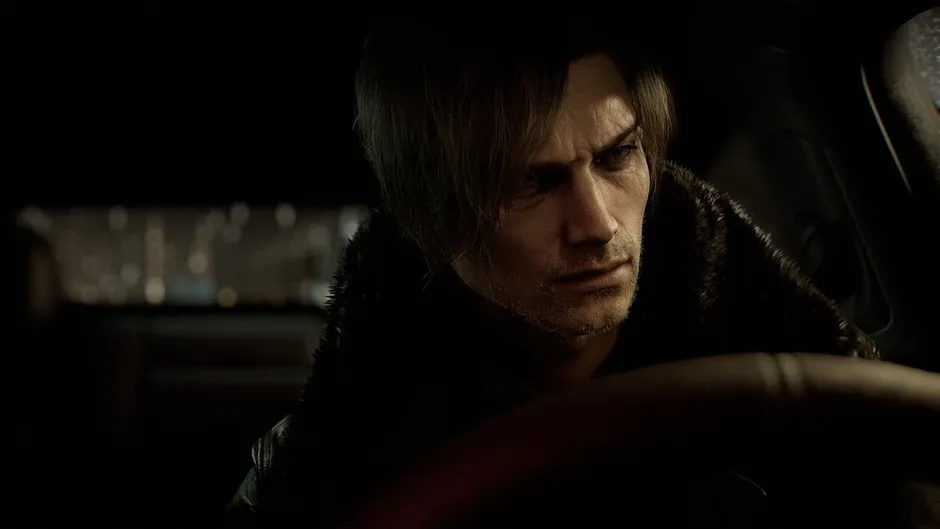
Leon's half of Requiem is a different proposition entirely, and Capcom is not shy about it. His scenario plays like a direct continuation of the over-the-shoulder action Resident Evil 4 popularised two decades ago: a proper arsenal that includes his signature Alligator Snapper pistol and the MSBG 500 pump-action shotgun, a melee toolkit built around counters and a well-placed roundhouse kick, and enemy encounters designed around crowd control rather than the one-mistake scarcity that defines Grace's chapters. His crafting is the traditional Resident Evil scrap-and-gunpowder system, with ammunition, gunpowder and attachments assembled from components found across his investigation, and it is tuned generously enough that running dry during a firefight is a rare, self-inflicted problem rather than the constant threat it is for Grace.
The character work leans into thirty years of continuity without demanding the player know all of it. This is a Leon who has been through Raccoon City, through Spain, through years of federal work that has worn the charm down to something drier and more tired, and the writing lets that fatigue show in small moments rather than a single speech about trauma. His half of the story runs in close parallel to Grace's rather than as a separate plot thread bolted on for variety, with both investigations converging on Victor Gideon, a former Umbrella researcher who has spent the decades since Raccoon City building a private operation out of the Rhodes Hill Care Center, using it as cover to continue the viral research the company never officially stopped doing.
The story's weak link: a villain who never quite arrives#
Victor Gideon is the clearest place Requiem falls short of its ambitions. He functions as a plot engine competently enough, giving Grace and Leon a concrete target and a location to converge on, but the game tells the player what to think of him far more than it earns it. His backstory as an Umbrella defector is delivered mostly through documents and offhand dialogue rather than a scene that puts real weight behind his choices, and by the time the two investigations meet him directly, he reads as a plausible obstacle rather than a character worth remembering. It is a real shortfall for a series whose best entries, Resident Evil 4's Osmund Saddler and Resident Evil Village's Mother Miranda among them, built villains who felt like they had their own reasons for existing rather than a plot's reasons for existing. Requiem's story works well enough around him, largely because Grace and Alyssa Ashcroft's mother-daughter thread carries the emotional weight instead, but a stronger antagonist would have turned a good campaign into a genuinely great one.
Pacing: two rhythms that do not always sync#
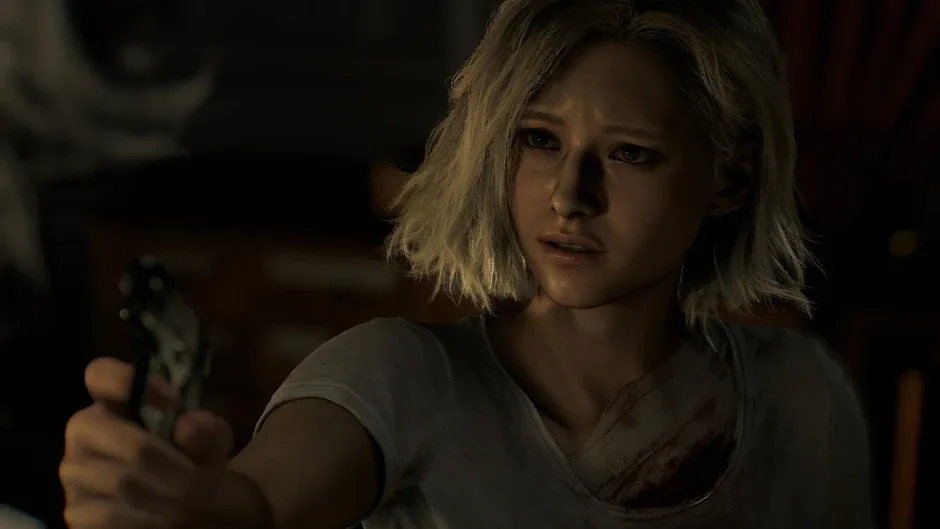
The alternating structure is Requiem's boldest idea and its most divisive one. On paper, cutting between Grace's slow-burn dread and Leon's cathartic action should function the way a well-cut horror film uses a quiet scene to make the next loud one land harder. In practice, the transitions in the back half of the campaign move faster than the tonal register can keep up with, and a chapter that ends on unresolved, quiet horror can be followed almost immediately by one that opens with Leon clearing a room with a shotgun, without much connective tissue between the two moods. Neither half suffers on its own; the friction is specifically in how the game asks you to move between them in a single sitting. Players who treat the two campaigns as separate experiences, playing several Grace chapters before switching to a stretch of Leon's, will likely find the pacing far more coherent than those who follow the game's suggested alternating order chapter by chapter.
The middle stretch, roughly the third and fourth chapters of each character's story, is where this friction shows up most clearly. Grace's investigation widens from the enclosed Wrenwood Hotel into the open, waterlogged ruins of Raccoon City itself, and that shift in scale briefly threatens the claustrophobia that made the opening hours work; the game recovers by tightening the map back down once she reaches the Rhodes Hill Care Center, but the wobble in the middle is noticeable to anyone paying attention to pacing rather than just plot. Leon's equivalent stretch is more consistent, since his sections are built to escalate rather than to unsettle, and his campaign's habit of introducing a new, more dangerous enemy type roughly every couple of chapters gives his half a clearer sense of forward momentum than Grace's more subdued chapters attempt to match.
Compared with Resident Evil Village and Resident Evil 4 Remake#
Resident Evil Village is the obvious point of comparison, since it is the series' other recent first-person-capable entry and shares Requiem's willingness to blend genuine scarcity with set-piece spectacle. Village leans harder into gothic excess, with Lady Dimitrescu and her daughters, Donna Beneviento's dollhouse and Karl Heisenberg's factory each functioning as a distinct, almost theme-park-like horror vignette. Requiem is the more disciplined game by comparison: Wrenwood Hotel and the Raccoon City sections build a single sustained sense of place rather than a tour through several, and Grace's lack of combat training gives her sections a rawer, more vulnerable feeling than Ethan Winters ever had once he started punching mutants bare-handed. If Village's variety is what you want, Requiem's more focused, grounded horror will feel comparatively narrow.
Resident Evil 4's remake is the better comparison for Leon's half specifically, since it is the game his campaign is most openly built to echo. The remake refined the over-the-shoulder gunplay to a near-perfect state, with parrying, stealth kills and crowd management all working in concert, and Leon's Requiem sections play like a direct continuation of that toolkit rather than a step backward. What Requiem's action half lacks that the remake had in abundance is a single antagonist as memorable as Ramon Salazar or as purely entertaining as the merchant, and it lacks the remake's village siege set piece as an early, unforgettable statement of intent. Judged purely as an action campaign, Leon's half of Requiem is very good. Judged against the remake it is clearly imitating, it is a notch below.
Worth the money?#
Requiem sells for $69.99 in its standard edition and $79.99 for the Digital Deluxe Edition on PC, PlayStation 5 and Xbox Series X|S, in line with a current-generation flagship release rather than a discounted mid-tier title. For that price, a focused first playthrough runs somewhere between nine and fourteen hours depending on how much you explore and how carefully you conserve resources along the way, with more thorough completionist runs stretching past seventeen. That is short by the standards of a modern open-world game, but it is a deliberate choice rather than a shortfall: almost nothing in Wrenwood Hotel or the Raccoon City sections is padding, and multiple difficulty modes plus unlockable extras give the campaign real reason to be replayed rather than simply reloaded.
Performance varies meaningfully by platform. PC hardware with a modern GPU handles the game comfortably, with high-end setups reaching well beyond 60 frames per second, and even the Steam Deck manages a stable 40 fps with FSR upscaling enabled on balanced settings, which is a genuinely strong result for a game built around this much lighting and particle detail. PlayStation 5 and Xbox Series X|S run smoothly in their standard performance modes. Nintendo Switch 2 is the outlier: Capcom targets 60 fps, and largely hits it during Grace's quieter sections, but Leon's busier action sequences can dip well below that target, making the Switch 2 version the one to approach with tempered expectations if smooth combat matters to you. A day-one patch improved several stability issues on Switch 2 specifically, and installing it before playing is worth the few extra minutes.
Play this instead if…#
Shorter: Resident Evil 7: Biohazard delivers a tighter, roughly ten-hour first-person survival horror campaign with a similarly vulnerable, undertrained protagonist and none of the two-character structure to manage.
Easier: The Resident Evil 4 remake gives you the same over-the-shoulder combat Leon uses here with a far more generous ammo economy and no first-person survival sections to contend with.
Cheaper or co-op: Resident Evil 5, regularly discounted to a fraction of Requiem's price, turns the same over-the-shoulder survival action into full two-player co-op from start to finish.
Frequently asked questions#
How long is Resident Evil Requiem? Around nine hours for a fast, direct run, roughly fourteen for an average first playthrough that explores along the way, and up to seventeen or more for a thorough completionist pass through both campaigns.
Can you change the camera at any time? Yes. First and third person are both available for Grace and for Leon at any point, not locked to a single choice made at the start of the game.
Does it have co-op or multiplayer? No. Requiem is a single-player campaign for both Grace and Leon, with no co-op or competitive modes attached to the main story.
Is there a difficulty option? Yes, with multiple difficulty modes affecting enemy aggression and resource availability, alongside the separate camera choice, which changes the tension of a scene without technically changing its difficulty.
Do you need to have played earlier Resident Evil games first? No, though longtime players will recognise more of the returning threads, particularly around Raccoon City and Leon's history; Grace's investigation is written to stand on its own for newcomers.
Is Leon Kennedy playable from the start? Leon's sections are woven through the campaign as their own scenario rather than unlocked after finishing Grace's story first, and the game lets you move between the two as it structures the chapters.
The Game Avant verdict#
Resident Evil Requiem does something the series has quietly needed for a while: it stops treating the camera as a settled question and turns it into a design tool with real consequences for how a scene lands. Grace Ashcroft's first-person dread in Wrenwood Hotel and Leon Kennedy's third-person firepower are both genuinely well made on their own terms, and letting the player choose the lens for either at any moment is the kind of idea that should be obvious in hindsight and somehow was not, until now. What keeps this from the series' very best is a villain who never becomes more than a plot function and a back half that asks the tonal gearshift between dread and action to happen faster than it comfortably can within a single evening. Neither flaw undoes what works. It is the rare horror sequel that tries something structurally new rather than simply making the last one bigger, and most of that gamble pays off.
8 out of 10 – a bold two-camera, two-protagonist structure that mostly justifies its own ambition, let down by a forgettable villain and a second half in too much of a hurry.