

A prequel that dares to change the formula#
Resonance: A Plague Tale Legacy is the first big spin-off from Asobo Studio's A Plague Tale series, and it makes a decision that defines everything else about it. Instead of following Amicia and Hugo through another plague-ridden stretch of France, it steps back fifteen years and hands the lead to Sophia, a young fighter who appeared briefly in A Plague Tale: Requiem. Her story takes place on Minotaur's Island, a ruin-filled place soaked in Greek mythology, and her quest is to find answers about her own past.
The short version of this review is that the game is a polished, atmospheric adventure that most critics like and that players on Steam have received very warmly. It succeeds because it commits to its new identity: more combat, more puzzles, more myth, less hiding. It does not reinvent the action-adventure genre, and some reviewers say that it feels less distinctive than the stealth-driven first two games. That is the reason it earns an 8 out of 10 rather than a higher score. It is a very good game with a few soft spots, not a new peak for the series.

What makes Resonance different#
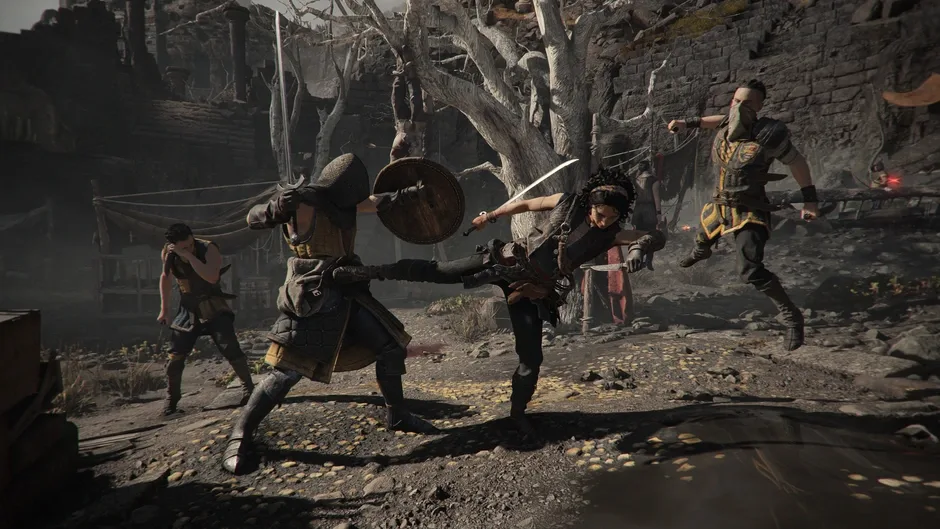
The most visible change is the protagonist. Sophia is faster and more aggressive than Amicia, and the game is built around that. She fights with blades, a grapple and thrown objects, and she staggers enemies before finishing them. The sneaking-and-slingshot rhythm that defined the earlier games has been pushed to the side, and the horror that remains is more concentrated than before.
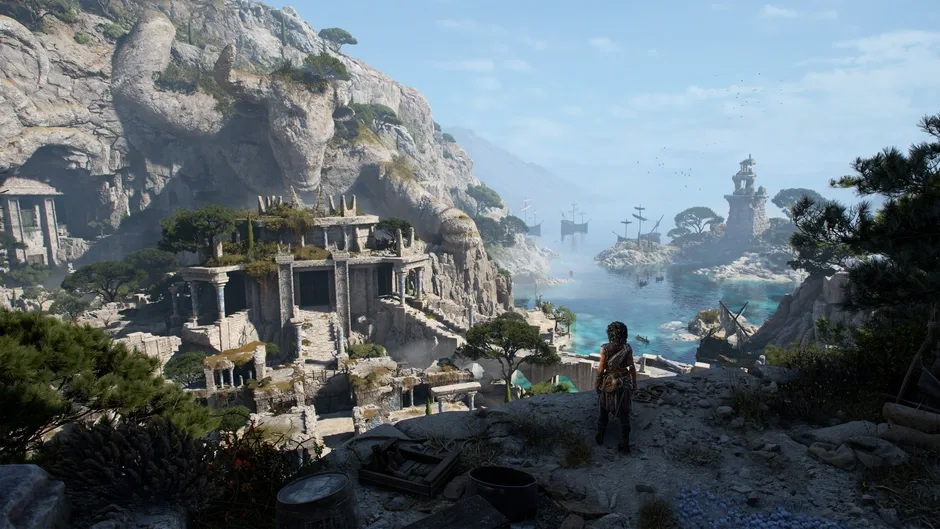
The second change is the setting. The earlier games were medieval, grey and grimy. Resonance trades that for a sun-baked Mediterranean island full of Minoan-style ruins, colourful frescoes and tombs, with the darkness growing the deeper you go. It is a bold contrast, and it is one of the reasons the game looks so good. Several critics describe it as the best-looking entry in the series so far.
The third change is structure. The game is described as a single, linear path forward, with the island working as a large, vertical ruin where the level design keeps you moving. That sets it apart from the more open stretches of its predecessors, and it also means the story is told with clear momentum.
Combat: parries, executions and a forgiving rhythm#
Fights revolve around parrying and punishing. A well-timed parry fills an enemy's stun meter, smaller flurry parries fill it more slowly, and once the enemy is staggered Sophia can finish them with an execution. Contextual kills near walls and ledges are frequent, and a grapple lets her pull, swing and stagger. A Focus Gauge powers an area attack in which she swings the grapple around her, which is a useful panic button when several enemies close in.
Progression is built around Resonance Points that unlock skills, with each skill offering two masteries. A parry skill, for example, can be tuned either to stun more or to let Sophia deflect heavy attacks. Collectible charms such as beads, armbands, bracelets, trinkets, seals and coins grant perks, and some of them widen the parry window or prevent a lethal hit. Swords found in special tombs add damage and faster Focus charging, which gives the exploration a tangible reward.
The consensus is that the combat is satisfying and readable but rarely hard, since Sophia is capable and the parry is generous. That is fine for a campaign of this length, but it has a downside. Some critics point out that the fights stay at roughly one intensity level for most of the game and can become repetitive towards the end. One reviewer also notes that the skills do not carry over to the sections where players control Theseus, where rolling replaces parrying. If you come for deep, demanding melee, the game may feel too easy. If you come for flow and spectacle, it delivers.

The light puzzles and the Minoan sphere#
Puzzles are the other half of the game, and they are built around a light-emitting artifact. Sophia carries a Minoan sphere with a prism that can solve puzzles, light safe paths through the dark and repel threats. The puzzle types include mirror reflection, tracing markings, finding routes, matching symbols and lining up coloured lights. Sophia's journal is part of the system too: you interact with its pages to get clues, which one reviewer found quicker than a full-screen menu.
The strength of this approach is variety. The puzzles break up combat well, and they give the island a sense of place, because the architecture itself is the challenge. The hint system is also well judged: it nudges the player without giving the answer outright.
The weakness is frequency. One critic says the puzzles became tiresome in how often they appeared, and another suggests they are best in short bursts. That fits the general picture. The puzzles are a good idea, executed well, that occasionally outstay their welcome.
Stealth and horror: reduced, but not gone#
Longtime fans will notice that stealth plays a much smaller role. It remains in the horror sections, where the game pulls back from fighting and asks you to hide, listen and move carefully. Reviewers who accept this shift say it suits a warrior protagonist, while those who miss the old formula say the game has lost some of what made the first two entries stand out.
The horror is where the game earns some of its highest praise. A creature hunts through the caves and tunnels, and it is described as a harrowing beast that drains life if it catches you in the open. The horror is slow to build, but once it does, it becomes more tense and gruesome than in Requiem. Several critics call the creature encounters among the best the series has produced.

Minotaur's Island: structure and exploration#
The island is the real star. It is built as a large, vertical ruin, with temples, tombs, caves and open stretches that connect into a coherent whole. The level design pushes players forward with very little backtracking, so the game feels like a guided expedition. Side tombs hold swords and charms, which gives the careful explorer a reason to look around.
This is a linear game, and it is worth being clear about that. There is no open world here, and there is little reason to wander once the story ends. In exchange, the pacing is tight. Fights, puzzles, horror and story beats arrive in a steady rotation, and the game rarely wastes time. The overall length is reported at roughly 20 hours by the publisher, while at least one critic finished in about 15, so the exact figure depends on how thoroughly you search the tombs and how quickly you solve the puzzles.
Story: Sophia, Theseus and the Prima Macula#
The narrative follows Sophia after she escapes a convent where she was experimented on. She flees to Minotaur's Island with her friend Leni, and visions connect her to the legend of Theseus and to the origins of the Prima Macula, the affliction that later troubles Hugo. The tie-in with the earlier games is meaningful but not required: critics agree that the story works as a standalone entry, although series veterans will catch extra connections.
The opening is the weakest part. It is described as confusing and light on exposition, and some players will take a while to understand what is going on. The payoff arrives later, with twists in the third act that critics generally find rewarding. The mythology is used well. Instead of being a decorative layer, Greek myth is the engine of the mystery, and it gives the setting a sense of purpose.

Characters, art direction and music#
Sophia is a driven fighter shaped by a violent childhood, and the game makes her a distinct lead rather than an Amicia clone. Leni, her closest friend, is the companion who joins her on the island, and her animations and expressions are singled out for praise. Sophia's father leads a bandit group she joins after her escape, which adds a human layer to the supernatural plot.
The art direction is the thing nearly every critic mentions first. The Minoan ruins, frescoes and warm light make the island look unlike anything else in the series, and the contrast with the darker caves is striking. The music is by Olivier Derivière, whose score takes inspiration from the Mediterranean setting and includes Greek-style choral work. It supports both the mysticism and the tension.
Technical state and difficulty#
Technically, reviews describe a polished game with minor problems at launch. Reported issues include clipping, characters getting stuck, a door opening during lockpicking, companions not following and enemies not fighting properly. Critics generally say that none of this was game-breaking, that checkpoints and autosaves limited the setbacks, and that they expected patches. Since the game has been out for several weeks, it is worth checking the latest patch notes before you buy.
Difficulty is gentle. The parry is forgiving, the skill system is clear, and puzzles come with hints that avoid handing over the solution. That makes the game approachable for players who are new to action-adventure or to the series. Those who want a hard challenge may find it too easy, although the horror sections add tension even when the fights do not.

Compared with A Plague Tale: Requiem and Uncharted#
The obvious comparison is A Plague Tale: Requiem. Requiem is a darker, stealth-centred journey with a large emotional arc for Amicia and Hugo. Resonance is brighter, more combat-oriented and more focused on puzzles and mythology. Requiem is the better pick for sneaking and for a tragic family story. Resonance is the better pick for variety, for spectacle and for a more accessible entry point.
The second reference is the Uncharted series. Reviewers describe the tomb exploration in Resonance as Uncharted-like, with ruined temples, set-piece climbing and puzzles that gate progress. The comparison is useful but not perfect: Resonance has a heavier horror streak and a more mythological tone.
| Resonance: A Plague Tale Legacy | A Plague Tale: Requiem | |
|---|---|---|
| Protagonist | Sophia, a young fighter | Amicia, with Hugo |
| Core loop | Parry combat, light puzzles, horror sections | Stealth, slingshot, rats |
| Setting | Mediterranean island, Greek myth | Medieval France and beyond |
| Structure | Linear, guided expedition | Chapter-based, mostly linear |
| Best for | Atmosphere, puzzles, standalone story | Stealth and emotional drama |
New to the series? Start here#
You do not need to have played the earlier games. Resonance is set fifteen years before Requiem and introduces its characters on its own terms, so you can start here and go back later. If you want the full effect of the connections, the earlier games are worth playing afterwards, but this is a prequel, so spoilers for the first two games are not required to follow it.
- Learn the parry early, because it is the core of combat and fills the stun meter fastest.
- Spend Resonance Points on a parry skill first, then add masteries that suit your style.
- Explore side tombs, which hold swords and charms that make fights easier.
- Use the sphere and the journal when stuck on a puzzle, before skipping ahead.
Worth the money?#
The publisher's figure is roughly 20 hours, and some reviewers finished in about 15, which is a healthy length for a linear action-adventure. Launch prices were reported at around $49.99 on PC and $59.99 on consoles, so check the current price on your store before buying. Player reception on Steam has been very positive, which suggests that the game finds its audience easily.
The game is available on PC through Steam and the Microsoft Store, on PlayStation 5 and on Xbox Series X|S, and it was reported to be part of Xbox Game Pass at launch, so check whether you already have access. The publisher expects a download of around 76 GB on PC, so leave room. Supported text and voice languages have not been verified for this review, so check the store page for English, Swedish and German options.
Replay value is modest. A linear game with a fixed route gives little reason to start again, apart from collectibles and a harder playthrough. For a 15 to 20 hour atmospheric adventure at this level of production, that is acceptable, and the game is easy to recommend at a discount if the full price feels high.
Play this instead if…#
Shorter: A Plague Tale: Innocence is a tighter, darker and more stealth-focused journey, and it is the natural choice if you want the series' original feel in a shorter package.
Easier: Uncharted 4: A Thief's End offers a gentler, more cinematic mix of climbing, shooting and puzzles with a familiar adventure rhythm.
Cheaper or co-op: A Plague Tale: Requiem often appears in sales and delivers more of the stealth the series is known for. Resonance itself is single-player only, so anyone specifically after co-op should look at a game such as It Takes Two.
Frequently asked questions#
How long is Resonance: A Plague Tale Legacy? The publisher puts the campaign at roughly 20 hours, while at least one critic finished in about 15.
Do I need to play the earlier games? No. It is a prequel set fifteen years before Requiem and works as a standalone story, though fans will spot extra connections.
Is it open world? No. The game follows a mostly linear path through Minotaur's Island with little backtracking.
Which platforms is it on? PC, PlayStation 5 and Xbox Series X|S, since 27 August 2026.
Is there co-op or multiplayer? No. It is a single-player game.
Is there still stealth? Yes, but much less than before. It appears mainly in the horror sections, while combat and puzzles carry most of the game.
The Game Avant verdict#
Resonance: A Plague Tale Legacy is a confident prequel that understands what it wants to be. It gives up some of the series' defining stealth and gains a more energetic fighter, a striking mythological setting and a puzzle structure that keeps the island interesting. Critics praise its art direction, music, pacing and horror, and they point to repetitive combat, a slow start and some launch glitches as the main drawbacks.
The honest view is that it is a better adventure than it is a reinvention. It does not innovate much compared with other big action-adventures, and it does not quite match the tension of the first two games. But it is polished, accessible and well paced, and it tells a satisfying story in a memorable place. That is enough for a strong recommendation, especially for players who want atmosphere and myth more than a hard challenge.
8 out of 10 – a handsome, well-paced prequel that trades stealth for swordplay and puzzles, held back only by repetition and rough launch edges.