 Counter-Strike 2
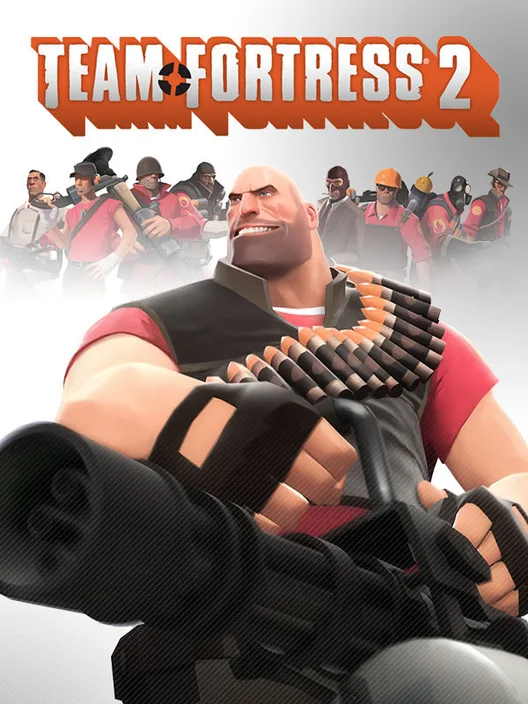 Team Fortress 2
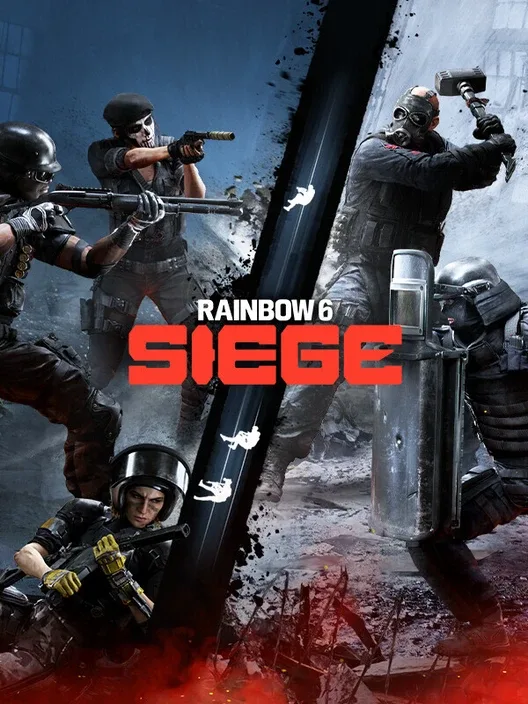 Rainbow Six Siege
 Left 4 Dead 2
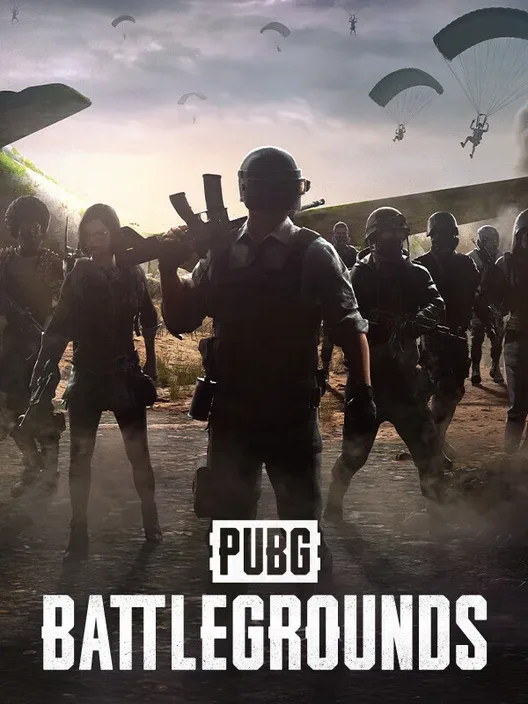 PUBG: Battlegrounds
"First-person" on this page means exactly what the camera does: these are shooters played entirely through the barrel of a gun, with the weapon, hands, and HUD locked to the player's own point of view rather than watching a character model from behind. That's a narrower claim than the parent shooters category, which also covers third-person gunplay, looter grinding, and shrinking-map battle royales — a few of those genres' biggest names show up here too when their default or most popular mode is genuinely played from behind the gun, like PUBG's first-person servers or The Finals' first-person-only viewpoint, but a game whose core identity is an over-the-shoulder camera belongs on this site's third-person page instead, not here. Tactical round-based shooters, co-op horde and extraction games, hero shooters, and pure single-player campaigns all sit under this one umbrella because they share that same fixed viewpoint, even though the moment-to-moment goals of a Counter-Strike round and a Doom Eternal arena fight barely resemble each other.
The order below blends Game Avant's combined critic-and-player rating data with an editorial pass for breadth, the same approach used across the site's other ranked pages: a pure percentage sort tends to bury massively-played, genre-defining games under smaller titles with a tighter, more self-selected fanbase, so this list curates rather than reprints the raw numbers, mixing the games that actually define first-person shooting with genuinely excellent smaller entries that earn their spot on craft. Read the write-ups below for what each of these best FPS games actually does and where it falls short.
1. Counter-Strike 2#
Valve's 2023 rebuild of its own decades-old competitive shooter ported the entire Counter-Strike formula onto the Source 2 engine and replaced the old fixed-tick server model with a "sub-tick" system that evaluates the exact instant a shot is fired or a grenade is thrown, making gunfights and utility timing far more consistent regardless of server tick rate. The round-based economy — buying rifles, armor, and grenades off money earned from the previous round's kills and objectives — remains the structural backbone separating Counter-Strike from nearly every other tactical shooter, since deliberately losing a round to save money for the next is a legitimate strategy rather than a failure state. Smoke grenades got a genuine physics upgrade, rendered as volumetric objects that react to gunfire and explosions instead of a static sprite, which changed how legacy maps like Dust II and Mirage get played at a high level. The core five-versus-five, plant-or-defuse bomb mode, unchanged in its basic shape since the original 1999 mod, still rewards map knowledge and crosshair discipline over raw reflexes alone. The honest drawback: the switch to Source 2 broke or altered a huge amount of the workshop content and legacy competitive infrastructure built around Global Offensive over more than a decade, and the sub-tick system, while more accurate, was also genuinely controversial among competitive players used to predicting network behavior under the old model.
2. Half-Life 2#
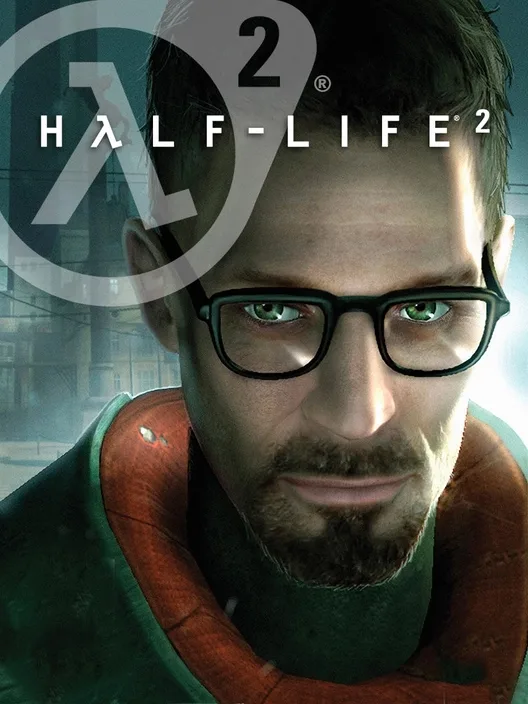
Valve's 2004 sequel is still cited as one of the most influential shooters ever made almost entirely because of the Gravity Gun, a tool that lets Gordon Freeman pick up and launch nearly any physics object in the world, turning saw blades, radiators, and explosive barrels into ammunition and turning City 17's ruined architecture into a toybox rather than static scenery. Ravenholm, the abandoned mining town overrun by headcrab zombies, is built almost entirely around that one tool — the chapter deliberately strips back conventional ammo to force improvised, physics-based kills, and it's still the sequence most cited when the game comes up. The Combine's soldiers, using genuinely coordinated flanking and suppression behavior rather than simply rushing the player, made squad-based enemy AI a selling point in a way few shooters before it had. Vehicle sections in the airboat and the dune buggy break up the on-foot combat across the game's long middle stretch, giving the pacing room to breathe between firefights. The story's ambient, cutscene-free delivery — no camera cut ever leaves Gordon's own eyes — was a deliberate, influential choice several later Valve games built on directly. The honest drawback: those vehicle sections, while a welcome pacing change on a first playthrough, run noticeably longer than the ideas inside them can sustain, and the cliffhanger ending, left dangling for over fifteen years before Alyx picked up an adjacent thread, is still a real frustration for anyone hoping for a direct follow-up to Gordon's own story.
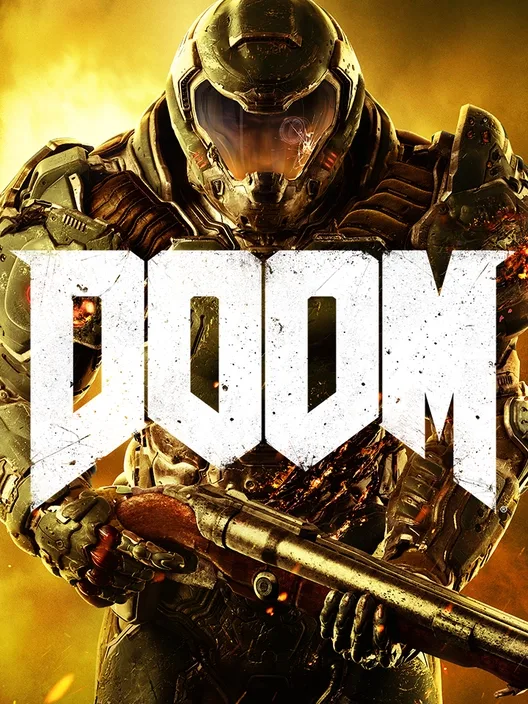
3. DOOM Eternal#
id Software's 2020 sequel to the 2016 reboot pushes "push forward combat" to its logical extreme by tying every resource the Doom Slayer needs directly to offense: glory kills on staggered enemies restore health, the shoulder-mounted flamethrower burns armor out of enemies on a cooldown, and the chainsaw, now a limited-fuel tool rather than a novelty, has to be used regularly just to keep ammo reserves from running dry. That loop turns every fight into active resource management rather than a straightforward shootout, a deliberately steep departure from more conventional cover-based shooters. The expanded traversal kit — a double jump, a dash, and monkey-bar swinging worked directly into arena layouts — makes movement itself as demanding a skill as aiming, and several of the game's most memorable arenas are built as much around vertical navigation as gunplay. The weapon mod system, letting each gun carry two alternate fire modes swapped on the fly, keeps the ten-plus weapon roster from collapsing into two or three favorites the way many shooters' arsenals do. Marauder encounters, a specific enemy type that punishes reckless aggression and demands a precise counter-timed shotgun blast, became one of the most divisive additions in the series specifically because they contradict the game's own always-be-moving instinct. The honest drawback: the difficulty curve is unusually punishing for players coming from the more forgiving 2016 reboot, and the platforming-heavy traversal sections, while mechanically sound, are a genuine tonal shift away from pure demon-slaying for longtime fans.
4. Team Fortress 2#
Valve's 2007 class-based shooter, released as part of The Orange Box, built its nine playable classes — Scout, Soldier, Pyro, Demoman, Heavy, Engineer, Medic, Sniper, and Spy — around genuinely distinct roles rather than reskinned versions of the same loadout, and that structural clarity is why the format is still copied by hero shooters nearly two decades later. The Medic's healing beam, which builds a temporary invulnerability Über charge the longer it stays locked onto a teammate, turns healing itself into an aggressive, high-value target during team fights rather than a passive support role. The Spy's disguise and cloak kit, letting a player impersonate an enemy class and backstab from behind for an instant kill, creates a specific kind of paranoia in objective-based modes no other class in the roster replicates. The game's cartoonish, Rockwell-and-Leyendecker-influenced art style was a deliberate pivot away from Valve's earlier, more militaristic concept art, and it aged far better than the grittier realism most of its 2007 contemporaries chased. Capture-the-flag, king of the hill, and payload modes each ask something different of the class roster, giving the same nine classes real tactical range across game types. The honest drawback: the class balance, refined over years of free updates and community-made cosmetic hats, still leans hard on server-specific house rules and mod culture to stay interesting today, and matchmaking has been repeatedly hit by long-running bot and cheater problems Valve has been slow to fully resolve.
5. Rainbow Six Siege#
Ubisoft Montreal's 2015 tactical shooter is still built around the same core idea a decade later: nearly every wall, floor, and ceiling in a map can be breached, reinforced, or destroyed, turning pre-round preparation — barricading windows, reinforcing walls, setting traps — into as much of the actual game as the firefight that follows. The Operator system, now numbering well over sixty across CTUs pulled from real-world counter-terrorism units, gives each match a rock-paper-scissors layer on top of the destruction, since picking the right defender or attacker gadget to counter the other team's known picks is its own skill separate from aim. Sound-based information — footsteps through floors, a breaching charge heard through a wall — is unusually load-bearing compared to most shooters, since a round can be won or lost entirely on audio cues before a shot is fired. The lean, round-based structure, with no respawns and permadeath within a round, keeps individual engagements tense in a way objective shooters with generous respawn timers don't replicate. The honest drawback: the Operator roster's sheer size, after ten years of seasonal content, has made the learning curve steep for newcomers trying to learn dozens of gadgets and counters at once, and its emphasis on precise one-shot-kill headshots has produced one of the more toxic, cheating-prone competitive communities among major shooters.
6. Left 4 Dead 2#
Valve's 2009 co-op horde shooter is still the clearest expression of its "AI Director" system: rather than a fixed, memorizable spawn pattern, the Director monitors each of the four survivors' health, ammo, and stress in real time and adjusts zombie density, item placement, and even weather on the fly, meaning the same campaign genuinely plays differently run to run instead of becoming a route to memorize. The five Special Infected — the Hunter's pouncing lunge, the Smoker's binding tongue, the Boomer's blinding vomit, the Tank's brute-force charge, and the Witch's instant-kill if provoked — each demand a completely different team response, and calling them out correctly under pressure is as much the skill being tested as aim. Melee weapons, new to the sequel and ranging from a chainsaw to a frying pan, gave the horde-clearing loop a second combat option beyond guns the original Left 4 Dead never had. The campaign structure, four distinct story arcs each ending in a defendable finale under mounting zombie pressure, gives runs a clear dramatic shape rather than an open-ended survival grind. The honest drawback: the Director's dynamic pacing, while the game's signature achievement, means difficulty can spike unpredictably on higher settings in a way some players read as unfair rather than tense, and the aging Source engine visuals now show their age against modern co-op shooters built around the same core loop.
7. PUBG: Battlegrounds#
Krafton's PUBG Studios, under creative director Brendan "PlayerUnknown" Greene, released the 2017 game that effectively invented the modern battle royale template, and while it's best known for that third-person-friendly mode, its dedicated first-person servers strip away the over-the-shoulder camera entirely and are where a large share of the competitive scene actually lives, since seeing around corners without exposing a character model is a real advantage the format removes on principle. The game's commitment to realistic, punishing ballistics — bullet drop, recoil patterns that genuinely differ between weapons, and no regenerating shield layer like several later competitors adopted — gives firefights a slower, more deliberate tension than the faster movement-heavy shooters that followed it. Vehicles, from motorcycles to boats, matter more here than in most battle royales, since the island maps are large enough that rotating on foot alone is rarely viable. The loot-based itemization, where finding a scope or an extended mag meaningfully changes a weapon's viability, gives scavenging genuine stakes beyond just finding a gun. The honest drawback: the dated Unreal Engine 4 foundation and notoriously inconsistent server performance, especially at launch, left it more technically fragile than the shooters it inspired, and the first-person-only ruleset, while purer, also strips out the peek-and-lean tactics some players specifically enjoy about the game's default third-person mode.
8. Destiny 2#
Bungie's 2017 sequel splits its identity between a story-driven campaign across an expanding solar system and an endgame built on raids, seasonal content, and gear chasing, with three character classes — Titan, Hunter, and Warlock — each offering distinct subclasses built around light and, later, darkness-based elemental powers rather than one universal skill tree. Raid encounters, six-player activities with no matchmaking and no in-game instructions, are the game's clearest achievement: mechanics like Vault of Glass's Oracles or Garden of Salvation's Sanctified Mind require a coordinated team actually communicating roles out loud, a design philosophy few live-service shooters commit to this fully. The weapon and armor loot loop, chasing specific rolls on a gun rather than just a higher number, gives long-term players a reason to keep running the same activities for marginal upgrades. Exotic weapons and armor, each built around one genuinely unique mechanical gimmick rather than just better stats, create build diversity generic rarity-tiered loot systems elsewhere don't match. The honest drawback: nearly a decade of seasonal content has meant repeated vaulting of older campaigns and destinations to manage file size and relevance, leaving long-time players' collected story content fragmented, and the new-player onboarding experience remains notoriously confusing given how much history the game now carries.
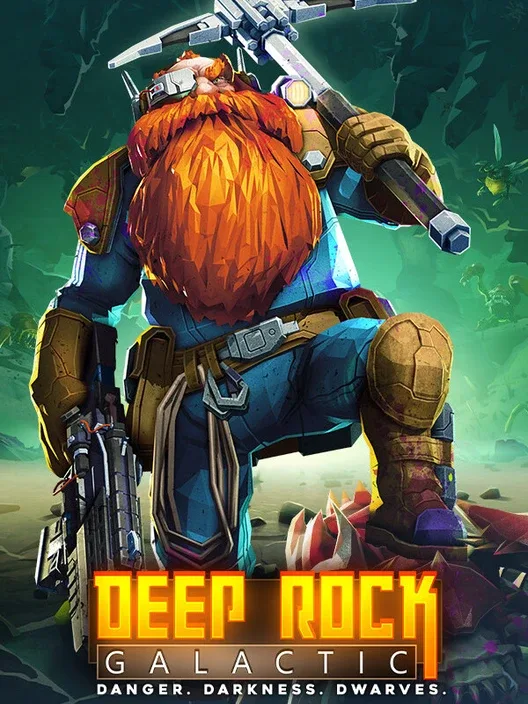
9. Deep Rock Galactic#
Ghost Ship Games' co-op horde shooter, which left early access in 2020 after launching into it in 2018, sends four dwarven miners into procedurally generated cave systems to extract resources under a strict, satirical corporate mandate from the eponymous mining company. The four classes — Driller, Engineer, Gunner, and Scout — each reshape the caves themselves rather than just offering different guns: the Driller can tunnel through solid rock on demand, the Engineer drops turrets and platforms, and the Scout's flare gun and grappling hook are built specifically around lighting and navigating the game's genuinely pitch-dark environments. Terrain destruction is total and mutual — caves can be dug through by players and by burrowing enemies alike, so a mission's actual layout is never quite the same twice even on a repeated mission type. Swarms triggered by specific mission events, rather than constant background pressure, give runs a rhythm of tense calm punctuated by genuinely overwhelming bug rushes that demand the whole team regroup fast. The honest drawback: the mission structure, while varied across several distinct objective types, is ultimately built from a fairly small pool of core loops that experienced players recognize quickly, and its steep early learning curve around movement and terrain awareness is a real barrier for players used to flatter, more conventional shooter levels.
10. Titanfall 2#
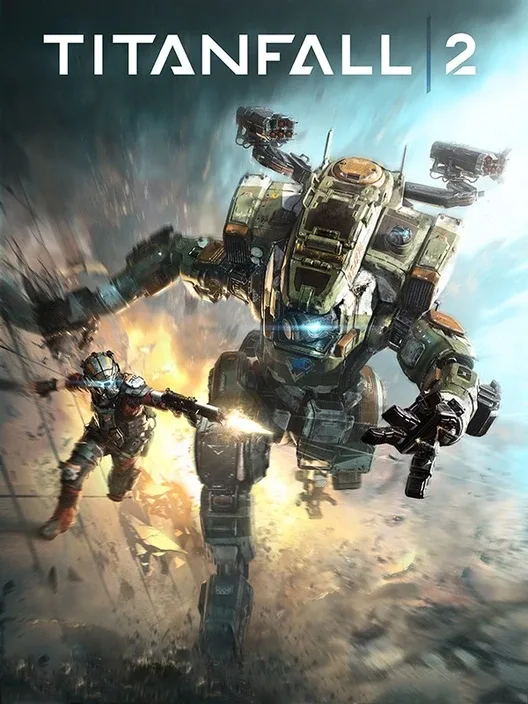
Respawn Entertainment's 2016 sequel is remembered as much for its single-player campaign as for its multiplayer, and the "Effect and Cause" mission, built around a device that lets Jack Cooper shift between a level's dilapidated present and its functioning past in real time mid-traversal, is still cited as one of the best individual shooter campaign missions ever made. Titanfall 2's wall-running and double-jump traversal, layered directly into every level's geometry rather than treated as an optional shortcut, makes basic movement between fights feel closer to a rhythm puzzle than dead time. The relationship between Cooper and his Titan BT-7274, built through the campaign as a partnership rather than pilot-and-tool, gives the story's emotional beats real weight without leaning on a human supporting cast. Multiplayer pairs fast, parkour-heavy pilot combat with the separate, weightier Titan combat, and switching between the two states — calling down a Titan, then ejecting from it under fire — creates a tactical rhythm few other shooters attempt. The honest drawback: the game launched into a market saturated by Battlefield 1 and Infinite Warfare in the same window, which tanked its initial player count despite strong reviews, and the multiplayer population has never fully recovered even as the campaign's reputation has only grown since.
11. Paladins#
Hi-Rez Studios' free-to-play hero shooter, which left early access in 2018, pairs a Overwatch-style roster of Champions and their unique kits with a Cards and Talents system borrowed straight from collectible card games: before a match, players build a deck of passive cards that upgrade a Champion's abilities in small, stackable increments, and mid-match, Talents chosen at the start of a round fundamentally change how a single ability functions for that game only. That deckbuilding layer, unusual for the genre, means the same Champion can be built toward sustained healing, burst damage, or crowd control depending entirely on the loadout brought into the match rather than a fixed kit. The game's roster spans over sixty Champions across Damage, Flank, Support, and Tank roles, with siege-style Payload and Onslaught modes giving objective play as much weight as raw eliminations. Battlegrounds, the game's own battle royale spin-off mode, folds the Champion-and-ability structure into a hundred-player shrinking-map format built on top of the same core engine. The honest drawback: the card and talent system's depth is also a genuine onboarding wall for new players trying to learn dozens of Champions' unlockable loadouts at once, and the game's visual and mechanical similarity to a much larger competitor has made it a permanent, if unfair, second-place comparison in most players' minds.
12. Ultrakill#
Solo developer Arsi "Hakita" Pataala's fast-movement shooter, in early access since September 2020, borrows its traversal directly from Titanfall and DOOM Eternal and its scoring philosophy directly from character-action games like Devil May Cry, rewarding stylish, varied kills with a rank-based style meter rather than treating survival alone as success. The parry mechanic, which lets the player's robotic protagonist deflect specific enemy projectiles back at their source with a precisely timed melee swing, is deliberately unforgiving — the developer has publicly and bluntly rejected requests to soften it with an easier alternative input. Weapons carry alternate-fire variants that fundamentally change their role rather than just adjusting damage numbers, like a shotgun whose secondary fire launches a cannonball that can be redirected mid-air with a well-timed parry. Blood-as-health mechanics, where certain kills refill health directly rather than requiring a separate pickup, keep the aggressive, forward-momentum playstyle the game is built around mechanically rewarded rather than just encouraged by level design. The honest drawback: as a still-unfinished early access game years into development, its later campaign layers and story content remain incomplete, and the unforgiving parry-and-movement skill floor is a real barrier for players not already comfortable with fast, precision-heavy action games.
13. Half-Life: Alyx#
Valve's 2020 return to the Half-Life series, built exclusively for virtual reality headsets, casts the player as Alyx Vance fighting to seize a Combine superweapon in the years before Half-Life 2, and its signature Gravity Gloves mechanic lets the player physically reach a hand toward any visible object and flick the wrist to pull it into their grip, extending the Gravity Gun's toybox physics into direct, one-to-one hand interaction rather than a button prompt. Combat requires physically reloading weapons by hand — sliding a magazine out, slotting a new one in, racking a slide — which turns a routine action-game task into a tactile skill under pressure that flat-screen shooters can't replicate. Resin, a currency scavenged from the environment and fed into a portable "Gravity Gun"-adjacent upgrade tool, lets players physically manipulate an in-world device to unlock new weapon functions rather than navigating a menu. The Combine and Jeff, a blind, sound-hunting zombie-like enemy introduced specifically for this game, both demand genuinely different physical behavior from the player, from crouched stealth to precise room-clearing gunplay. The honest drawback: the entire experience is locked to VR hardware, which remains a real financial and physical-space barrier that excludes it from a large share of shooter fans regardless of how well-regarded the game itself is.
14. Arma 3#
Bohemia Interactive's 2013 military sandbox trades scripted campaigns for an open, systemic simulation of modern combined-arms warfare, letting a single server run infantry, armored vehicles, naval craft, and full flight-sim-grade aircraft simultaneously across maps that can stretch tens of real kilometers across. Ballistics modeling accounts for bullet drop, wind, and even the Coriolis effect at extreme long-range sniping distances, a level of granularity few shooters attempt outside a dedicated sim. The Eden Editor, a full scenario-building tool shipped with the base game, lets players script entire custom missions, AI behavior, and objectives without touching external tools, which is why the game's community-made mods and game modes, from the massive Antistasi guerrilla-war campaign to the standalone battle royale mod that helped kickstart the genre, have outlived most of the base campaign's own content. Vehicle and squad command layers let a single player direct AI subordinates through a full tactical hierarchy rather than just controlling one soldier. The honest drawback: that same systemic depth makes the base game's controls and UI notoriously unfriendly to newcomers, and the simulation-grade ballistics and movement, while a real strength for its dedicated community, are a genuine wall for players coming from more streamlined military shooters.
15. SCP: Secret Laboratory#
Northwood Studios' free-to-play asymmetrical shooter, spun off from the fan-made SCP – Containment Breach, puts a full lobby of players into competing roles — Class-D test subjects, Foundation scientists, Facility Guards, Chaos Insurgency intruders, Mobile Task Force units, and the anomalous SCPs themselves — each with entirely different objectives and win conditions running simultaneously in the same match. The Alpha Warhead, a facility-wide detonation device that can be armed to destroy the entire underground complex and force a chaotic evacuation to the surface, turns the late stages of a round into a genuinely different kind of tension than the early containment-breach chaos. Roles like SCP-049, a plague-doctor-like entity that "cures" players by killing and reanimating them, or SCP-173, which can only move when unobserved, translate specific SCP Foundation lore entries directly into asymmetric gameplay mechanics rather than treating them as pure flavor text. The game's entirely free, community-funded development model, sustained largely through voluntary support rather than a publisher, is unusual for a shooter with this much ongoing content output. The honest drawback: the sheer number of roles and overlapping win conditions makes the game genuinely confusing for a first-time player dropped into a match with no explanation, and its low-budget, community-built presentation is a real mismatch for players expecting AAA production values.
16. DOOM (2016)#
id Software's 2016 reboot resurrected the series after a decade of dormancy by explicitly rejecting the cover-based, regenerating-health design that had come to dominate mainstream shooters, replacing it with the "Glory Kill" system: melee-executing a staggered demon in a brief, brutal animation drops health pickups directly, incentivizing players to charge into danger rather than retreat behind cover. The chainsaw, introduced here as a fuel-limited panic button that instantly kills almost any enemy and drops bonus ammo, gave players a deliberate risk-reward tool for resource management under pressure. Argent Energy lore, delivered through environmental codex entries rather than forced cutscenes, let players who wanted story dig for it without slowing down players who just wanted to keep moving through Hell's industrial-Martian setting. The SnapMap tool, a built-in level editor with node-based logic scripting, let the community build and share custom maps and game modes without external software. The honest drawback: the multiplayer mode, developed by a separate external studio rather than id Software itself, was widely considered the weakest part of the package and was effectively abandoned by its own sequel's design philosophy two years later.
17. The Finals#
Embark Studios' free-to-play shooter, released in December 2023 and staffed heavily by former Battlefield developers, builds its entire identity around a server-side destruction system that lets whole buildings collapse and reshape a map mid-match, with every player on the server seeing the exact same physically simulated damage at the same instant rather than a cosmetic effect. Contestants pick from three body-type Classes — Light, Medium, and Heavy — each with a distinct gadget loadout, from the Light's grappling hook and cloaking device to the Heavy's mounted machine gun and dome shield, giving the same core cash-out objective real tactical variety depending on team composition. The Cashout game mode, where teams deposit stolen valuables at a station that then has to be actively defended while it processes, turns holding ground in a collapsing, gunfire-riddled building into the game's signature tension. Gadgets like C4 charges and goo grenades are used as much to reshape the arena for tactical advantage as to damage opponents directly, making the destructible environment itself a weapon rather than a backdrop. The honest drawback: the sheer amount of visual noise from collapsing structures, gadget effects, and a rotating cast of announcers can make it genuinely hard to track a firefight at a glance, especially for players new to the format.
18. Valorant#
Riot Games' 2020 tactical shooter deliberately grafts a hero-shooter ability layer onto a Counter-Strike-style round economy, and the balance between the two is the whole design thesis: each Agent gets one cooldown-based ability and other utility purchased with the same economy used for guns and armor, but gunplay itself stays the centerpiece rather than getting overshadowed by powers. Sage's healing orb and revive ultimate, Jett's mobility-focused dash and updraft, and Brimstone's precision sky smoke each give a specific tactical role to a five-player composition in a way plain Counter-Strike's identical loadouts don't offer. The round-based buy phase, inherited directly from the tactical-shooter tradition Counter-Strike established, means economy management and utility timing matter as much as aim, and a team that wins gunfights but mismanages its buy rounds can still lose a match. Precise, low-recoil gunplay, deliberately closer to Counter-Strike's punishing accuracy demands than to a typical hero shooter's more forgiving aim assist, keeps mechanical skill the dominant factor even with abilities layered on top. The honest drawback: the ability layer, while carefully balanced against gunplay, still produces occasional rounds decided almost entirely by a well-timed ultimate rather than raw aim, a genuine departure from the purer gunfight-first philosophy of the tactical shooters it's modeled on.
19. Counter-Strike#
The 1999 Half-Life mod, built by Minh "Gooseman" Le and Jess Cliffe and later folded into Valve's own catalog, established nearly every structural idea the entire tactical-shooter genre still runs on: a round-based economy tied to kills and objectives, a hard split between a Terrorist and Counter-Terrorist side, and a bomb-plant win condition that rewards map knowledge as much as aim. Buy menus at the start of each round, letting a team choose between saving money on a lost round or spending everything on a full-armor push, turned economic decision-making into as real a skill as gunplay itself, a structure every one of its own sequels has preserved rather than replaced. One-life-per-round permadeath, with no respawns until the next round starts, gave every individual gunfight lasting consequence in a way most shooters of its era, built around constant respawns, never attempted. Maps like de_dust and de_inferno, largely community-made and later adopted into official rotation, shaped competitive shooter map design for the genre that followed it for decades. The honest drawback: the original's dated visuals and increasingly thin server population, long since eclipsed by its own sequels, mean it survives today mostly as a historical touchstone and a still-active but shrinking legacy scene rather than a game most new players would pick up first.
20. Overwatch 2#
Blizzard Entertainment's October 2022 sequel to its 2016 hero shooter cut standard team size from six players to five and moved to a free-to-play model, while keeping the original's core idea intact: a large, constantly growing roster of heroes divided into Tank, Damage, and Support roles, each with a genuinely unique kit rather than shared class archetypes with different skins. The role queue system, which locks matchmaking to a fixed number of each role per team, was carried over from the original game's later seasons specifically to prevent the all-damage, no-healing compositions that made early Overwatch matches chaotic and unbalanced. Hero-specific ultimate abilities, charged through dealt or received damage and healing, remain the game's signature swing-turning mechanic, from a single well-placed Reinhardt shatter to a Zenyatta ultimate that can turn a losing team fight around in seconds. New game modes like Push, where two teams fight over a single robot slowly moving a payload in either direction along a lane, sit alongside the returning Escort and Control formats to keep objective play varied. The honest drawback: the shift to five-versus-five and free-to-play was accompanied by a heavily criticized battle-pass monetization model and a hero-unlock structure for new players that many longtime fans felt cheapened a roster they'd previously owned outright.
Read this page alongside Game Avant's broader shooters category and its third-person, battle royale, and looter-shooter sibling pages for the full picture of where first-person shooting sits relative to the rest of the genre. The ranking above blends the site's combined critic-and-player rating data with an editorial pass for breadth, and it will keep shifting as more games earn a real sample size of reviews and as new first-person shooters join the catalog — treat it as a working shortlist of the best FPS games worth playing right now, not a fixed, permanent verdict.