
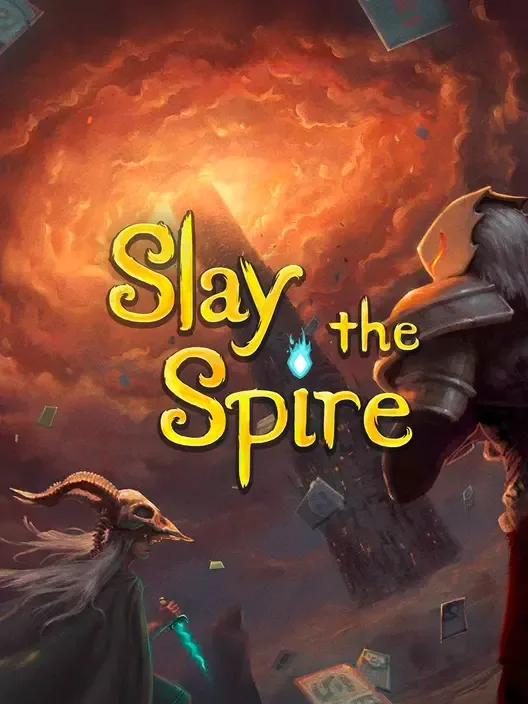
Slay the Spire
Roguelike Deckbuilder · Card Game · Deckbuilding · Card Battler · Roguelike
Game page →
Review
A roguelike deckbuilder and sequel to a genre favourite. You build a deck card by card, face enemies in turn-based combat, pick up relics and make route choices across each run. New characters, cards and events change how each run plays. Besides solo play, it offers online co-op for up to four players. Is it your kind of game?
Game Avant verdict
A sequel that keeps the original's razor-sharp card-by-card decision making and adds a real reason to come back: new characters, alternate acts and co-op that changes how a deck is built.
By GameAvant · Published Oct 9, 2026 · Updated Oct 9, 2026 · 20 min read
Choose what matters to you
Every question is optional.
How do you want to play?
What suits you better?
How do you feel about a tough game with lots of retries?
Based on your choices
Pick what matters to you above and the result shows up here.
IGDB
85%
36 ratings
Steam:
61%
184,557 reviews
Fits you if
you like optimizing a deck and finding strong card combinations.
Skip it if
you want real-time action or dislike randomness in runs.
Availability
Steam
$24.99
Slay the Spire II is a sequel built by a team that clearly understood exactly what made the original a genre-defining roguelike deckbuilder, and it refuses to break that formula in pursuit of novelty for its own sake. Mega Crit released it into Early Access on 5 March 2026, and the result plays like the original on its best day while adding enough genuinely new machinery that a veteran of the first game cannot simply coast on old habits and muscle memory. The core loop stays exactly where it needs to: climb a spire built from branching routes, construct a deck one card at a time, read what each enemy is actually telegraphing before it acts, and lose a run to a specific, nameable mistake rather than bad luck you cannot account for. That legibility is the entire secret behind why the original worked, and the sequel protects it carefully while expanding what surrounds it. Five playable characters are available at launch, each with their own distinct card pool and strategic identity, and every one of the game's three acts now has two separate versions, meaning the specific sequence of enemies, events, and environmental hazards a run presents changes meaningfully between playthroughs rather than simply reshuffling the same fixed content. Four-player co-op is the single biggest structural addition, and it changes deck-building in ways a purely solo roguelike never had to account for: card choices now have to consider what the rest of the party needs as much as what any individual deck wants, turning the genre's traditionally solitary optimization puzzle into something closer to a negotiated, shared strategy. Very few roguelikes make losing feel this genuinely productive rather than simply frustrating. When a run ends in Slay the Spire II, the reason can almost always be traced directly back to an identifiable decision: a card taken because it looked strong in isolation without accounting for how it interacted with the rest of the deck, a fight chosen from the map when a rest site would have kept the run alive longer, a single attack ignored for one turn too many. Nothing about a loss feels opaque or arbitrary, and that clarity is precisely why the score here lands as high as it does. The one caveat that genuinely matters sits directly in the release model rather than in anything about the design itself. The game remains in Early Access, and the developers have stated they expect it to stay there for one to two years while they add more cards, events, environments, and enemies, improve balance and visual effects, and build toward a proper ending before the eventual full release. This assessment rates the game as it exists right now, fully functional and already excellent, and anyone looking for a complete campaign with a definitive finish line should go in knowing that finish line is still actively under construction rather than simply unpolished.
You may love it because
Every run deals a new set of cards, relics and potions, so no two decks ever end up the same and a good pivot feels like a solved riddle.
It may frustrate you because
A bad run of offers can end a promising attempt early, and no amount of skill turns a hopeless hand into a win.
You may love it because
Each act can appear as one of two different versions, with different enemies, events and bosses, so the map stays unpredictable long after the first dozen runs.
It may frustrate you because
Learning the game takes longer when the enemy roster keeps changing, and a boss you thought you had solved can turn out to be a different one.
You may love it because
Each player picks a character and uses healing, defence, buffs and debuffs on the others, so a table can build a deck that no single player could.
It may frustrate you because
Enemies have more health and their attacks hit everyone, so one player playing poorly can pull down the entire run.
20 min read
· By Game Avant
Three alternatives, one line each on why.
Roguelike Deckbuilder · Card Game · Deckbuilding · Card Battler · Roguelike
Game page →
Roguelike Deckbuilder · Deckbuilding · Card Game · Roguelike · Card Battler
Game page →
Roguelike Deckbuilder · Deckbuilding · Card Game · Roguelike · Card Battler
Game page →
Roguelike Deckbuilder · Deckbuilding · Card Game · Card Battler · Roguelike
Game page →
Roguelike Deckbuilder · Deckbuilding · Card Game · Roguelike · Card Battler
Game page →
Deckbuilding · Roguelike Deckbuilder · Card Game · Roguelike · Card Battler
Game page →Play it together
Online
Up to 4 players