
Two writers who never wanted to share a page#
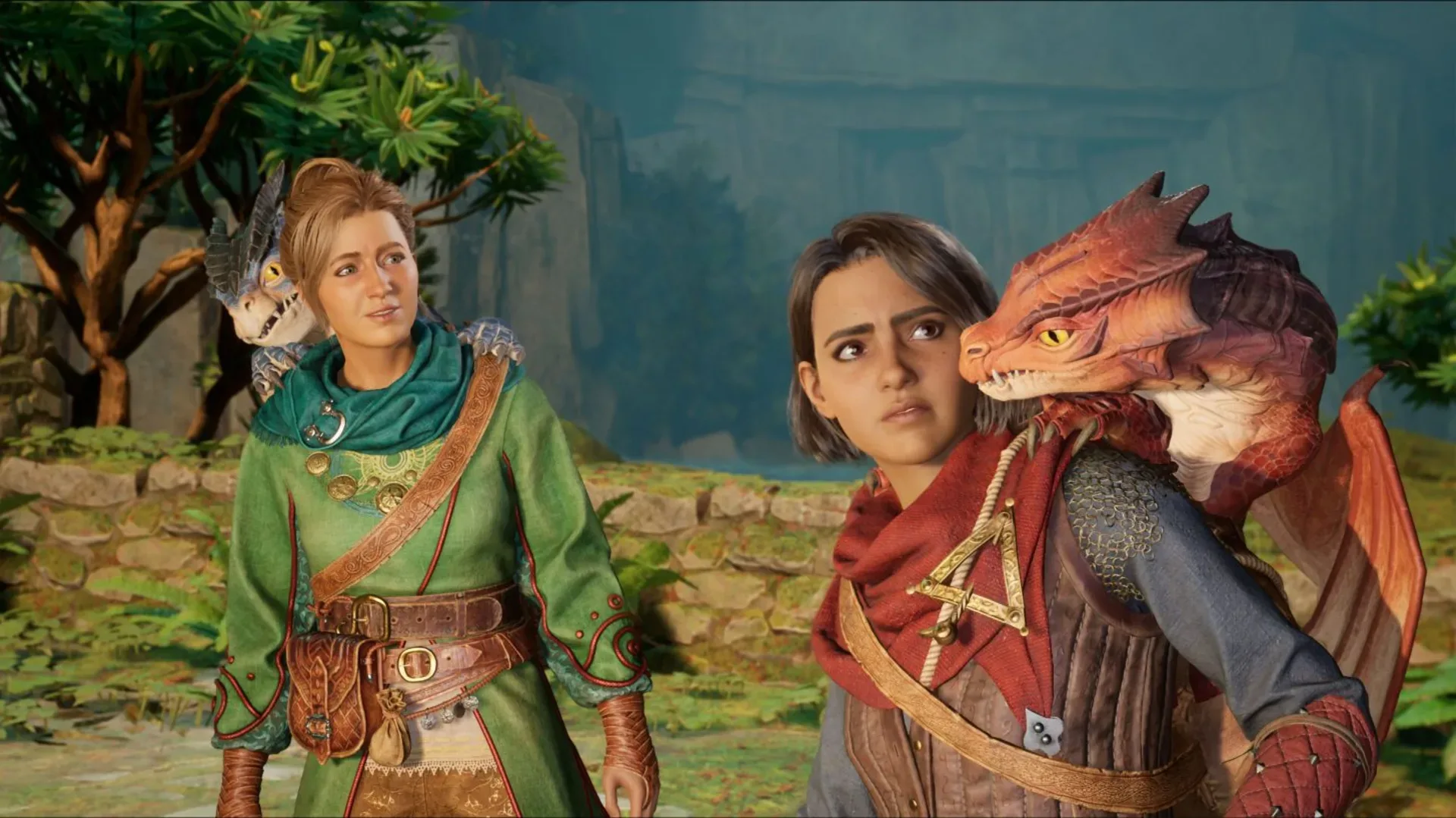
Split Fiction is a two-player adventure built almost entirely out of ideas that other studios would each spend a full game exploring. Developed by Hazelight Studios and published by Electronic Arts, it released on 6 March 2025 for PlayStation 5, Xbox Series X|S and PC, with a Nintendo Switch 2 version following on 5 June 2025. It requires exactly two people to play, either on one couch or online through a free Friend's Pass, and it spends that requirement on the most sustained run of genre-hopping set pieces the studio has ever built. It is not a longer or more ambitious story than the same team's previous game, It Takes Two. It is a bigger, stranger toy box, and the gap between how good the gameplay is and how familiar the story is around it is the one thing keeping this from a perfect score.
What makes Split Fiction different#
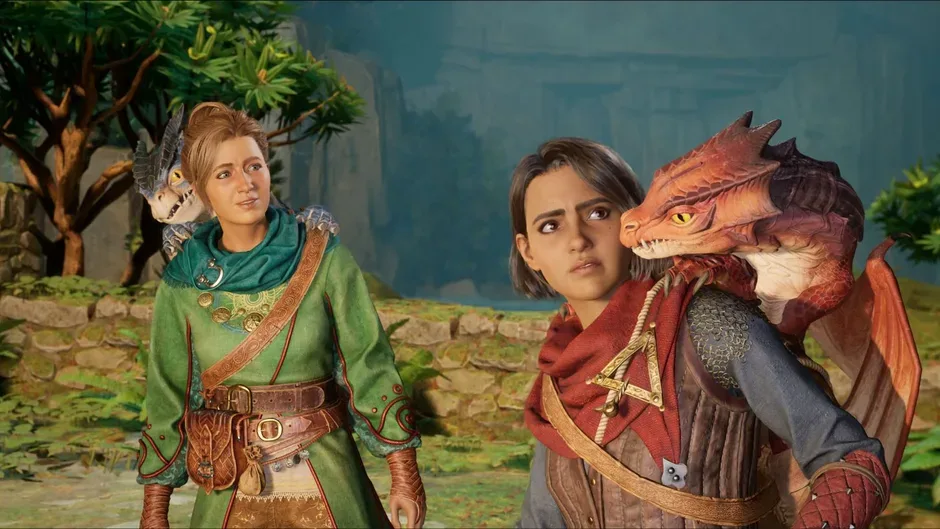
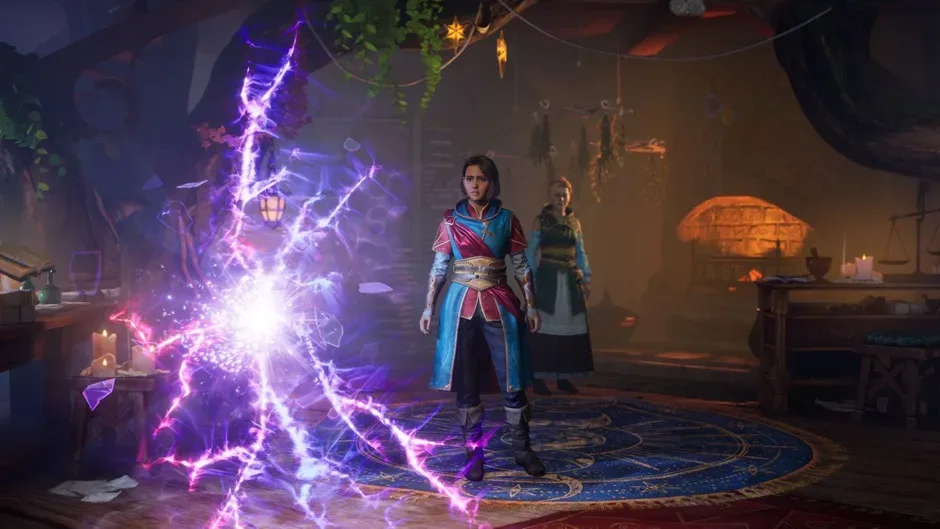
The single idea the whole game is built on is that neither player should ever get comfortable. Mio Hudson and Zoe Foster are two aspiring writers invited to Rader Publishing to test a machine that turns a submitted manuscript into a shared, explorable simulation. When Mio panics and tries to back out, a scuffle with CEO J.D. Rader knocks her into Zoe's fantasy story instead of her own sci-fi one, and a fault in the Machine traps them together, thrown back and forth between both of their unfinished stories. That premise is a licence for Hazelight to abandon whatever mechanic it just introduced the moment it has made its point. A chapter that opens as a stealth-driven prison escape can end as an airborne dragon chase, and the pairing of Mio's hard science fiction and Zoe's high fantasy means every transition also swaps the entire visual language of the game, not just the verbs available to the two players.
A world that changes its own rules every few minutes#
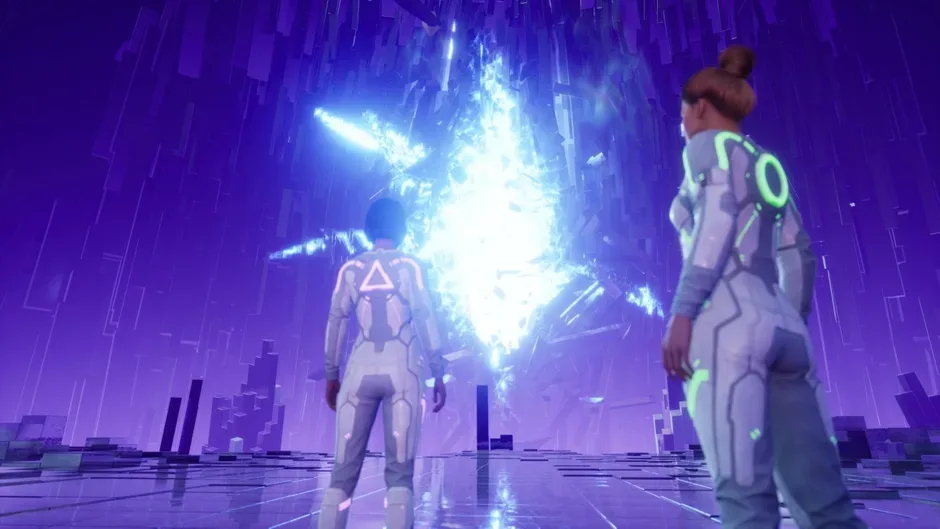
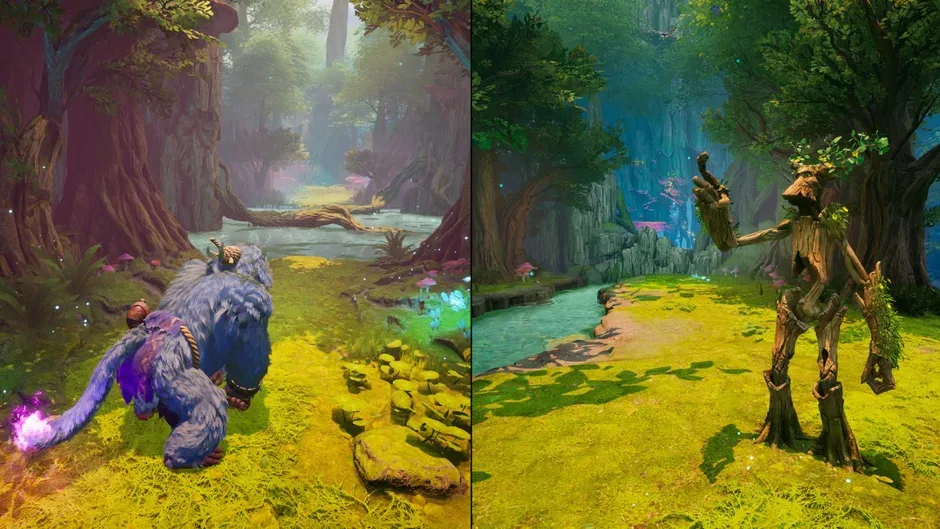
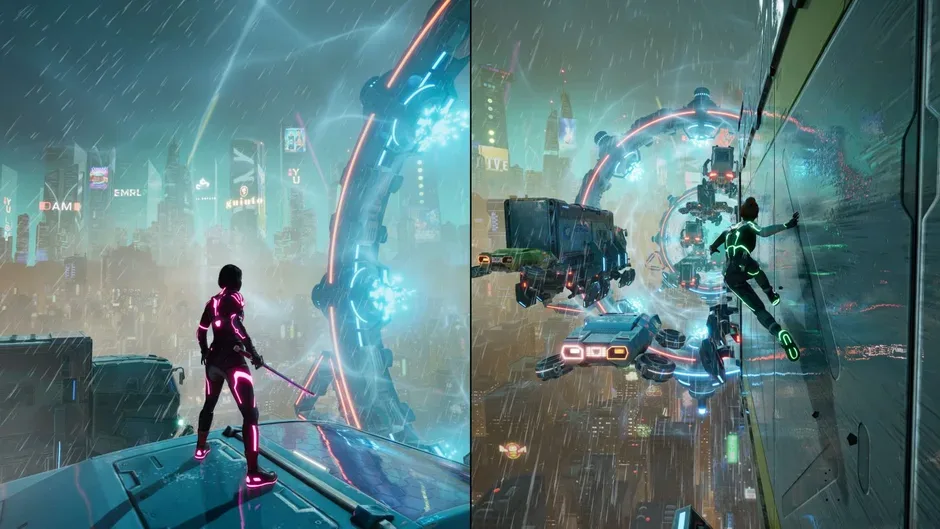
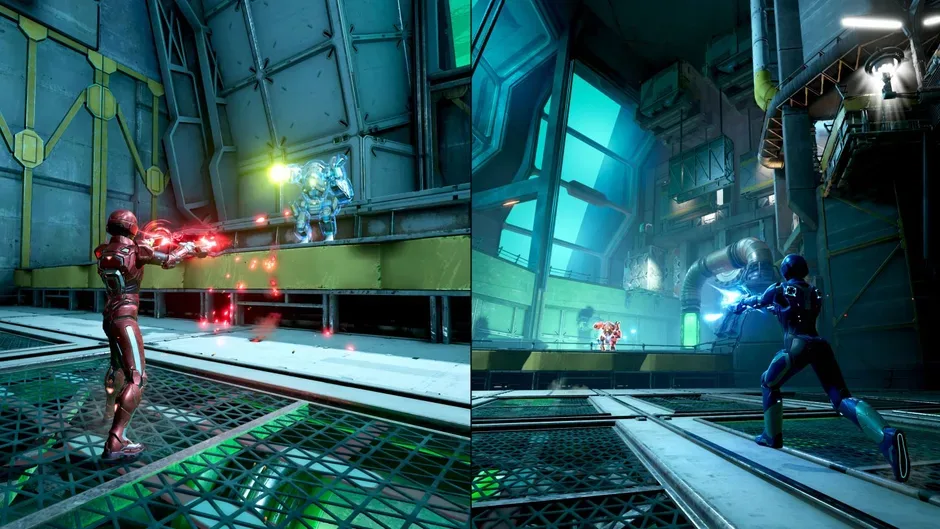
Split Fiction is structured as eight main chapters, each of which reads more like a standalone level built for a different genre of game than a stage in a single adventure. Neon Revenge drops the pair into a rain-slicked cyberpunk city for high-speed motorcycle chases and shootouts against a futuristic crime syndicate, with the kind of neon-drenched verticality that would not look out of place in a dedicated racing game. Hopes of Spring shifts into a slower, nature-driven chapter through an enchanted forest and icy peaks that blends fantasy creatures with sci-fi technology bleeding in from Mio's side of the story. Final Dawn turns into a factory-set action set piece built around explosions, chases and shootouts at a pace closer to a blockbuster action film than anything the studio's earlier games attempted. None of these chapters overlap mechanically with the ones before or after them, and the game rarely explains a new system with more than a single short prompt before trusting both players to work it out together under pressure.
Rise of the Dragon Realm and the chapters that push furthest#
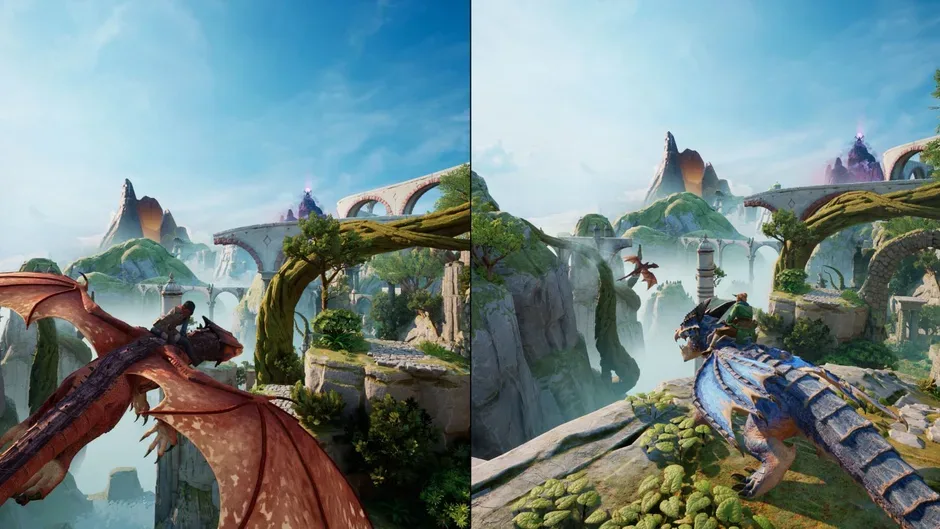
The clearest example of what the game is trying to do sits in Rise of the Dragon Realm, a full-fantasy chapter where Mio and Zoe are each handed a dragon egg to protect while they explore a world built from Zoe's imagination and hunt down Megalith, the force responsible for wiping out the setting's dragons. It is the chapter that leans hardest into spectacle, with aerial combat and cooperative flight sequences that ask each player to handle a different half of controlling their dragon, and it stands as one of the most visually distinct co-op sequences either Hazelight or its competitors have shipped. Isolation goes in the opposite direction, trading scale for a claustrophobic prison escape built on stealth and a mounting sense that the two characters are being watched by something the game has not shown yet. Putting a sequence like that a few hours after a dragon chase is a deliberate whiplash, and it is the clearest sign that the studio treats pacing itself as a mechanic worth designing around rather than an afterthought.
Side stories: the game's best jokes are optional#
Scattered across the main chapters are twelve side stories, short detours triggered by glitches in the Machine that drop Mio and Zoe into unfinished, half-formed ideas from stories they never completed. Each one runs no more than about fifteen minutes, and because they exist outside the pressure of advancing the plot, they are where the writing and the level design take the biggest risks. A player who skips them still sees the whole story, but skipping them also means missing the parts of Split Fiction that are the most purely playful, the ones built with no obligation to explain themselves or connect to anything that comes before or after. Hunting down all twelve adds a genuine couple of hours to a full playthrough, and unlike a lot of optional content bolted onto other games, none of it feels like padding chosen to inflate a runtime.
A camera that decides for you when to come together#
One of the quieter pieces of design carried over from It Takes Two is the dynamic split screen itself. Rather than locking the two halves of the frame in place, the camera stretches, shrinks and merges the two views depending on how close Mio and Zoe are standing and what each of them is looking at, sometimes widening one player's half during a solo puzzle and sometimes collapsing the divider entirely during a shared cutscene. It sounds like a small technical flourish, but it changes how the game reads moment to moment: a chase sequence where the divider snaps into a jagged diagonal to match a collapsing bridge communicates urgency without a single line of dialogue, and a quiet side story often signals its tone by letting the two halves of the screen breathe rather than compete for space. Few other split-screen games treat the boundary between the two players as something worth designing at all, and Split Fiction leans on it constantly.
The making of it: a bigger budget spent on scope, not length#
Split Fiction was built by a team of around 80 people at Hazelight Studios using Unreal Engine 5, on a budget director Josef Fares has said was close to twice the size of It Takes Two's. That money is visible less in raw graphical fidelity, which stays a step behind the biggest single-player blockbusters, and more in how many fully realised worlds the game is willing to throw away after an hour or two. Building a convincing cyberpunk city for Neon Revenge, a full aerial dragon ecosystem for Rise of the Dragon Realm and a claustrophobic industrial prison for Isolation, then moving on from each without reusing its assets in a later chapter, is an expensive way to make a game, and it is the clearest sign of where the extra budget actually went. On PС, PlayStation 5 and Xbox Series X|S the game runs smoothly at a stable frame rate through nearly all of its set pieces; the Switch 2 version trades resolution for portability but holds up better than most third-party ports the console has received.
Built so two players cannot survive without each other#
The Friend's Pass is the detail that makes all of the above practical rather than a barrier. Only one player needs to own Split Fiction; the other can download the Friend's Pass for free and join either locally in split screen or online, with full crossplay between PC, PlayStation 5 and Xbox Series X|S players, and the Switch 2 version joining that crossplay pool as well. Split Fiction has no single-player mode of any kind, and the design does not treat that as a limitation to work around. Almost every puzzle, chase and boss encounter is built so that Mio and Zoe have genuinely different tools in the same room, whether that is one player managing a grappling mechanic while the other handles ranged attacks, or the pair splitting a single obstacle into two halves that only resolve when solved at the same time. It means a distracted or less experienced partner is never just watching; the game is actively unplayable without their half of the puzzle.
Difficulty, accessibility and who it is actually for#
The difficulty curve is forgiving by design rather than by accident. A player who dies or falls behind typically respawns within a few seconds as long as their partner keeps going, and combat encounters are built around spectacle rather than punishing precision. That makes Split Fiction a genuinely good choice for pairing an experienced player with someone who rarely picks up a controller, since the game's pace and constant novelty do the work of keeping an experienced partner engaged while the more forgiving checkpointing keeps a newer one from feeling like dead weight. The trade-off is that Split Fiction is rarely difficult in a way that will test two skilled players looking for a real challenge; it is a showcase built for momentum and variety first, and precision-demanding difficulty a distant second.
Story: two writers, one machine, and a plot you can see coming#
The story of two very different people forced to trust each other while confronting their own regrets is sincere, and it lands its two biggest emotional beats, Mio confronting a manifestation of her own repressed anger and Zoe finally making peace with the death of her sister, with more weight than the premise initially suggests. It is also entirely predictable from the moment the two characters are introduced: prickly professional meets over-eager dreamer, the two clash, and pressure forces them to become friends. Rader himself, forcing his way into the simulation as an increasingly monstrous, godlike figure for the climax, is a serviceable antagonist rather than a memorable one. None of this actively damages the experience, because the story mostly stays out of the way of the gameplay rather than trying to compete with it, but it means Split Fiction's writing is the one part of the package that does not match the ambition of everything built around it.
Compared with It Takes Two and A Way Out#
It Takes Two remains the tighter of Hazelight's two most recent games. Its central metaphor, a couple turned into dolls working through a divorce, gives every mechanic a direct emotional throughline that Split Fiction's writer-versus-writer premise never quite matches, and its levels connect to each other more coherently as a single house-sized adventure rather than eight standalone stories. What Split Fiction does instead is spend a reported budget nearly twice the size of It Takes Two's almost entirely on raw variety: more genres, more visually distinct worlds and a side-story system with no equivalent in the earlier game. If the emotional core of a co-op game matters more to you than its sheer range of ideas, It Takes Two is still the studio's best work. If you want the widest possible tour of what two people with a controller each can do together, Split Fiction is the bigger, more generous game. A Way Out, the studio's earliest co-op title, is worth a mention too: it proved the format could work with a much smaller budget and a straight prison-break thriller, and the difference in scale between that game and this one is the clearest evidence of how far Hazelight has grown in five years. It Takes Two also asked something narrower of its players than Split Fiction does: because its whole cast is effectively two characters and a handful of narrated objects, it could afford to let a single argument between the married couple carry an entire level, where Split Fiction's rotating genres mean a chapter rarely has the runway to develop a supporting character the way It Takes Two developed its squirrel narrator or its rival wasp and bee factions. That trade-off is the clearest way to describe the difference between the two games: It Takes Two goes deep on a small cast and a handful of interconnected mechanics, and Split Fiction goes wide on genre and spectacle at the expense of depth in any single idea.
Worth the money?#
Split Fiction costs $49.99 on every platform, including the later Switch 2 release, which is a noticeably lower price than most big-budget releases despite the reported budget. A campaign-only playthrough runs 10 to 12 hours, and hunting down all twelve side stories brings a full completionist run to roughly 15 hours, all of it playable in full by one household through the free Friend's Pass. For a game that only one of you has to buy, that is a strong ratio of content to price, and it undercuts the idea that co-op games have to be either short throwaway experiences or expensive investments for both players.
| Platform | Release | Best for |
|---|---|---|
| PC | 6 March 2025 | The widest choice of resolution and frame rate for the player who owns the game |
| PlayStation 5 / Xbox Series X|S | 6 March 2025 | The simplest way to play locally on a shared couch |
| Nintendo Switch 2 | 5 June 2025 | Portability, at the cost of running at a lower resolution than the other platforms |
Text and voice on every platform ship with full English voice acting and text support in a wide range of languages, though the exact subtitle list varies slightly by storefront and is worth checking before buying if you rely on it.
Play this instead if …#
Shorter: Unravel Two, an earlier Hazelight-adjacent co-op game, tells a smaller, gentler two-player story about connection in a fraction of the time.
Easier: Overcooked 2 offers the same instant "we need to work together right now" energy in short, chaotic bursts that are easier to pick up cold with a less experienced partner.
Cheaper or for one player: It Takes Two, the studio's previous game, is frequently discounted well below its original price and remains playable through the same Friend's Pass model, while A Way Out tells a tighter, cheaper two-player story if Split Fiction's scale feels like more than you need.
Frequently asked questions#
How long is Split Fiction? The main campaign takes roughly 10 to 12 hours, and a full run including all twelve side stories takes around 15 hours.
Can you play Split Fiction alone? No. There is no single-player mode; every chapter and side story is built for exactly two players.
Do both players need to buy the game? No. Only one player needs to own Split Fiction; the other can join for free through the Friend's Pass, either locally or online with full crossplay between PC, PlayStation 5, Xbox Series X|S and Nintendo Switch 2.
Is there a difficulty option? There is no traditional difficulty slider. The game leans on frequent checkpoints and forgiving respawns rather than a menu setting, which keeps the challenge centred on spectacle rather than precision.
Do you need to have played It Takes Two first? No. Split Fiction is a standalone story with new characters and no narrative connection to Hazelight's earlier games.
Is the story worth paying attention to? It is worth following for its two central emotional arcs, but it is the most conventional part of the game next to the chapter-to-chapter variety of the gameplay.
Does the split screen get in the way? Rarely. The camera dynamically resizes and merges the two halves of the frame based on where Mio and Zoe are standing, so it tends to clarify a scene rather than clutter it.
How does it compare technically to It Takes Two? It runs on the same engine philosophy with a noticeably larger budget behind it, which shows up mainly in how many distinct, fully built worlds the game is willing to use once and discard rather than in raw graphical fidelity.
The Game Avant verdict#
Split Fiction is not a subtle game, and it does not try to be. It spends a bigger budget than any previous Hazelight release almost entirely on refusing to let either player settle into a comfort zone, moving from motorcycle chases to dragon flight to a claustrophobic prison escape without ever circling back to a mechanic it has already used. The cost of that ambition is a story that knows exactly where it is going from the first chapter, and a couple of ideas that get retired just as they start to click. Neither of those flaws is enough to outweigh a campaign that treats constant reinvention as a design principle rather than a marketing line, backed by a Friend's Pass system that removes the biggest practical barrier co-op games usually run into. It asks for a partner and nothing else, and it rewards that partnership with more ideas per hour than almost any other game released this decade.
9 out of 10 – the most inventive two-player game available right now, let down only by a story that never surprises the way its gameplay does.