
A world that was never really about the dragons#
Skyrim is the game that convinced a decade of players that wandering off the road is the point of an open-world RPG, and it did that with a game whose combat, writing and technical foundations were already a little behind the curve the day it released. Bethesda Game Studios put it out on 11 November 2011 for PlayStation 3, Xbox 360 and PC, rebuilt it as a Special Edition in 2016 for PlayStation 4, Xbox One and PC, and rebuilt it again as the Anniversary Edition in 2021, which folded years of Creation Club add-ons into one package and brought it to Nintendo Switch. It has sold more than 30 million copies across every version combined and is still being sold, patched and modded fourteen years after release. None of that longevity comes from a plot that holds up. It comes from a map that was built to reward curiosity before that was a standard feature of the genre, and that idea has aged better than almost anything else in the game.
The setup is simple. Skyrim, the northernmost province of Tamriel, is sliding into civil war between the Stormcloaks, led by Ulfric Stormcloak, and the ruling Imperial Legion, exactly as dragons, thought extinct for centuries, begin returning to the world. The player character survives an execution interrupted by the dragon Alduin and turns out to be Dragonborn, able to absorb a dragon's soul and speak its language in the form of Thu'um, dragon shouts. That premise gets a few good hours out of the opening cave crawl and the walk into Whiterun, and then the game mostly stops insisting on it, which is exactly what makes it work.
What makes Skyrim different#
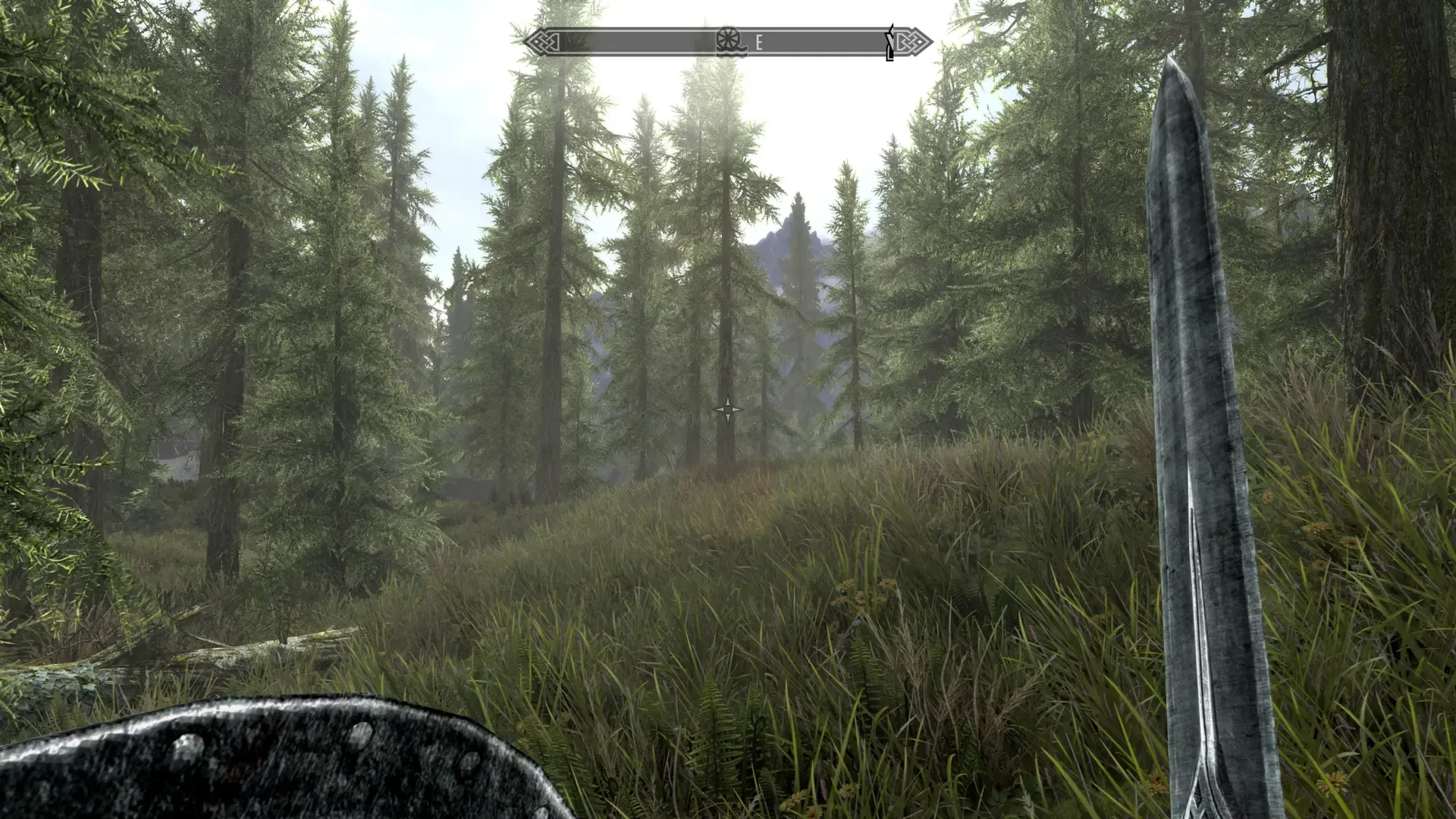
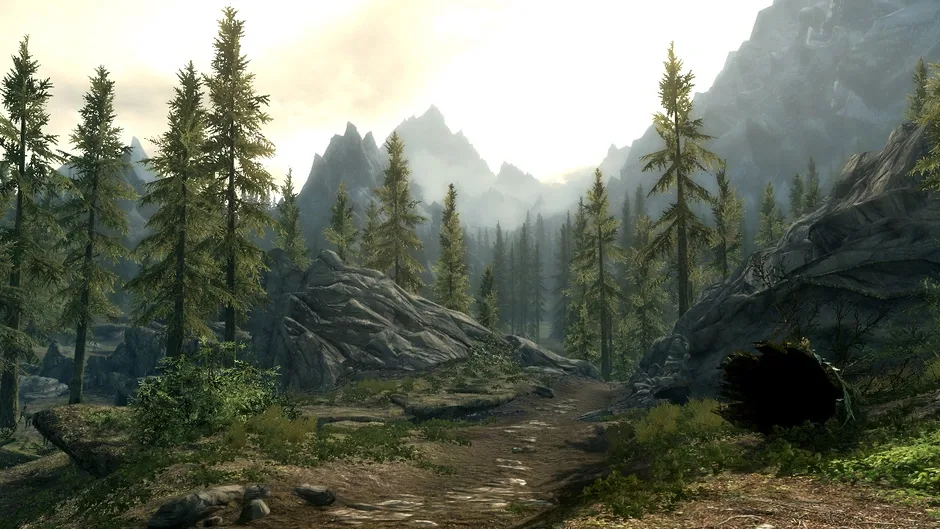
The one idea the whole game is built on is that nothing important is locked behind following the plot. Alduin can wait. The civil war can wait. A tower on the horizon, a column of smoke from a bandit camp, a waterfall that looks like it is hiding something behind it, none of that waits, because Bethesda's level designers built Skyrim's terrain so that almost every visible landmark is a real, reachable, hand-placed location rather than empty scenery. Climb the wrong mountain and there is a giant's camp with a mammoth herd. Follow the wrong river and there is a Forsworn hideout carved into a cliff. Walk into a cave because it looked interesting and there is a word wall for a new shout, or a Daedric artifact quest, or a dragon priest's tomb.
This is what separates Skyrim from most open worlds that came before it and plenty that came after. There is no fog of collectible icons cluttering the map, because for most of the game there barely is a map beyond hand-drawn terrain and named locations. You do not clear checklist markers. You notice something on the skyline, you go and look, and the game has almost always put something there worth finding. That trust, built entirely through level design rather than any quest system, is the reason a fourteen-year-old game with combat this simple still gets people lost in it for a hundred hours.
Skyrim's nine holds: a world built for detours#
The province is split into nine holds, each with its own jarl, its own capital and its own local flavour: Whiterun in the centre, a farming and trading hub that becomes the opening area's hub city; Windhelm in the east, the ancient, cold seat of Nord tradition and Ulfric's stronghold; Solitude in the west, the Imperial capital perched on a sea arch; Riften in the southeast, home to the Thieves Guild and a canal-choked black market; and Markarth, built into and around Dwemer ruins, whose stone architecture alone tells a story the quests barely touch. Each city is small by modern open-world standards, but every one of them has a full economy of named shopkeepers, a jarl's court with its own politics, and enough side content that visiting for a main quest errand regularly turns into an hour of unrelated business.
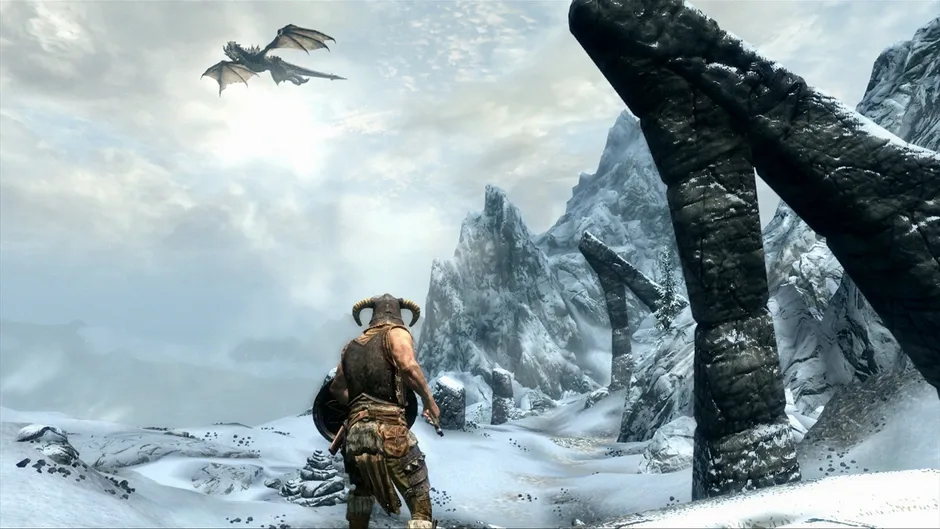
Between the cities the terrain itself does the work other games hand to a compass. Snow-capped peaks, hot springs steaming in the cold, Nordic ruins built into cliff faces, standing stones that grant permanent bonuses once activated, and dragon lairs perched on the tallest points all sit in plain sight from a distance, which means the player, not a quest marker, decides what gets explored next. Fast travel exists and most players use it constantly, but it only unlocks a location once you have walked there on foot at least once, which quietly forces the exploration the game is built around before it lets you skip it.
Combat, magic and the Thu'um#
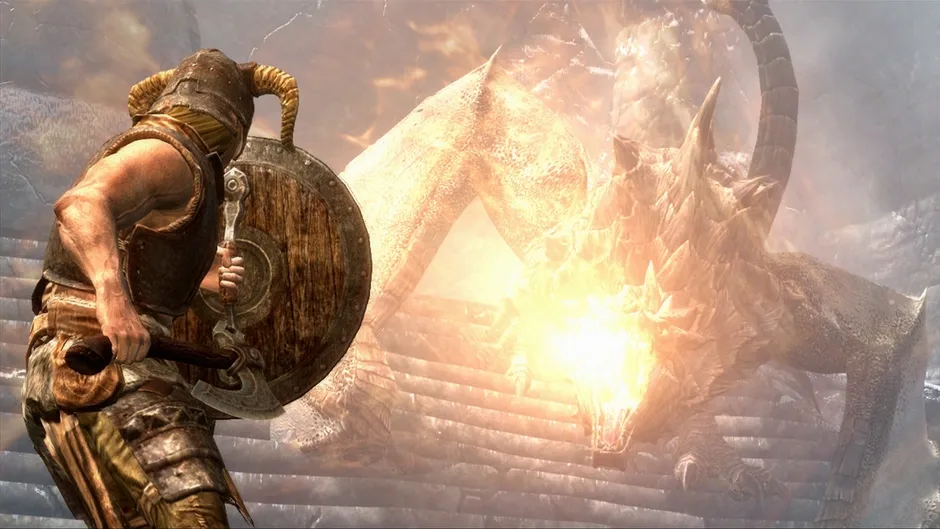
Combat is the part of Skyrim that has aged the least gracefully. It runs on a stamina bar, a swing timer and hit reactions that have not changed much since Oblivion: light attacks, a chargeable power attack, and blocking with a shield or weapon. There is no stagger-based stance system, no parry window worth learning, and dual-wielding two one-handed weapons removes the ability to block entirely, which makes it a pure damage-race option rather than a real stylistic choice. None of that has been fixed by either re-release; it is the same combat in 2011, 2016 and 2021.
What keeps combat interesting despite that is the way it layers with magic and the Thu'um. Destruction spells like fireball and chain lightning, alteration spells that turn skin to stone or flesh to iron, illusion spells that make an enemy flee or turn allies against each other, and conjuration spells that summon Daedra or reanimate a corpse as a fighting ally all sit on the same hotbar as weapons, and nothing stops a character from casting a spell in one hand and swinging a mace with the other. Dragon shouts add a third layer entirely: Unrelenting Force knocks enemies and small objects backward, Whirlwind Sprint is a short dash useful in and out of combat, Become Ethereal makes the player briefly immune to damage, and Bend Will, learned from the Dragonborn expansion, lets a player tame and ride a dragon. Shouts recharge on a cooldown rather than a resource, so they function as a free option layered on top of a stamina-and-magicka economy the rest of combat runs on. It is not deep combat by modern standards, but the amount of ways to solve one fight, sneak past it with an arrow to the head, burn it down with fire, freeze it solid, summon something to fight it for you, or shout it off a cliff, gives it more range than its individual systems suggest.
Character building: no classes, only habits#
Skyrim removed the class system Bethesda's earlier games used and replaced it with eighteen skills split across combat, magic and stealth, each of which levels purely by being used. Swing a sword and one-handed goes up. Sneak past a guard and sneak goes up. Every skill increase feeds a character level, and every character level grants a perk point spendable in that skill's tree, which holds things like Smithing's ability to improve armour past its base rating, Enchanting's ability to place two effects on one item, or Sneak's ability to land a fifteen-times sneak-attack multiplier with a dagger. There is no fixed race-plus-class combination locking a build in from the start; a character can start as a stealthy archer and end the game as a heavy-armoured, fire-breathing werewolf battlemage, because nothing about the system prevents it beyond the time it takes to raise a new skill.
That freedom has a cost the game never quite balances. Because levelling is tied to use rather than choice, a build that ignores what it is actually good at early on feels weak for hours, and the game's own enemy difficulty scales loosely with the player's level regardless of which skills were raised to get there. The Legendary Skills option, added later, lets a maxed skill be reset to level 15 in exchange for permanent bonus perk points, which turns min-maxing into a genuine long-term loop for players who want one, but it is opt-in and easy to never discover.
Guilds, the civil war and radiant quests#
The four major factions each play a different genre inside the same game. The Companions in Whiterun are Skyrim's warrior guild and secretly a circle of werewolves, and their questline ends with a choice about whether to keep the curse or be cured of it. The College of Winterhold is the game's mage faction, its questline built around a forbidden Aldmeri artifact and one of the better-written villains in the base game. The Thieves Guild in Riften runs through Riftweald Manor and the black-market Ratway, and its story of rebuilding a broken criminal empire is one of the few Skyrim questlines with real structural stakes. The Dark Brotherhood, the assassins' guild, opens with one of the series' most quietly disturbing quests, a lullaby that turns into a murder invitation, and its writing holds up better than the main quest built around it.
Running underneath all of it is the civil war between the Stormcloaks and the Imperial Legion, joinable at almost any point and playable to its own separate conclusion regardless of how the main quest against Alduin is going. It is Skyrim's most politically pointed writing, an argument about nationalism, religion and empire dressed as a fantasy conflict, and it never gets the depth its premise deserves; sieges of Windhelm or Solitude are the closest the game gets to a large-scale battle, and they are a fraction of the size the setup implies.
Around all of that sit radiant quests, procedurally assigned busywork generated from a template: kill this bandit leader, fetch this item, deliver this letter, largely interchangeable and repeated hundreds of times across a full playthrough. They exist to make Skyrim's world feel like it always has something to do, and they succeed at that while being the least interesting content the game offers.
The expansions and the mods that keep rebuilding it#
Skyrim's official expansions each add something structurally different rather than just more world. Dawnguard, released in 2012, splits the player between a vampire-hunting order and Lord Harkon's vampire clan, and adds vampire lord and werewolf-adjacent perk trees along with Auriel's Bow, a weapon tied to the DLC's own eclipse mechanic. Hearthfire, also 2012, is smaller in scope but changes the daily texture of the game: it lets a player buy land and build a house piece by piece, from the foundation up, adopt children, and manage a small household, something no earlier Elder Scrolls game let you do. Dragonborn, released in 2012 as the last major expansion, sends the player to Solstheim, the island shared with Morrowind, to face Miraak, the first Dragonborn, and it is the strongest single piece of new content Bethesda made for the game, with a genuinely different visual identity and the only boss fight that meaningfully changes the shout system.
The Anniversary Edition folds in years of smaller Creation Club content on top of that, from a survival mode that adds hunger, cold and camping to entirely new quests and dungeons of varying quality, and bundles all of it with the two major DLCs into one purchase.
None of that fully accounts for how the game is actually played today, though. Skyrim's PC modding scene, built on Bethesda's own Creation Kit and hosted mainly through Nexus Mods and the in-game Creation Club, is arguably larger and more active than any other single-player game's, more than a decade after release. Overhaul mods rebuild combat timing and enemy AI, texture packs replace assets that looked dated even in 2011, and entire new quest mods add hours of content built to the same standard as the base game. Console versions since the Special Edition support a limited, curated form of mods, but the PC version's modding scene is functionally a second, ongoing development team the game has never stopped having.
Story: better in its side quests than its main one#
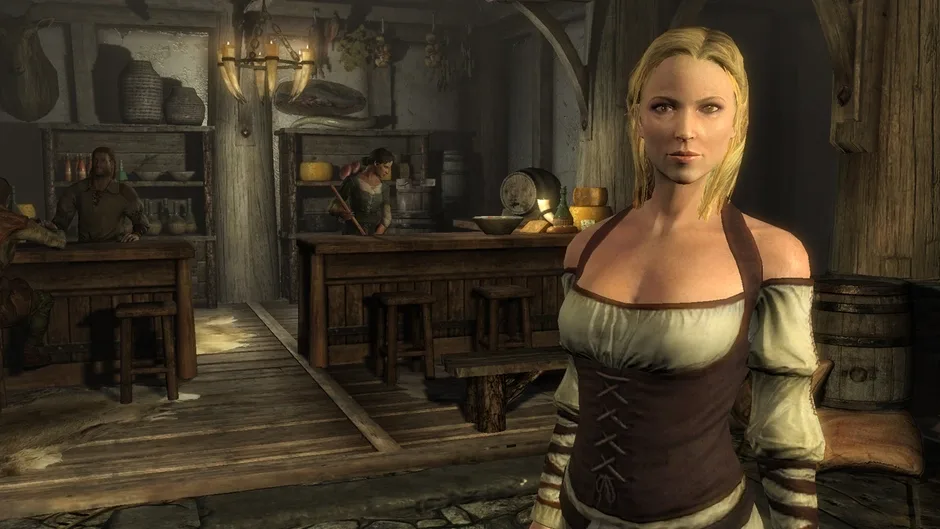
The main quest, chasing Alduin from Helgen through the Greybeards at High Hrothgar to Sovngarde, is the least interesting story Skyrim tells. Alduin barely speaks, the stakes stay abstract until the very end, and the Dragonborn's rise to importance happens because the plot needs it to rather than because anything earns it. What holds the writing up is everywhere else. The Daedric artifact quests, one per Daedric Prince, from Molag Bal's corrupted priest to Sanguine's drunken wedding-crashing bender to Meridia's cleansing of an undead-infested temple, are consistently sharper and stranger than the main story. Dragon priest tombs scattered across the map tell fragments of an ancient, pre-Nord history through environmental storytelling rather than dialogue. And the four guild questlines each carry more emotional and political weight than the fight against Alduin ever manages, which is an unusual thing to say about the story a game is nominally sold on, and it is exactly why so many players finish Skyrim having never touched the ending.
New to open-world RPGs? Start here#
Skyrim is still one of the friendlier places to start with this kind of game, provided a few habits are set early. Pick a race for its starting skill bonuses rather than lore alone; a Nord or Orc gives melee builds an easier start, while a High Elf or Breton makes an early mage far more survivable. Head into the wilderness and let the map fill itself in through walking rather than fast-travelling everywhere immediately, since that is where the game's actual design lives. Join a guild early, even one that does not fit the eventual build, since guild questlines teach the game's systems better than the main quest does. And do not feel obligated to chase Alduin quickly; nothing punishes ignoring the main quest for dozens of hours, and the world rewards that far more than the story does.
Compared to Oblivion and The Witcher 3#
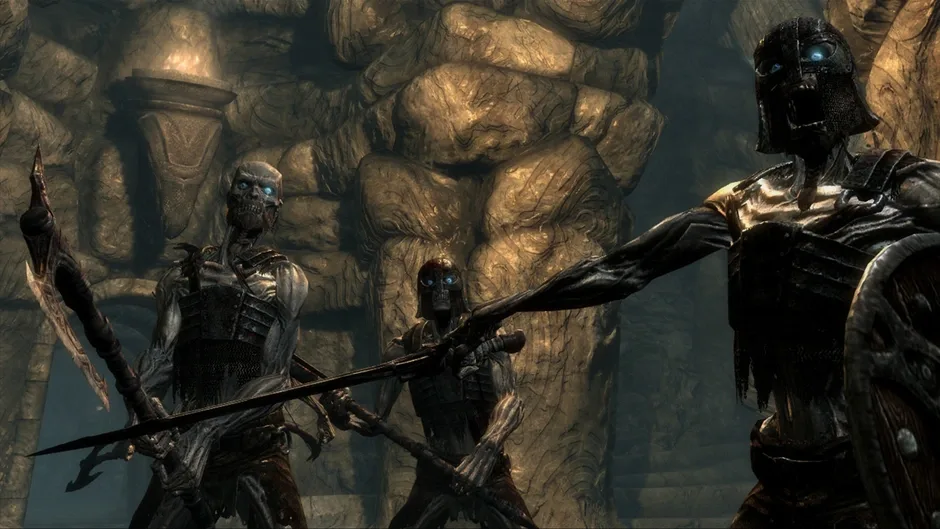
The Elder Scrolls IV: Oblivion, rebuilt as Oblivion Remastered in 2025, is the clearest point of comparison, since Skyrim is a direct refinement of its ideas. Oblivion's Radiant AI and its four guilds are the template Skyrim's holds and factions expand on, and Oblivion still has spellmaking, letting a player build a custom spell from scratch, a system Skyrim removed entirely. But Oblivion's enemies scale directly with player level in a way that breaks immersion by the late game, and it has no dragon shouts, no smithing and no player-built housing. Skyrim is the more complete, better-paced version of the same idea; Oblivion is worth playing for the systems Skyrim quietly dropped.
The Witcher 3: Wild Hunt is the fairer comparison for anyone choosing between two open-world RPGs today. CD Projekt Red's game hands over Geralt, a fixed, fully voiced character with his own history, rather than letting a player build one from nothing, and it has no shouts, no race or class choice and no player housing in Skyrim's sense. What it has instead is far better written quests: the Bloody Baron storyline and the two expansions, Hearts of Stone and Blood and Wine, are more consistently strong than anything in Skyrim's main quest. If character freedom and a world with almost no plot armour matter more, Skyrim is still the stronger pick. If a story worth following from beginning to end matters more, The Witcher 3 wins that comparison clearly.
Worth the money?#
The Anniversary Edition typically sells for around 40 to 50 euros at full price and is discounted to under 15 euros multiple times a year on PC and console storefronts, which makes it one of the best value single-player RPGs still on sale. A focused run through the main quest and one guild takes roughly 30 hours; a playthrough that explores properly, joins every guild and finishes both major DLCs runs 100 hours or more, and a completionist run chasing every quest and location comfortably passes 200.
Best platform: PC, for the modding scene alone, provided the hardware can also run whichever mods get installed on top of the base game. PlayStation 5 and Xbox Series X|S run the Anniversary Edition well through backward compatibility with the Special Edition. Nintendo Switch has carried its own portable version since 2017 and remains a fully playable, if visually softer, way to take the game anywhere. Steam Deck handles the base game comfortably even with a moderate mod list.
Text and voice: voice acting is English only across every platform; text and subtitles are available in several languages, though not consistently in every region's storefront.
Play this instead if…#
Shorter: The Elder Scrolls IV: Oblivion, especially the 2025 remaster, gives a tighter, roughly 20 to 30 hour main story with the same four-guild structure Skyrim expanded.
Easier on the eyes and friendlier to newcomers: Hogwarts Legacy borrows Skyrim's open-world exploration loop and a school of magic in place of guild halls, with a more forgiving, less punishing tone throughout.
Better written, closer in scale: The Witcher 3: Wild Hunt trades character-building freedom for a fixed protagonist and quests written with far more consistency than Skyrim's own.
Frequently asked questions#
How long is Skyrim? Around 30 hours for a focused main quest and one guild, 100 or more for a normal playthrough that includes the major DLCs, and 200 plus to see nearly everything.
Is Skyrim still worth playing in 2026? Yes for the exploration and character building, which have barely aged; combat and the main quest have aged less well and are the game's clearest weak points.
Does Skyrim have classes? No fixed classes. Every character levels eighteen skills through use and spends perk points freely, so a build can change direction entirely over a playthrough.
Is there co-op or multiplayer? No official multiplayer exists; a long-running community mod adds unofficial online co-op on PC, but it is not supported by Bethesda.
Do the console versions get mods? Yes, since the Special Edition, PlayStation and Xbox support a curated, limited selection of mods; PC has access to the full Nexus Mods and Creation Club catalogue.
The Game Avant verdict#
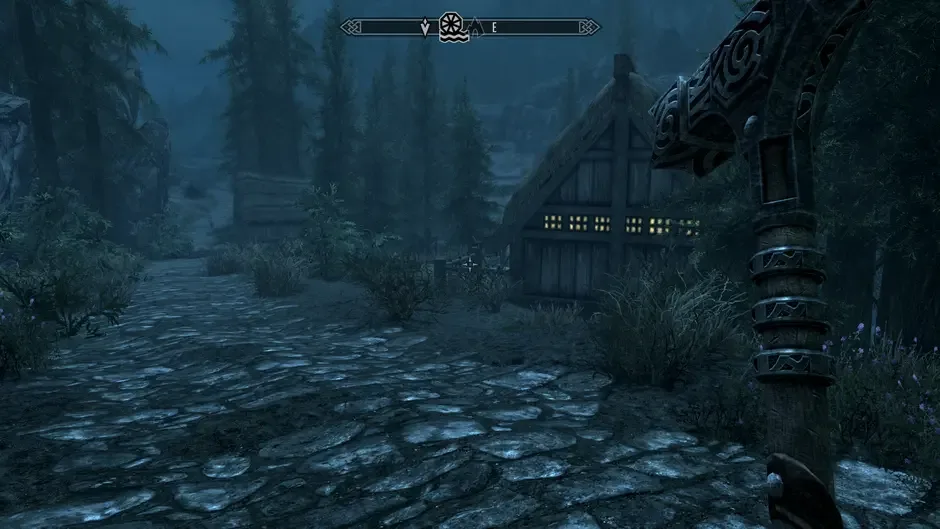
Skyrim is not a well-made game by the standards its own sequels and rivals have since set. Its combat has not meaningfully changed since 2011, its main quest is the weakest story it tells, and its bugs have needed a community of modders to finish fixing for well over a decade. None of that outweighs what it still does better than almost anything released since: it built a world where looking at a mountain and deciding to climb it is consistently a good idea, and it built a character system with no walls around what that climb turns you into. Two re-releases and an entire decade of mods later, that idea is still the reason people start a new character in Skyrim instead of finishing the one they have.
9 out of 10 – a game whose flaws never went away, in a world good enough that nobody minds.