
Pokémon Legends: Arceus
time travel · Fantasy · Adventure · Third person · Action
Game page →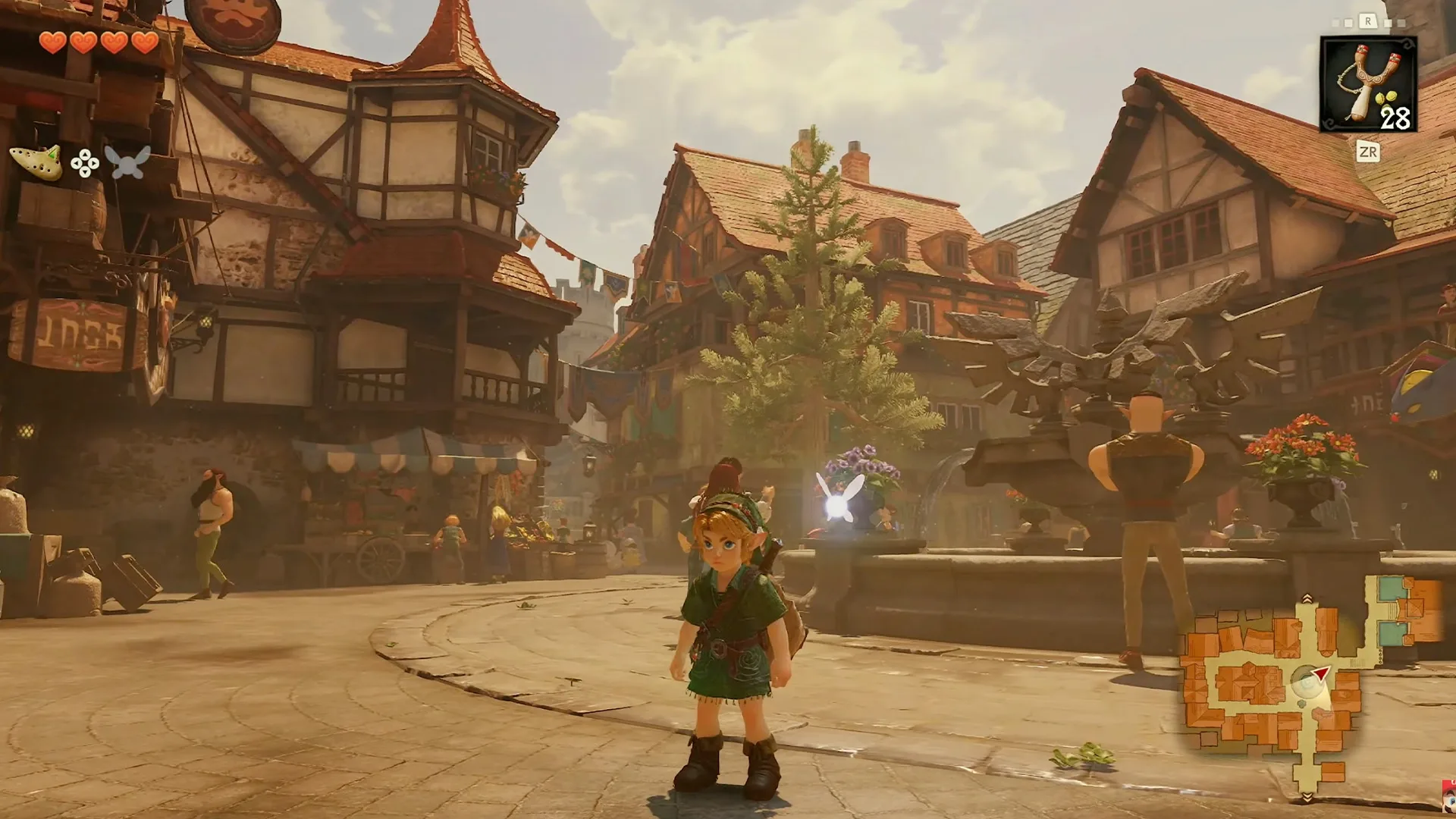
Review
Nintendo's full remake of the 1998 original rebuilds Ocarina of Time with a free camera, voice acting, and modern movement, landing exclusively on Switch 2.
Game Avant verdict
A ground-up rebuild, not a touch-up, that trusts a 28-year-old adventure to still work and mostly proves it right.
By GameAvant · Published Nov 9, 2026 · Updated Nov 9, 2026 · 7 min read
Fits you if
you want to experience a genre-defining classic with modern controls, you like story-driven action-adventures with dungeons and items, you're invested in Switch 2's exclusive lineup and you appreciate voice acting and orchestral scores in older games revisited.
Skip it if
you already know the original by heart and want nothing changed, you don't own or plan to own a Switch 2, you prefer fully new stories over remakes and you dislike time-travel structured narratives.
The Legend of Zelda: Ocarina of Time (2026) is Nintendo's full remake of the 1998 Nintendo 64 original, rebuilt from the ground up by Nintendo EPD Production Group No. 3 — the in-house team behind Breath of the Wild and Tears of the Kingdom — and released November 5, 2026 as a Switch 2 console exclusive. It's priced at $59.99 digitally, with physical copies listed higher around $69.99. Unlike a straightforward remaster, this is a structural rework of how the game plays, while keeping the story, dungeons, and world of the original intact. At its core, Ocarina of Time is an action-adventure built around Hyrule, its central kingdom, and the young hero Link, who is drawn into a quest to stop the warlord Ganondorf from acquiring the Triforce, a relic of near-unlimited power. The story's defining trick, carried over from the original and still central here, is time travel: Link spends part of the adventure as a child and part as an adult, with his actions in one era affecting the state of the world in the other. Progression moves through a series of dungeons, each built around a specific item or ability Link acquires — a hookshot, various masks and tools, and the titular ocarina, whose songs serve as both puzzle-solving tools and fast-travel or world-altering abilities throughout Hyrule. The remake changes how all of this is actually played. The N64 original used a fixed camera that the player couldn't control; this version replaces it with a free camera operated with the right stick, giving players full control over how they view the action for the first time. Movement has been modernized too: Link now jumps manually with a button press rather than auto-hopping off ledges as he did in 1998, can sprint, and can swim and dive underwater — none of which existed in the original game. Combat has also been reworked, with motion-based aiming added for ranged weapons like the slingshot. On the presentation side, cutscenes are fully voice-acted for the first time in the series' history, with additional dialogue written in throughout the adventure to support it, and the soundtrack has been rearranged into a full symphonic orchestral score, alongside overhauled sound effects, textures, and materials across the whole of Hyrule, plus faster loading between areas. A new mode called Hall of Fallen Foes lets players replay fights against the game's major bosses, Ganondorf and Phantom Ganon included, without starting a new file or hunting down a late-game warp point, giving the adventure a reason to keep coming back to after the credits. Scattered across Hyrule are collectible Fairy Thoughts, small new lore fragments that reward exploring corners of the map the main quest doesn't require visiting. For the ocarina songs themselves, the Switch 2's built-in microphone can recognize a tune Link has already learned if the player hums it or plays it on a real instrument, with Link then playing it back automatically, a small but distinctive way of connecting the hardware to the game's signature mechanic. This isn't the first time Ocarina of Time has been remade. The 2011 Nintendo 3DS version, Ocarina of Time 3D, was built by Grezzo, a studio that worked directly with members of the original N64 team to decide what to change and what to preserve, including leaving some beloved bugs untouched. That remake was well received, which is part of why expectations for this new version were high going in — expectations the 2026 version has largely met, landing among the best-reviewed games of the year. There's no platform announced beyond Switch 2, and nothing suggests a multiplatform release is planned.
You may love it because
Every one of the original nine dungeons, the Water Temple included, is still built on the same puzzle logic that made the 1998 game a landmark, so returning players always know roughly where they are.
It may frustrate you because
Nothing about the core puzzle design has been modernized to match newer Zelda games, so the pacing and backtracking that felt normal in 1998 still feels that way now.
You may love it because
Hearing Zelda warn you about Ganondorf, Saria say goodbye, or the Temple of Time theme played by a live-sounding orchestra changes how every major scene lands, even though the plot beats are unchanged.
It may frustrate you because
The added voice work and dialogue can slow down scenes longtime players remember skipping through quickly on the N64.
You may love it because
Building the remake specifically for Switch 2 lets Nintendo rework lighting, character models and the camera without worrying about older hardware.
It may frustrate you because
It also means there's no way to play this exact version without owning that one console.
7 min read
· By Game Avant
Three alternatives, one line each on why.
time travel · Fantasy · Adventure · Third person · Action
Game page →
time travel · Fantasy · Adventure · Third person · Action
Game page →
castle · Fantasy · Adventure · Single player
Game page →
castle · Fantasy · Adventure · Third person · Action
Game page →
castle · Action · Single player
Game page →
castle · forest · Fantasy · Adventure · Single player
Game page →