
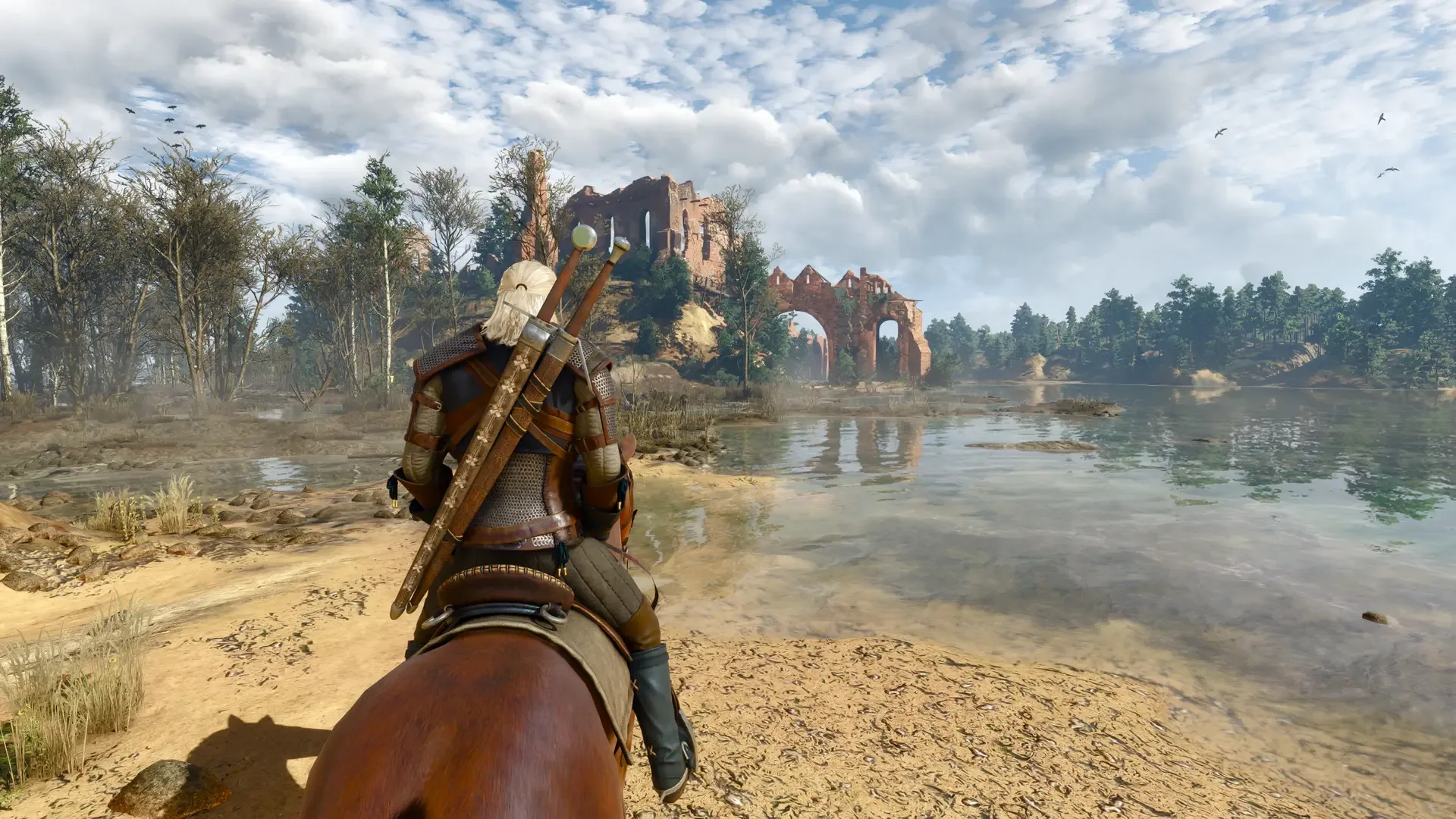
A war-torn continent that never waits for you#
The Witcher 3: Wild Hunt is the game where CD Projekt Red took a series known for tight, linear political thrillers and rebuilt it as one of the largest open worlds of its era, then proved the switch made the writing better rather than thinner. Released on 19 May 2015 for PlayStation 4, Xbox One and PC, later ported natively to Nintendo Switch in 2019, and rebuilt again for PlayStation 5, Xbox Series X|S and PC with a free next-generation update in December 2022, it is still the game every open-world RPG that wants to be taken seriously gets compared against. That is not because of its map size, which several later games have matched or beaten. It is because almost nothing else has matched the density and quality of what fills that map.
Geralt of Rivia, a monster-hunting Witcher mutated as a child to fight things ordinary steel cannot, is searching for Ciri, his adopted daughter, while a continent tears itself apart around him. The Northern Kingdoms are losing a war against the Nilfgaardian Empire, and the Wild Hunt, a spectral cavalcade of otherworldly riders led by the elven king Eredin, wants Ciri for reasons the story slowly reveals. That premise gives the game its spine. It almost never gives the game its best moments.
What makes The Witcher 3 different#
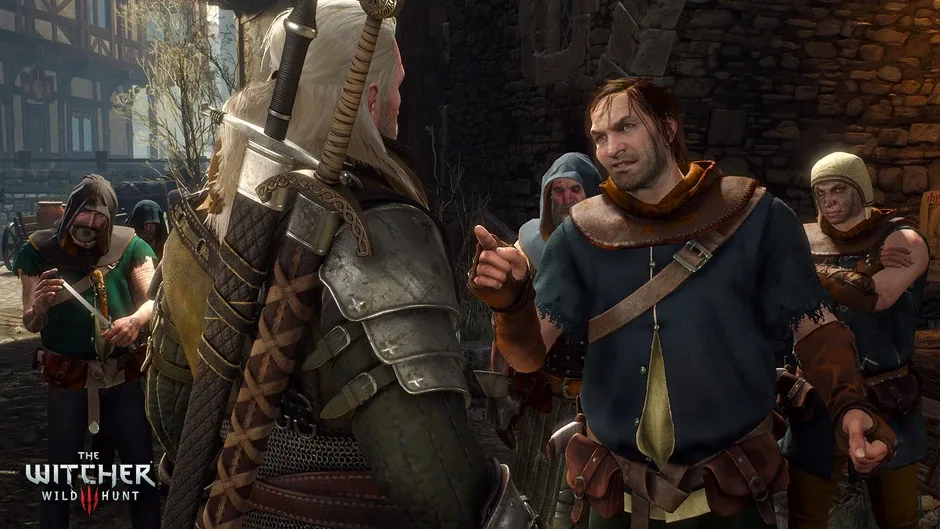
The one idea that carries the game is that a side quest can matter as much as the main plot, and often more. Most open-world RPGs treat side content as padding between story beats. The Witcher 3 treats a stranger's problem in a swamp as worthy of the same craft as its ending. The clearest example is the Bloody Baron questline in Velen: a warlord with a missing wife, a pregnant daughter who has fled, and a household falling apart under the weight of what he has done to hold it together. It starts as a simple "find my family" errand and ends as a study of addiction, violence and grief with no clean solution, tangled up with a monster called a Botchling and the swamp Crones who trade in curses. Nothing about it feels like filler. It is simply better written than most games' main stories, sitting a few hours into a side path most players find by accident.
That density repeats everywhere. A contract to hunt a griffin near White Orchard becomes a lesson in reading monster behaviour before the game asks it of you again. A quest about a haunted orchard turns into the story of a farmer, his dead wife and a tree spirit called the Whispering Hillock that remembers exactly how it died. The game rarely tells you which of its dozens of side quests are the good ones. It assumes, correctly, that most of them are.
Exploration: Velen, Novigrad and Skellige#
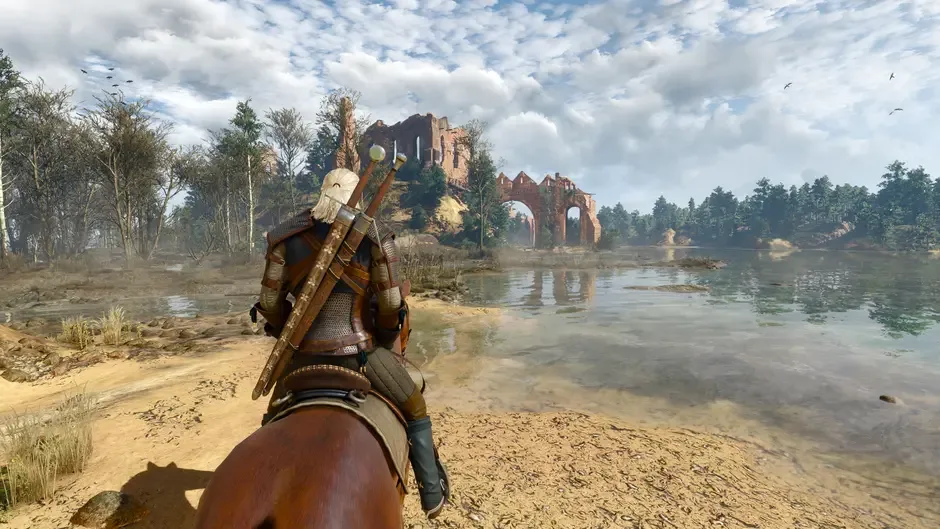
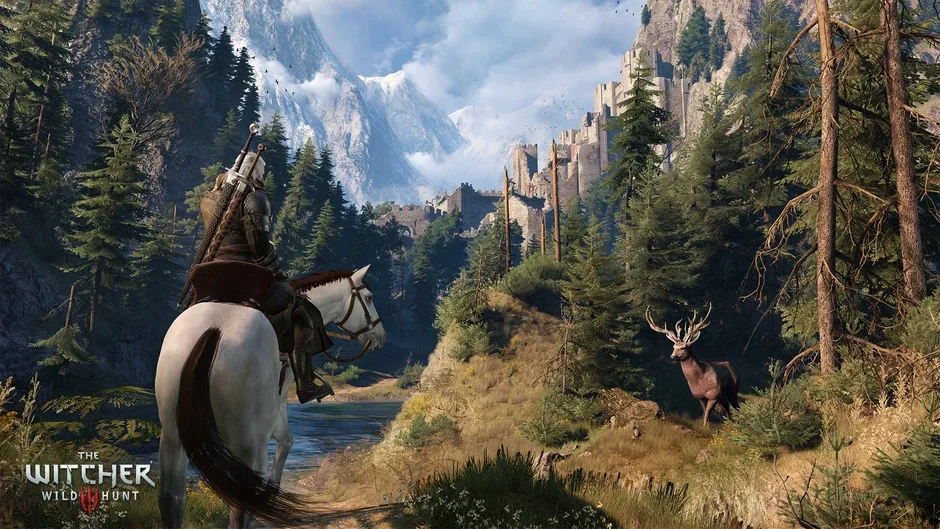
The Continent is split into three main regions with three different moods, and the game leans into the contrast rather than smoothing it out. Velen, also called No Man's Land, is grey, flooded and hopeless: burned villages, drowner-infested ponds and roadside gallows set the tone before a single scripted cutscene explains why. Novigrad, the free city, is Velen's opposite: dense, wealthy, corrupt and full of factions, from the witch-hunting zealots of the Church of the Eternal Fire to the criminal underworld Geralt has to work with rather than around. Skellige, the northern isles, trades density for scale, with longships, fjords and a slower, more spread-out rhythm built around sailing between islands rather than riding a straight road.
Roach, Geralt's horse, is serviceable rather than spectacular, closer to a means of covering ground than a character in his own right, and Skellige in particular can feel slow to cross without frequent use of the signposts that unlock fast travel. Sailing between the islands introduces its own rhythm, closer to weather-watching and current-reading than the road travel of Velen and Novigrad, and a storm rolling in while a boat is halfway to an island can turn a routine crossing into a small survival scramble. What makes the exploration work regardless of region is that almost every point of interest, a bandit camp, a ruined tower, a monster nest, has a small story attached to it rather than a loot chest and nothing else. A named place on the map is rarely just a fight. It is usually a fight with a reason behind it that a notice board, a corpse or an overheard conversation explains before you arrive.
Combat and signs: a system that needs its first few hours forgiven#
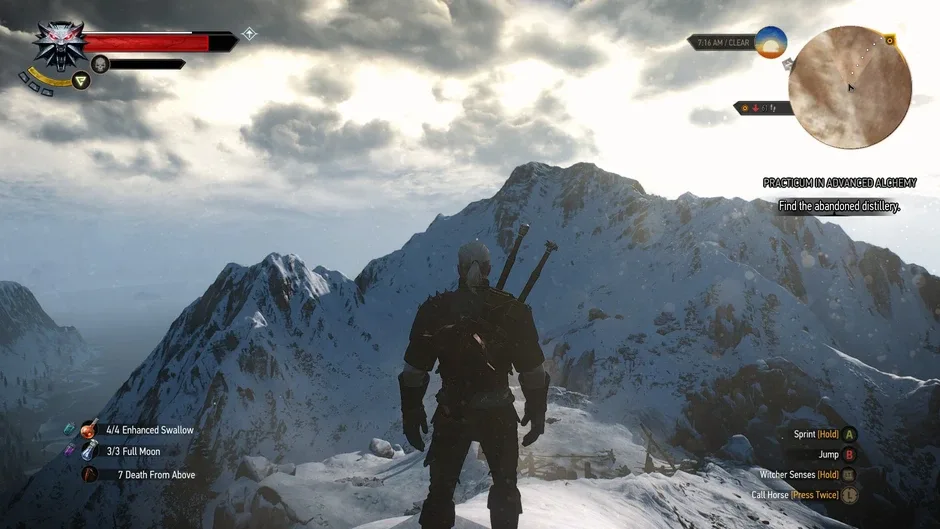
Base Witcher 3 combat, at launch and even after patches, asks for patience. Geralt fights with a light and heavy steel-sword attack, a silver sword for monsters, a dodge and roll, and five signs: Igni for fire, Aard for a telekinetic shove, Yrden for a slowing trap, Quen for a shield, and Axii for mind control. In the opening hours, before skill points open up meaningful upgrades, it can feel stiff and slightly floaty, and a string of early complaints about the combat were not wrong about that first impression.
It clicks once the pieces come together. A Yrden trap slows a pack of drowners so Igni can burn through them before they close the distance. Quen absorbs a hit that would otherwise interrupt a potion. Axii turns a dangerous bandit into a temporary ally against his own group for a few seconds, which is often enough. None of this is deep in the way a dedicated action game is deep, but it rewards reading an enemy and preparing for it rather than rolling on reflex, and the skill tree, split across Combat, Signs, Alchemy and General categories with mutagen slots for extra bonuses, lets a given build lean hard into one of those styles by the midgame.
Alchemy and preparation: the part most players skip and shouldn't#
Alchemy is the system the game trusts players to ignore and quietly punishes them for ignoring. Potions, oils and bombs are crafted from ingredients gathered while exploring, and each one has a real, specific use: Swallow potions heal over time, Thunderbolt boosts attack power, oils applied to a sword deal bonus damage to a category of enemy, and bombs like Northern Wind freeze a group in place. A Toxicity meter limits how many potions can be active at once, which turns drinking three before a boss fight into a real decision rather than a free button to press.
Ignoring alchemy entirely is possible on the easier difficulties and turns Witcher 3 into a passable action-RPG. Using it turns the same fights into something closer to a puzzle solved in advance: the right oil, the right potion, a Yrden trap laid before the enemy arrives, and a fight that would otherwise take five nervous minutes takes one calm one. It is the single biggest gap between a player who bounced off the combat and one who says the combat is great, and it explains most of that disagreement.
Monster contracts: hunts with a story attached#
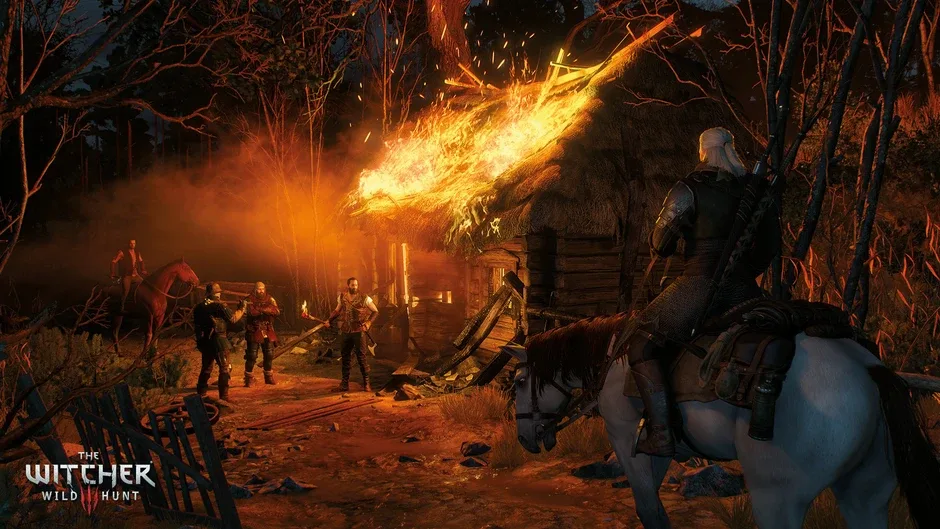
The Bestiary work is where the game's writing and its combat systems meet most cleanly. A contract almost never opens with a monster fight. It opens with a village, a notice board, and someone's account of what happened, and the fight is the last step of an investigation rather than the whole quest. The Whispering Hillock, a tree spirit questline in Velen, asks Geralt to piece together why an orchard is cursed before deciding whether the spirit deserves to be destroyed or heard out. The Ladies of the Wood, the Crones who rule over Velen's swamp, are treated with genuine folk-horror dread rather than as a simple boss fight, and the choices around them carry into the Bloody Baron's story. Even smaller contracts, a griffin outside White Orchard, an ekhidna in a cave, a fiend stalking a herd, teach a specific weakness and a specific counter rather than repeating the same fight with a different skin.
Difficulty: four settings that change more than damage numbers#
Witcher 3 offers four difficulty settings, from Just the Story, aimed at players who want the narrative with minimal friction, up to Death March, which removes several of the game's safety nets rather than simply inflating enemy health. On Death March, potions can only be brewed at a meditation campfire rather than anywhere, healing outside combat is removed, and enemies hit hard enough that ignoring signs and alchemy is no longer an option. The jump between Story and Sword, the default setting, and Death March is less about numbers and more about whether preparation is optional or mandatory, which is a more interesting difficulty curve than most open-world RPGs bother building.
New Game Plus, added in a 2016 update, lets a finished save carry skills and some items into a fresh run at a higher starting difficulty, which is the intended way to experience Death March for players who want the full mechanical depth without a brutal first playthrough.
Hearts of Stone and Blood and Wine: two of the best expansions ever made#
The two story expansions are not optional extras so much as a second and third act the base game never had room for. Hearts of Stone, released in October 2015, is the smaller of the two: a contract with the immortal, eerily polite Gaunter O'Dimm to help the bandit Olgierd von Everec leads into a story about broken promises and the cost of wishing for too much, with a standout wedding-crashing quest that plays with the game's own rules in ways the main campaign never risks.
Blood and Wine, released in May 2016, is bigger than most stand-alone RPGs. Set in Toussaint, a sunlit duchy of vineyards, tournaments and knightly ideals that looks nothing like Velen's grey misery, it gives Geralt his own vineyard, Corvo Bianco, to fix up between quests, and builds its main story around a string of vampire murders that force Geralt to reckon with a vampire named Dettlaff and the fragile peace he shares with the higher vampire Regis, a returning character from the earlier novels. It is widely considered one of the best expansions any studio has produced, not because it is large, though it is, but because it commits to a completely different tone and setting rather than reusing Velen's mud with a new coat of paint.
Story: a family Geralt refuses to give up on#
Underneath the war and the Wild Hunt, the main plot is a story about found family. Geralt's search for Ciri runs through Yennefer, the sorceress he loves and argues with in equal measure, Vesemir, the old Witcher who raised him, and a scattered cast of former companions each with their own agenda about what Ciri should become. The choices that matter most are rarely obvious morality checks. Deciding how to advise Ciri near the end, whether to push her toward becoming a Witcher-like fighter or trust her judgement, quietly determines which of several distinct endings the game gives her, and the game never flags which choices are the important ones as you make them.
The honest weak point is Eredin and the Wild Hunt itself. As villains, they are mostly a looming threat and a handful of confrontations rather than a fully developed antagonist on the level of the Bloody Baron or Dettlaff, and the main quest line, taken on its own, is thinner than almost any major side story around it. Kaer Morhen, the ruined keep where Geralt trained and where the game's largest set-piece battle against the Wild Hunt takes place, is the closest the main story gets to matching its own side content, mostly because it finally puts a face on an enemy who spends most of the game as a distant threat rather than a character. That is the trade the whole game makes, and it is a trade most players end up agreeing with once they have played the side content it favours instead.
New to The Witcher? Start here#
The Witcher 3 is designed to work without having played the previous two games or read the novels, though a short in-game "previously on" recap and a glossary cover the basics. A few choices make the opening hours considerably kinder. Play the prologue in White Orchard fully before moving to Velen, since it teaches signs, alchemy and the Bestiary at a controlled pace. Put early skill points into Fast Attack and a sign of choice rather than spreading them thin. Craft a few basic potions and oils before the first proper monster contract rather than after losing to one. And do not feel obliged to follow every yellow marker in order; the side quests the game hides behind notice boards and overheard conversations are, more often than not, the best material in the game.
Compared with Kingdom Come: Deliverance II and Baldur's Gate 3#
Kingdom Come: Deliverance II is the closer comparison for tone. Both games build a world where politics, class and religion shape almost every conversation, and both trust patient, unhurried side quests over constant action. Deliverance II strips out magic and monsters entirely in favour of a demanding, realistic sword-fighting system and a 15th-century Bohemia with no signs or potions to lean on, which makes it colder and more punishing than The Witcher 3 but similarly committed to letting ordinary people's problems carry real weight.
Baldur's Gate 3 is the better comparison for choice and consequence. Larian Studios' turn-based RPG, released in August 2023 for PC, PlayStation 5 and Xbox Series X|S, tracks companion approval and branching dialogue with a granularity The Witcher 3 does not attempt, and its combat is a fully tactical, D&D-based turn-based system rather than real-time swordplay. Its party of custom or origin characters, Astarion, Shadowheart and the rest, also gives it a breadth of romance and companion reactivity that a single fixed protagonist cannot match one for one. What The Witcher 3 does better is that same fixed, fully voiced protagonist whose personality is already written; Geralt's dry, weary voice gives every choice a consistent character behind it that a fully customisable party of the player's own making cannot offer in quite the same way, and his relationships with Yennefer, Triss and Ciri carry years of established history a blank-slate hero cannot start with.
Worth the money?#
The Complete Edition, which bundles the base game with both expansions, is regularly discounted to well under 20 euros and rarely sells above 30 at full price years after launch. For that, a story-focused run to the credits takes around 50 hours, a full playthrough with side content closer to 100, and both expansions together add roughly 30 to 40 more. Almost no other single-player RPG offers this much content per euro at this point in its life.
Best platform: PC and current-generation consoles benefit most from the free next-gen update, which adds ray tracing, a 60 fps performance mode on PlayStation 5 and Xbox Series X, DualSense haptic feedback on PS5, uncapped field of view and ultra-widescreen support. The Nintendo Switch version, ported natively rather than through cloud streaming, runs at a noticeably lower resolution and frame rate but remains a genuinely playable way to take the whole game on the go. Older PlayStation 4 and Xbox One hardware still runs the pre-next-gen version acceptably, if with none of the newer visual options.
Play this instead if…#
Shorter: The Witcher 2: Assassins of Kings, the prequel that introduces several characters who return in The Witcher 3, runs around 15 to 20 hours for one of its two branching paths and tells a tighter, chapter-based political story without an open world.
Easier: Horizon Zero Dawn trades signs and alchemy for a bow-and-gadget hunting loop against mechanical beasts, keeping the exploration and monster-hunting feel while asking far less precise preparation before a fight.
Cheaper: Vampyr, DONTNOD's smaller vampire-hunter RPG set in early 20th-century London, borrows a similar moral-choice structure around who to spare and who to feed on, at a fraction of the price and length.
Frequently asked questions#
How long is The Witcher 3? Around 50 hours for the main story alone, close to 100 for a full playthrough with side quests, and roughly 30 to 40 more across both expansions.
Do you need to play the earlier Witcher games first? No. The game recaps the essential backstory, though returning characters like Letho and Regis land with more weight for players who have played The Witcher 2 or read the novels.
Is there romance? Yes, most notably with Yennefer and Triss Merigold, with choices throughout the game affecting which relationship, if any, the story acknowledges by the end.
Does difficulty change more than damage taken? Yes. The higher settings, especially Death March, restrict potion brewing to campfires and remove passive healing, making alchemy and signs closer to mandatory rather than optional.
Is the next-gen update free? Yes, for anyone who already owns the game on PC, PlayStation or Xbox; it was released in December 2022 alongside the current-generation console versions.
The Game Avant verdict#
The Witcher 3: Wild Hunt is not the most mechanically deep RPG on the market, and its central villain is thinner than almost every side story surrounding him. Neither of those flaws matters much once the Bloody Baron's questline, the Crones of the swamp, or a single conversation in Corvo Bianco's cellar has made its case. Nine years after launch, a free next-gen update later, this is still the open-world RPG other studios measure their side quests against, because it is one of the few games where wandering off the main road is consistently the better decision.
9 out of 10 – the RPG that proved a side quest can be better written than most games' main stories, and mostly still is.