
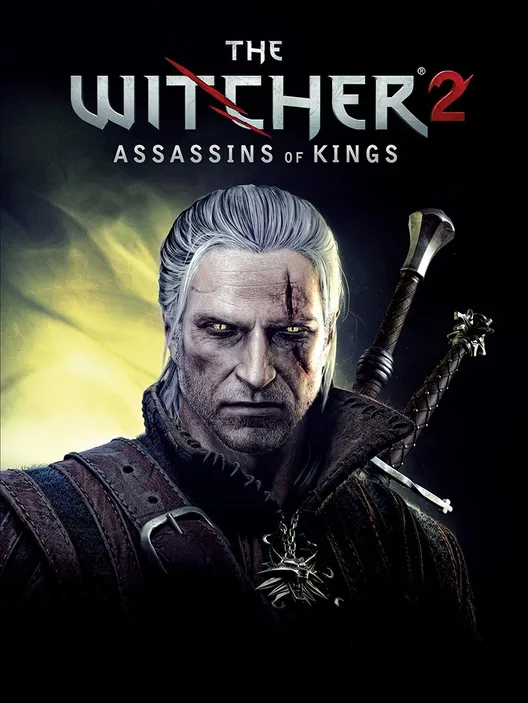
The Witcher 2: Assassins of Kings
RPG · Nudity · Choices Matter · Fantasy · Open World
Game page →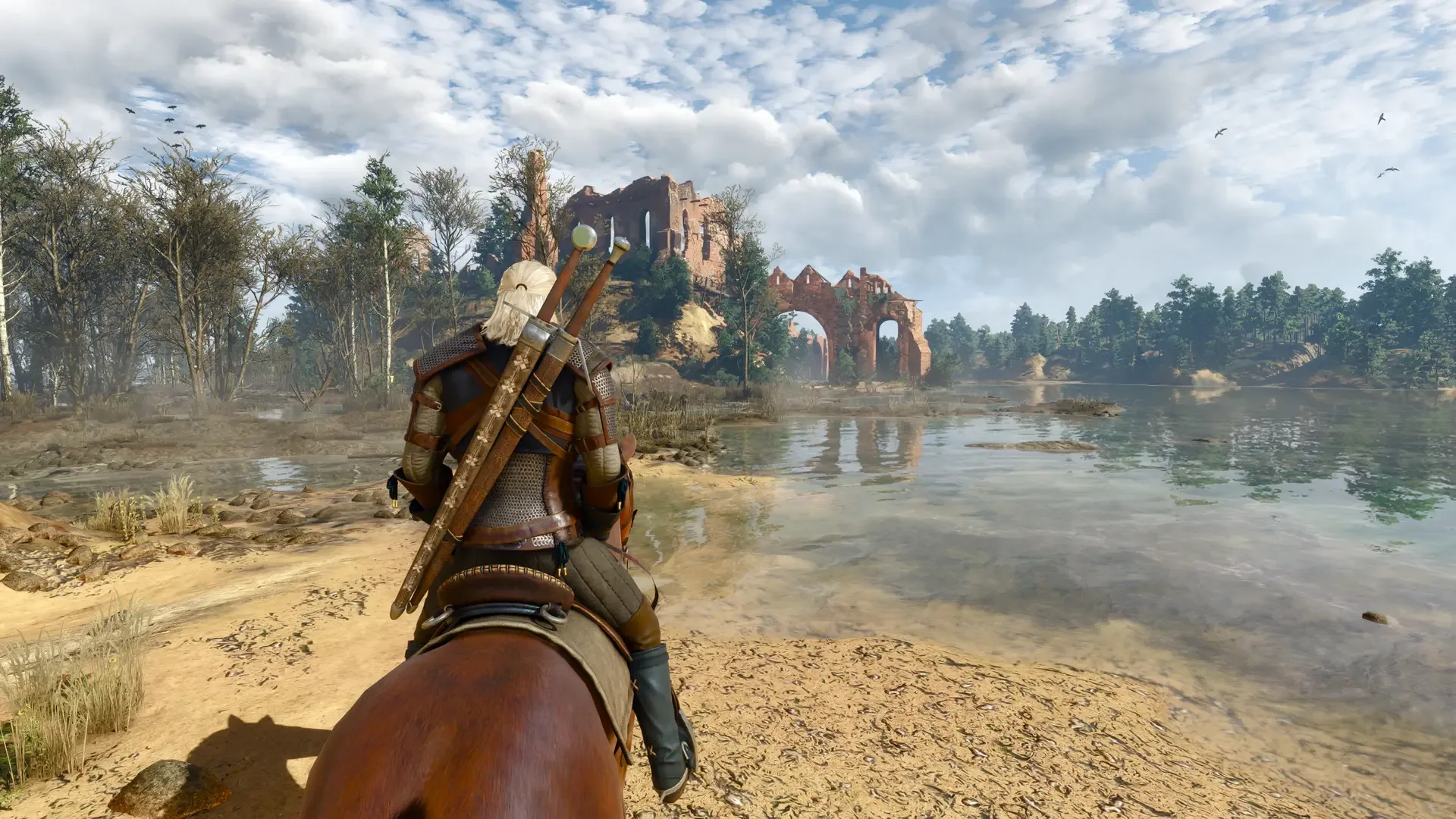
Review
Geralt of Rivia searches for his adopted daughter Ciri across a war-torn open world. The game is known for side quests that rival the main story, morally grey choices and two large expansions, Hearts of Stone and Blood and Wine. Combat mixes swordplay, magic signs and potions. Is it your kind of game?
Game Avant verdict
A sprawling, morally grey world where the side quests routinely outwrite the main story, backed by signs-and-alchemy combat that finally clicks once you stop ignoring it.
By GameAvant · Published Sep 26, 2026 · Updated Oct 9, 2026 · 14 min read
Choose what matters to you
Every question is optional.
How do you like to find your way?
How much story and dialogue do you want?
How do you want to play?
Based on your choices
Pick what matters to you above and the result shows up here.
IGDB
93%
5,493 ratings
Steam:
96%
824,260 reviews
Fits you if
you want a mature story, memorable quests and a world full of detail.
Skip it if
you want tight, polished combat above everything else.
Availability
Steam
$24.99
The Witcher 3: Wild Hunt is the game where CD Projekt Red took a series previously known for tight, linear political thrillers and rebuilt it almost entirely as one of the largest open worlds of its era, then proved conclusively that the switch to scale made the writing sharper rather than thinner the way open-world expansion usually does to narrative focus. Released on 19 May 2015 for PlayStation 4, Xbox One and PC, later ported natively to Nintendo Switch in 2019, and rebuilt again for PlayStation 5, Xbox Series X|S and PC with a free next-generation update in December 2022, it remains the game every open-world RPG aiming to be taken seriously still gets measured against, more than a decade after its original release. That is notably not because of raw map size, which several later games have since matched or outright exceeded. It is because almost nothing else released since has matched the sheer density and consistent quality of what actually fills that map. Geralt of Rivia, a monster-hunting Witcher mutated as a child specifically to fight threats that ordinary steel cannot touch, spends the game searching for Ciri, his adopted daughter, while an entire continent tears itself apart around that personal search. The Northern Kingdoms are actively losing a brutal war against the invading Nilfgaardian Empire, and the Wild Hunt itself, a spectral cavalcade of otherworldly riders led by the elven king Eredin, wants Ciri for reasons the main story only reveals gradually across dozens of hours. That central premise gives the overall campaign its narrative spine and forward momentum, but it is, notably, almost never where the game's genuinely best individual moments actually come from. That distinction matters enormously to understanding why this specific RPG has endured as a benchmark for a full decade. The side quests scattered across the Northern Kingdoms routinely outwrite the main story in terms of pure narrative craft, taking small, seemingly disposable premises, a missing cat, a haunted house, a local dispute between neighbors, and developing them into genuinely morally complicated stories with no clean, obviously correct resolution. Geralt's own profession as a monster hunter paid for contract work gives the writers a built-in structural excuse to drop him into dozens of small, self-contained moral puzzles across the map, and the game trusts players to sit with genuinely uncomfortable outcomes rather than engineering a satisfying resolution for every single one. Combat, built around a combination of sword-based swordplay, elemental Signs magic, and alchemical potions and oils, takes real time to click into place, and players who treat it as a simple hack-and-slash system in the opening hours will likely bounce off its deliberate pacing before the deeper layering of preparation and matchup-specific tactics becomes apparent. Once that system clicks, it rewards the same kind of careful preparation the side quests reward narratively: knowing what you are about to fight changes the encounter as much as raw mechanical skill does. Across dozens of hours and a genuinely massive amount of content, the game rarely coasts on scale alone, and that consistency, sustained across a morally grey world that never quite waits for the player to catch up, is exactly why it remains the standard the genre still measures itself against.
You may love it because
Contracts and side quests like the Bloody Baron are written with more nuance than Ciri's main hunt, so wandering off the path is usually the better choice.
It may frustrate you because
Following every side thread can bury the main story for so long that Eredin and the Wild Hunt stop feeling like a real threat by the time you return to them.
You may love it because
Brewing the right potion, applying an oil for the enemy type and setting a Yrden trap before a fight turns a hard monster into a solvable puzzle.
It may frustrate you because
Walking into a Death March fight without any preparation at all can turn a five-minute encounter into a repeated, frustrating death.
You may love it because
Geralt's established voice, morals and dry humour make every choice feel like it belongs to a real character rather than the player's invention.
It may frustrate you because
Anyone who wants to build their own hero from scratch, rather than roleplay an existing one, has far less room to do that than in a fully custom-build RPG.
14 min read
· By Game Avant
Three alternatives, one line each on why.
RPG · Nudity · Choices Matter · Fantasy · Open World
Game page →
RPG · Nudity · Choices Matter · Fantasy · Open World
Game page →
Open World · RPG · Medieval · Fantasy · Role-playing (RPG)
Game page →
Open World · RPG · Medieval · Fantasy · Role-playing (RPG)
Game page →
RPG · Open World · Fantasy · Choices Matter · Action RPG
Game page →
RPG · Choices Matter · Open World · Fantasy · Magic
Game page →