
A debut with more ideas than polish#
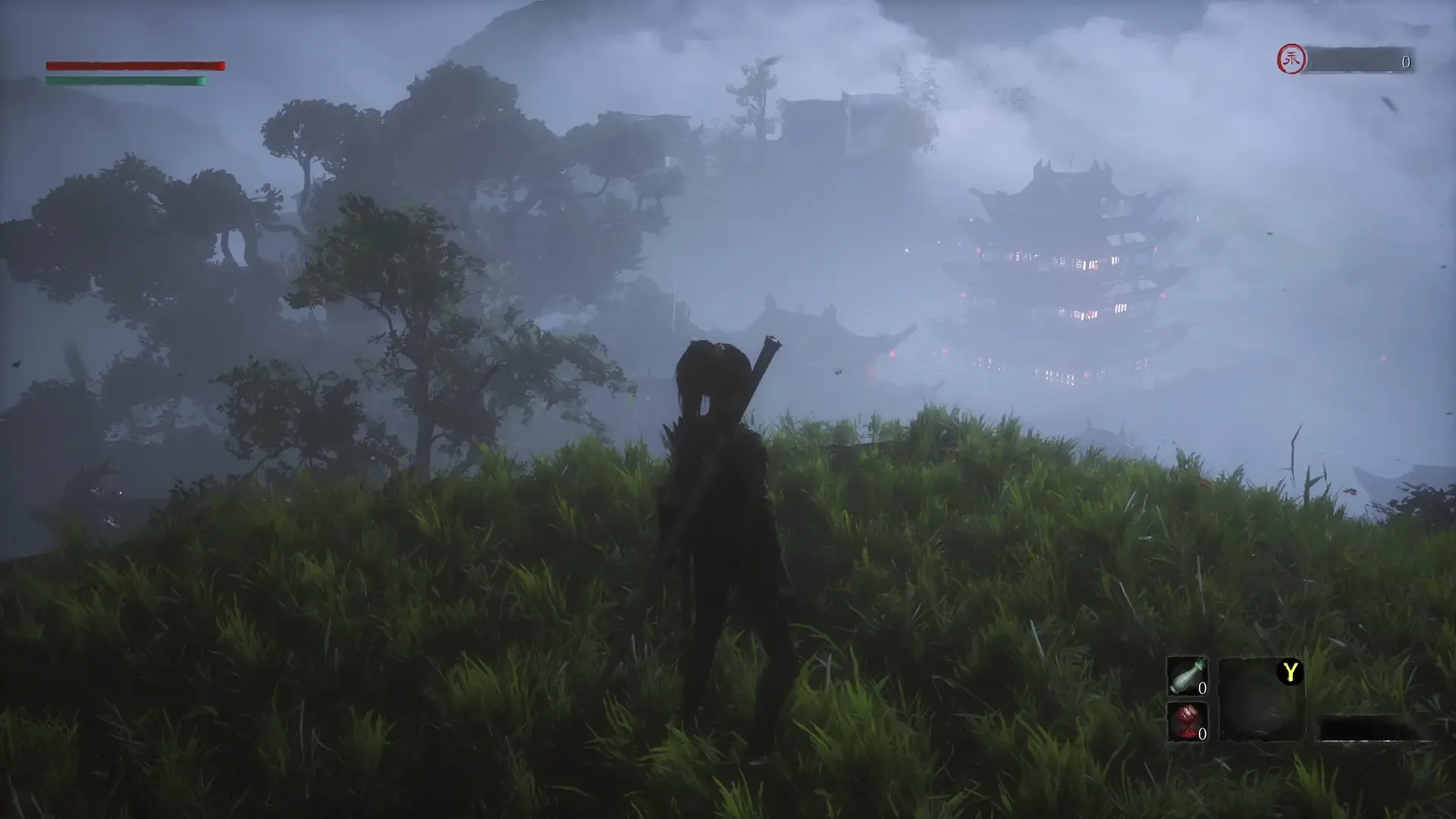
Wuchang: Fallen Feathers is the first game from Leenzee, and it plays like a studio that spent its entire budget on ambition and had little left over for quality assurance. Published by 505 Games and released on 24 July 2025 for PlayStation 5, Xbox Series X|S and PC, it throws a cursed pirate into a version of Ming-dynasty China falling apart from plague, war and something stranger, and builds a combat system around punishing hesitation rather than rewarding patience. The setting and the core fighting are genuinely distinctive. The camera, the balance and the launch performance are not, and the gap between those two halves is the whole story of this review. It is the kind of debut that makes a case for the studio's next project almost as loudly as it makes a case for itself.
What makes Wuchang: Fallen Feathers different#
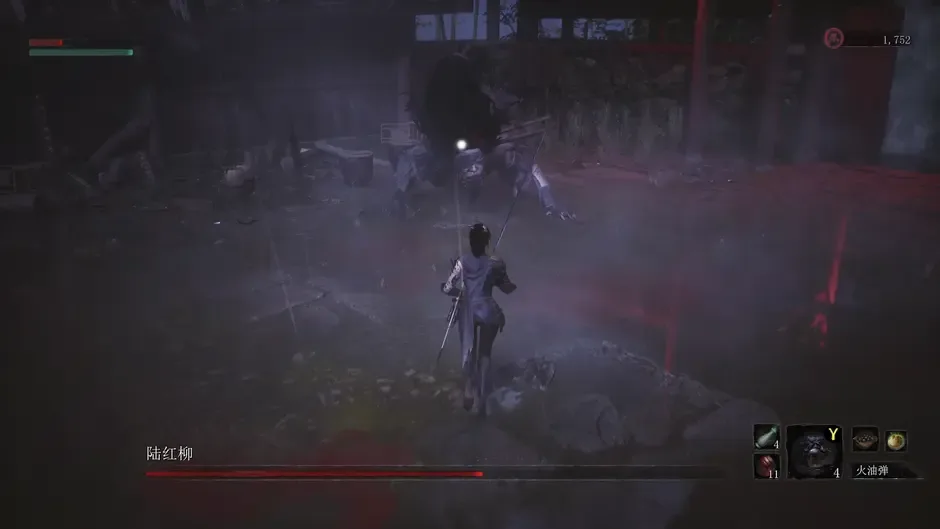
The one idea the entire combat system is built around is that dodging should be an attack, not just an escape. Every weapon builds a resource called Skyborn Might, up to five stacks, and the fastest way to fill it is a "shimmer": a precisely timed dodge through an incoming attack that not only avoids all damage but immediately refunds Might for the counter. Where a typical Soulslike teaches you to roll away and punish an opening afterward, Wuchang: Fallen Feathers wants the dodge itself to be the punish. Spend the Might you build on an active skill mid-combo, and a sword swing chains into a burst of magic or a follow-up strike that most enemies cannot interrupt.
That single mechanic reshapes how every fight plays. Standing at a distance and whittling down a boss's health bar is possible but slow and unsatisfying, because Skyborn Might drains if you sit outside the danger zone. The game wants you inside an enemy's swing radius, reading the attack, shimmering through it, and immediately spending the resource that dodge just handed you. Against a well-designed opponent, this produces some of the most aggressive, satisfying exchanges the genre has offered in years. Against a poorly tuned one, particularly a few of the game's flying and multi-limbed bosses, it produces frustration, because a camera that cannot keep a fast or airborne target in frame makes it nearly impossible to time a shimmer against attacks you cannot actually see coming.
Shu: a world built from real history and stranger myth#
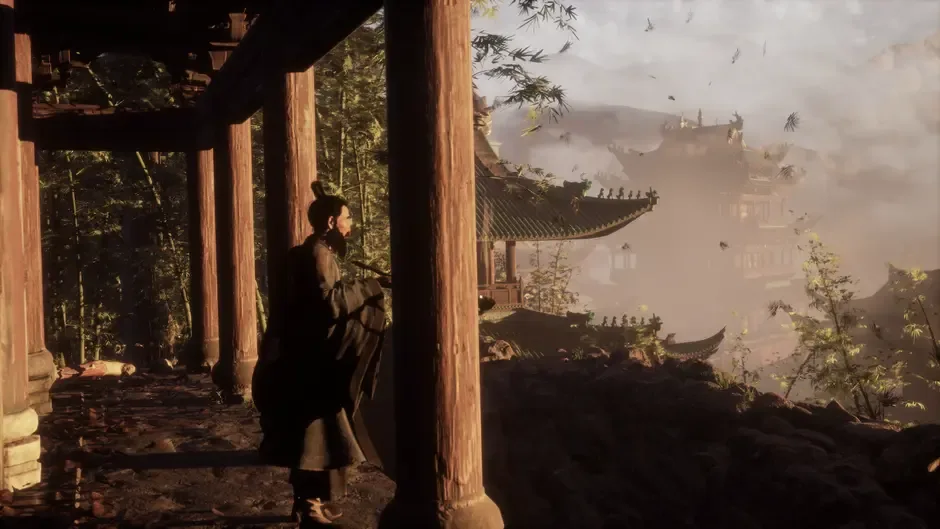
The region of Shu, where the game is set, does the most convincing work of any Soulslike world outside FromSoftware's own catalogue in the last several years. It draws its late-Ming architecture, its warring factions and its famine-and-rebellion backdrop from an actual, well-documented period of Chinese history, then layers a supernatural plague called the Feathering on top of it: an affliction that erodes memory, induces madness and eventually transforms its victims into monstrous, half-bird creatures. The half-bird imagery is not decoration. Leenzee has said the design draws directly on the bronze relics excavated at the real Sanxingdui archaeological site, whose mysterious human-bird hybrid figures give the Feathering's monster designs a texture nothing in the genre's usual European-fantasy playbook resembles.
The hub area, Shu Sanctum, radiates outward into four connected regions, and the opening stretch alone threads together more than a dozen named locations: the Reverent Temple, Buddha Cliffs, Worship's Rise, Lightzen Temple, the Mercury Workshop, Doomwillow Beach, the Lu Mansion, the Corpse Pits and Palace Pass among them, each reachable by more than one route. It is a semi-open structure rather than a fully open world; you are given several paths to the same destination and rewarded for wandering off the obvious one, rather than dropped into a map with no direction at all. Bandit camps, hidden shrines and a handful of the game's 24 bosses sit off the main path entirely, and missing a side route can mean missing a boss, a piece of gear or, in a few cases, an entire alternate ending tied to an NPC questline you never triggered.
Bai Wuchang: a story told through a body falling apart#
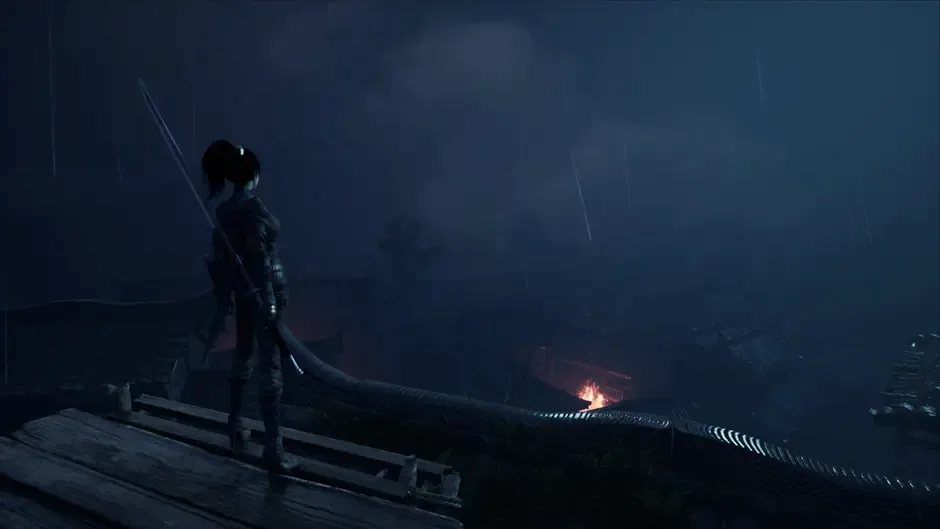
The protagonist, Bai Wuchang, is a pirate warrior who returns to her homeland of Shu searching for an ancient artifact that can resurrect her younger sister, Bai Yu. Early in the story, a rampaging feathered monstrosity at Worship's Rise afflicts her with the Feathering herself, and she loses her memory in the process, which turns the entire game into a search for what happened to her as much as a search for the artifact. It is a smaller, more personal framing than the sprawling cosmic mythology most Soulslikes reach for, and it mostly works, because the game is willing to let Bai Wuchang's own body betray her: the Madness system, discussed below, visibly disfigures her the longer a fight or a run goes on, so her physical state becomes a running commentary on how close she is to becoming exactly the kind of creature she is hunting.
The dialogue does the rest of the heavy lifting, and it leans hard into a genre habit that lands better here than most: bosses who talk. Several of the named story bosses, Xuanyangzi and Zhu Youjian among them, recite verse before and during their fights, poetry that grows more fractured and deranged as the encounter escalates, mirroring the character's own descent into the Feathering. It is a small touch that does more to sell the horror of the disease than any cutscene in the game manages.
Madness and Red Mercury: a currency you can lose twice#
Underneath the Feathering's story sits a genuinely clever risk-reward system called Madness, which rises passively as you kill non-Feathered humanoid enemies or die in combat, and can also be pushed up deliberately with consumable items. At 50%, Bai Wuchang's eyes turn red. At 90%, demonic markings crawl visibly up her arms and the interface itself starts to distort. Above 90%, the payoff arrives: damage dealt and the Red Mercury you earn from kills both increase, at the cost of taking more damage yourself. It is a genre-standard souls-and-currency loop with a genuinely new twist, because the currency itself, Red Mercury, is punished on a sliding scale rather than an all-or-nothing wipe.
Die under 50% Madness and you drop only a small amount of Red Mercury where you fell. Die between 50% and 90% and you lose a chunk large enough to set back a full grinding session. Die above 90% and the ground keeps everything, full stop. Die at exactly 100% and the game spawns your Inner Demon, a hostile copy of your own character wielding your own build, standing between you and every point of Mercury you have lost. The way back down is to hunt enemies who are already visibly Feathered, marked by feathers growing from their bodies, which lowers Madness with every kill. The system rewards exactly the aggression the combat wants from you and punishes exactly the recklessness that aggression can tip into, and it is one of the most interesting spins on the Souls currency formula this genre has produced in years.
Bosses and difficulty: comfortably hard, unevenly designed#
Wuchang: Fallen Feathers spreads 24 boss fights across its four regions, nine tied to the main story and fifteen entirely optional, several of them missable if a questline is not triggered in time. The difficulty sits in a comfortable, well-worn Soulslike band: most fights fall inside a handful of attempts once the pattern clicks, and the shimmer-into-Skyborn-Might loop gives skilled players a genuine tool for turning a losing fight around rather than simply grinding levels until the numbers work.
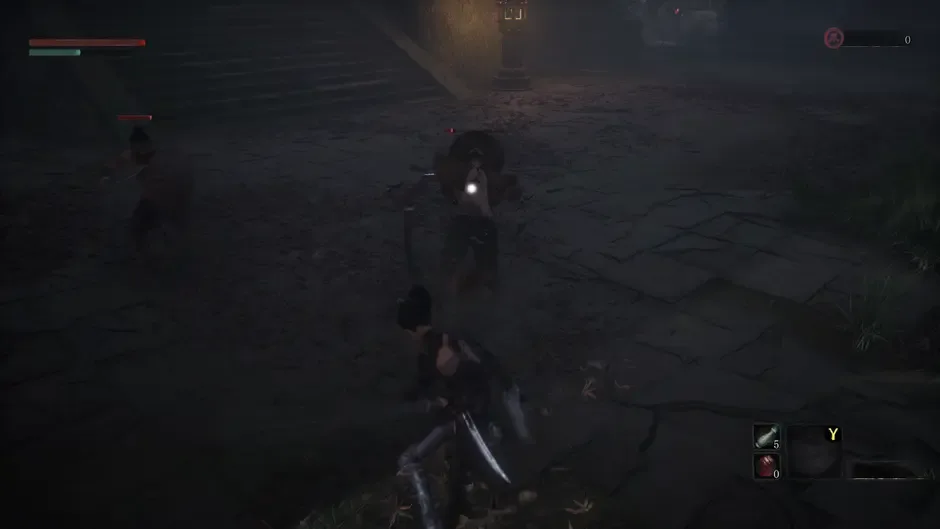
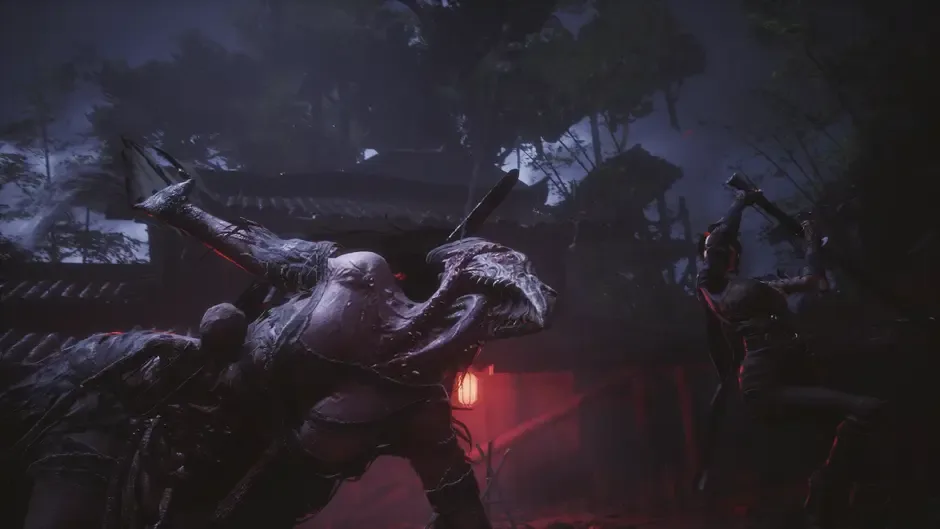
The roster's quality is not consistent. The best fights, humanoid swordsmen like Xuanyangzi, live or die on readable timing and reward exactly the aggressive playstyle the combat is built for. The weaker fights lean on scale, multiple limbs or airborne movement, and that is precisely where the lock-on camera falls apart: it struggles to keep fast or flying targets framed, and in a handful of the game's tighter arenas it will swing wildly when Bai Wuchang gets backed into a corner, turning a fair fight into a guessing game about where the next hit is coming from. None of this makes the boss roster bad. It makes it inconsistent in a way that a studio's first game, tackling this much scope at once, was always at risk of being.
Weapon choice and the magic imbalance problem#
Bai Wuchang can equip two weapons at once and switch between them mid-fight, and the game leans on that far more than most Soulslikes do: a combo that starts with a fast dual-blade opener and finishes with a heavy two-handed follow-up deals a bonus that neither weapon earns on its own, and the game's Impetus Repository lets you reset your skill points at will, so committing to a weapon type is never a permanent decision the way it can be in some of this game's peers. In practice that means the early hours reward experimentation: pick up whatever drops, try it against a mid-tier enemy, and either keep it in the rotation or shelve it without losing any real progress.
The one place this openness backfires is magic. Active skills built around Skyborn Might, especially ranged spells, land with an impact that most melee combos need several successful shimmers to match, which means a caster build can front-load its damage in a way a pure swordsman cannot. It is not broken in the sense that any single build trivialises the whole game, but a handful of fights are noticeably easier with the right spell equipped than they are with a blade alone, and a more careful balance pass would go a long way toward making every weapon feel like an equally valid choice rather than a stylistic one.
Performance: the part 505 Games and Leenzee are still fixing#
The version that shipped on 24 July 2025 had real, well-documented technical problems, concentrated on PC. Built on Unreal Engine 5, the game leaned hard on shader compilation, and players on a wide range of hardware, including cards well above the minimum spec, saw stutter, frame drops and long shader-compile pauses during ordinary traversal and, worse, during boss fights. Leenzee shipped a patch within a day of launch addressing several of these issues, including a manual toggle for a low-latency mode that had shipped enabled by default, VRAM optimisation for lower-end GPUs, and a fix for stutter specifically tied to finisher animations. The developer publicly acknowledged the problems, stating they "should never have occurred," and follow-up patches have continued to narrow the gap since. Anyone buying now is buying a meaningfully more stable game than the one that launched, but PC players sensitive to frame pacing should still expect occasional hitching, particularly the first time a new area's shaders compile.
New to the genre? Start here#
Anyone who has never touched a Soulslike gets a slightly gentler introduction here than in FromSoftware's own games, precisely because of Skyborn Might. The system gives a visible, immediate reward for learning an attack pattern rather than just punishing a mistake, which makes the learning curve more concrete: a successful shimmer feels good right away, even before the whole combat system clicks. The best opening move is to spend real time in the Shu Sanctum hub before rushing forward, pick up at least two different weapon types early, and test both against ordinary enemies before committing to a style, since the Impetus Repository's free respecs make that risk-free. It is also worth building the habit early of burning off Madness by actively hunting already-Feathered enemies after a hard fight, rather than discovering the Red Mercury penalty scale the hard way, after a frustrating death.
Compared with Nioh 2 and Black Myth: Wukong#
Nioh 2 is the closest structural relative here, and the comparison is not flattering to either game equally. Team Ninja's Yokai-hunting samurai epic also pairs weapon-switching combat with a risk-reward corruption meter, and after several years of patches and two expansions, its version of that formula is simply more refined: better camera, better balance across its stances and weapon types, and a mission structure that never asks the lock-on to track something as unpredictable as a flying, screen-filling boss in a tight corridor. Wuchang: Fallen Feathers has the more distinctive setting of the two, drawing on real Ming history rather than Nioh 2's slightly more generic sengoku-era yokai theming, but it has not yet earned Nioh 2's mechanical polish, and it may take a similar string of patches to get there.
Black Myth: Wukong is the more useful comparison for tone and ambition rather than mechanics. Both games are debut-adjacent, big-budget swings at Chinese mythology from studios eager to prove a national game industry can build AAA-scale action RPGs, and both lean on spectacle, striking monster design and a story told as much through implication as dialogue. Where Black Myth: Wukong is a more linear, cinematic action game with a much larger budget behind its presentation, Wuchang: Fallen Feathers is the rougher, more experimental Soulslike of the two, willing to hand the player a genuinely novel combat resource and a semi-open world in exchange for a shakier technical foundation. If Black Myth: Wukong is the confident showcase, this is the ambitious first draft.
Worth the money?#
At $49.99 for the standard edition and $59.99 for the Deluxe Edition, Wuchang: Fallen Feathers sits at a normal mid-tier price rather than full blockbuster pricing, and it was available day one on Xbox Game Pass, which remains the lowest-risk way to try it if you already subscribe. For that money, a focused run to the credits takes roughly 25 to 35 hours, a normal playthrough that explores side areas and optional bosses runs closer to 40 to 60, and chasing full completion, every boss and every ending, stretches toward 70 to 80 hours. That is a genuinely large amount of content for the price, on par with or ahead of most full-priced Soulslikes.
Best platform right now is PlayStation 5 or Xbox Series X, where performance has been the more consistent of the three since the day-one patches; Xbox Series S players should expect the softest visual settings of the three console versions. PC offers the best possible visuals for players with strong hardware but is also where the shader-related stutter has been most persistently reported, so anyone building a new PC around this game specifically should wait for at least one more patch cycle before buying at full price. Text and voice are available in English on every platform, with subtitle support across a range of languages including German.
Play this instead if …#
Shorter: Sekiro: Shadows Die Twice trades weapon variety and builds for a single sword and the tightest, most focused parry system FromSoftware has ever shipped, in roughly 30 hours.
Easier: Lords of the Fallen's 2023 reboot offers a more forgiving difficulty curve, denser checkpoints and a two-world structure that softens the punishment of a bad run.
Cheaper or co-op: Wo Long: Fallen Dynasty, Team Ninja's own take on a plague-ravaged, mythologised Chinese setting, is frequently discounted well below full price and supports a full co-op mode for players who want the same historical-fantasy flavour with a friend.
Frequently asked questions#
How long is Wuchang: Fallen Feathers? Around 25 to 35 hours for a direct route to the credits, 40 to 60 for a normal playthrough with side content, and 70 to 80 for full completion of all 24 bosses and every ending.
Is Wuchang: Fallen Feathers open world? No. Shu is a semi-open, interconnected structure with multiple routes between named areas, closer to a dense Soulslike map than a fully open world.
Does it have co-op? The core campaign is a single-player experience; there is no built-in co-op mode for the main story.
Is there an easy mode? No difficulty slider, but weapon switching, the Skyborn Might system and levelling give players several ways to adjust how a fight feels.
Is the PC version stable now? Better than at launch. Multiple patches since 24 July 2025 have addressed the worst stutter and VRAM issues, but occasional hitching, especially on first load of a new area, has still been reported.
Do you need to know Chinese history or mythology going in? No. The Feathering, Bai Wuchang's story and the Sanxingdui-inspired monster designs are explained within the game itself, though familiarity with the late-Ming period adds texture to the setting.
Can you respec your build? Yes. The Impetus Repository lets you reset skill points at will, so switching between melee weapons, dual-wielding and magic never costs you a wasted playthrough.
The Game Avant verdict#
Wuchang: Fallen Feathers is the rare debut that gets the hardest part right and stumbles on the parts every other Soulslike has already solved. Skyborn Might genuinely reinvents what a dodge is for, the Madness and Red Mercury loop is one of the smarter takes on souls-currency risk in years, and Shu is a setting built from real history and stranger myth that no other game in the genre currently offers. None of that excuses a camera that cannot track its own boss roster, a launch that needed a day-one patch to be playable on a meaningful chunk of PC hardware, or a Skyborn Might economy that clearly favours some weapons over others. Leenzee has built something worth finishing despite its flaws, and worth watching closely for whatever it makes next, especially if it carries this world and this combat system into a sequel with a full patch cycle already behind it rather than ahead.
7 out of 10 – a genuinely inventive Soulslike debut that a shaky camera and a rough launch keep from matching its own best ideas.