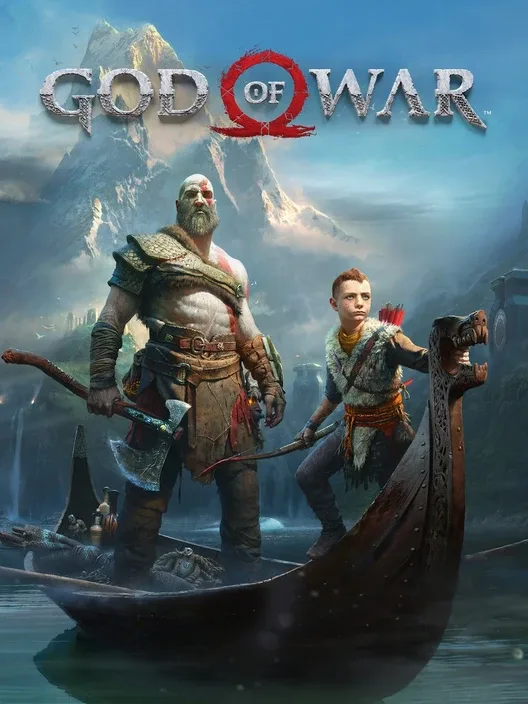
 God of War
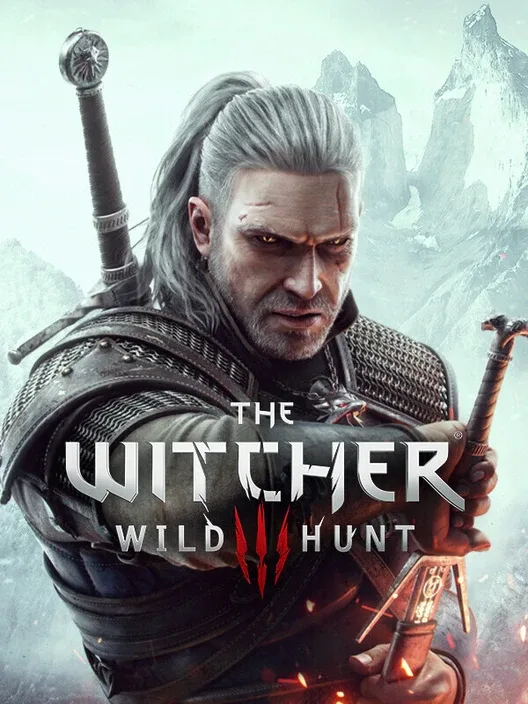 The Witcher 3: Wild Hunt
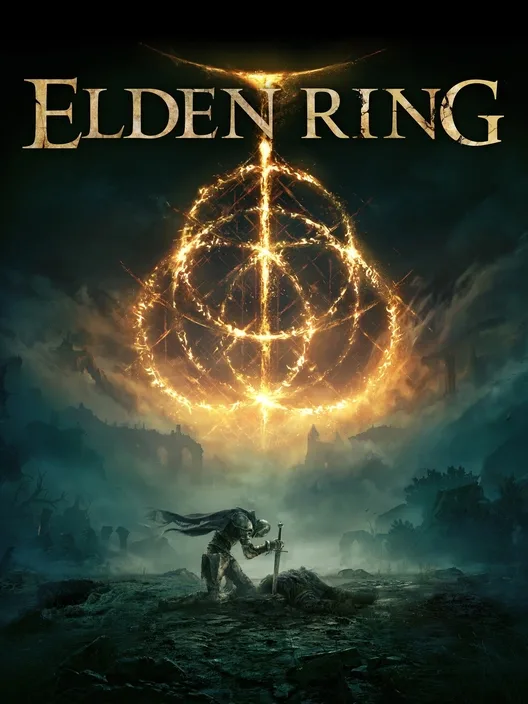 Elden Ring
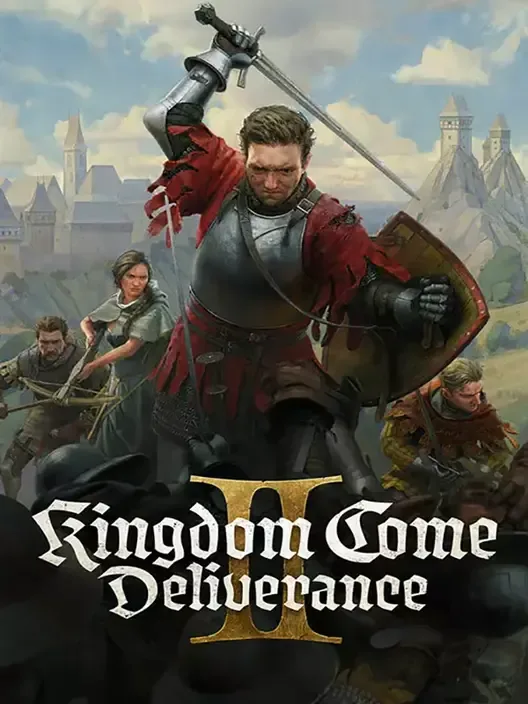 Kingdom Come: Deliverance II
 Black Myth: Wukong
 Star Wars: Knights of the Old Republic
This is Game Avant's own ranked list of the best open-world RPGs right now, built from the site's combined critic-and-player rating data rather than picked by hand. "Open-world RPG" on this page means games where a large, continuous, explorable map is itself a core design pillar, not just a backdrop: a world that rewards wandering off the main path, that reacts to where and how a character travels through it, and that ties exploration directly into character progression rather than gating it behind linear levels. That's what separates this list from the RPG category's own broader ranking and from the action and crpg subgenre pages, where combat systems or dialogue-driven storytelling take priority over the shape and scale of the world itself — a game like Disco Elysium can be mechanically brilliant while confining its whole story to a single town, which is exactly the kind of focus this list isn't measuring.
The order below comes from blending IGDB's aggregate critic score with Steam's own user review percentage, applied only to games with a real sample size behind the number, and it shifts as more people rate these games or as new ones join the catalog with enough reviews to be scored fairly. Read the write-ups below for what each of these best open-world RPGs actually does well and where it falls short.
1. God of War (2018)#
Santa Monica Studio's 2018 reboot rebuilds the entire God of War formula around a single-shot camera and a semi-open Norse world structured as a hub of interconnected lakes, forests, and realms rather than the series' earlier linear corridors. The Lake of Nine functions as the game's central traversal hub, with new regions and boat routes opening up as Kratos acquires specific tools, turning exploration itself into a soft progression gate rather than a purely optional detour. Side content, including the optional Valkyrie boss fights and the Muspelheim and Niflheim trial realms, is built with genuine mechanical depth rather than padding, each demanding specific combat builds the main story doesn't require. The Leviathan Axe's throw-and-recall mechanic doubles as an environmental puzzle tool, freezing switches and unlocking shortcuts across the world map as new regions open. Atreus's growing combat and traversal abilities gate specific areas behind story progression, giving the open world a structured sense of expansion rather than dumping the full map on the player at once. The honest drawback: several regions, particularly ones locked behind late-game favor requirements, feel geared toward padding playtime for full completion rather than offering meaningfully different content from what's already been explored.
2. The Witcher 3: Wild Hunt#
CD Projekt Red's 2015 open-world epic spans three major regions — Velen, Novigrad, and Skellige — each with a distinct visual identity, local folklore, and monster ecology, rather than reusing the same enemy roster and environmental dressing across a single sprawling map. Geralt's alchemy and sign-casting toolkit, including oils applied per-monster-type before a hunt, ties directly into the open world's Bestiary system, which rewards players for tracking down and researching specific creatures rather than simply overleveling past them. The Bloody Baron questline, set entirely within one explorable region, is frequently cited as evidence that the writing can carry an open map the way a linear game carries a script, with every dialogue option trading one bad outcome for a different one. Points of interest scattered across the map, from smuggler's caches to abandoned sites, are hand-placed with specific loot and context rather than procedurally generated filler. The Blood and Wine expansion's Toussaint region, added in 2016, is frequently ranked among the best single pieces of world design the genre has produced. The honest drawback: the base combat, while serviceable, is the weakest part of the package next to the writing and world design, and the early open-world hours undersell how good the game becomes once Geralt's full toolkit and the map's best regions open up.
3. Elden Ring#
FromSoftware's 2022 open-world reinvention of the Souls formula hands players an entire continent, the Lands Between, structured so that nearly any wall the player can't beat yet has an alternate path around it rather than a hard story gate. Torrent, the game's spectral horse, and the map's verticality via ladders, lifts, and Spirit Springs make traversal itself a puzzle layered on top of combat, rather than simple point-to-point walking. The Ashes of War system, letting any weapon be reforged with a different skill and elemental affinity, means build discovery happens through exploration, since new Ashes are found scattered across the open world rather than sold in a single shop. Legacy Dungeons, the game's tightly designed castles and catacombs, are dropped into the open map at specific points, giving the world a rhythm of open exploration punctuated by focused, linear challenge areas. The Shadow of the Erdtree expansion added an entire second map's worth of content in 2024 without diluting what made the base game's world work. The honest drawback: several optional dungeons reuse the same boss encounters the main path already featured, and the game offers no map markers for quest objectives, which some players read as immersive and others read as simply obtuse.
4. Kingdom Come: Deliverance II#
Warhorse Studios' 2025 sequel follows Henry through two large, interconnected regions, Bohemian Paradise and the city of Kuttenberg, built with the same commitment to grounded, no-magic medieval realism that defined the first game, now rendered across a noticeably larger and denser map. Reputation now tracks per-region rather than globally, meaning a crime committed in one town doesn't follow Henry to the next, which gives the open world's separate settlements genuinely distinct social consequences rather than one shared global standing. Disguises and social class visibly change how NPCs react across the map, turning open-world travel itself into a risk calculation rather than a simple point of transit. The game's refusal to include fast travel without in-world justification, or a minimap that spoon-feeds objectives, keeps the sense of physically traversing a specific place in a specific century intact throughout. Alchemy, blacksmithing, and lockpicking all function as genuine skill-based minigames tied to resources found while exploring the world, rather than a stat check disguised as an activity. The honest drawback: the commitment to realism cuts both ways, and players wanting the more forgiving, fantastical open-world structure of a Witcher or Skyrim will find Deliverance II's punishing combat and slow early hours a real barrier to enjoying the world it built.
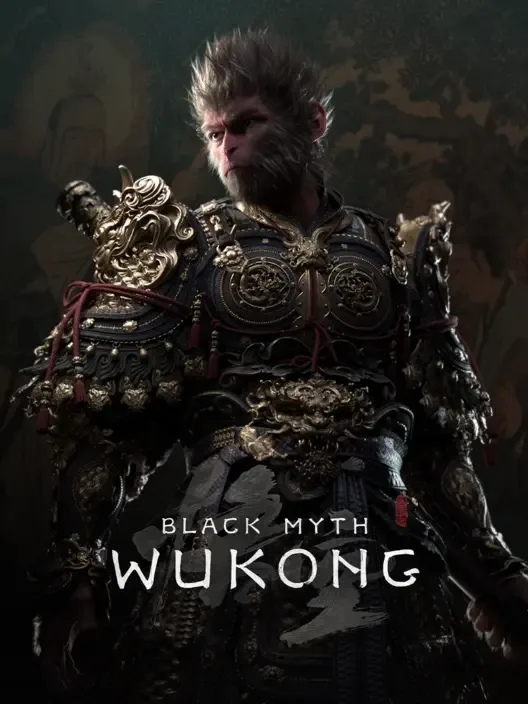
5. Black Myth: Wukong#
Game Science's 2024 debut, loosely adapting Journey to the West, structures its world as a series of large, semi-open chapters rather than one fully contiguous map, each built around a specific mythological region — a bamboo forest, a flooded valley, a mountain of fire — with its own hidden bosses, side paths, and lore items to discover away from the critical path. The game rewards exploration specifically through its Transformations, unlocked from defeated bosses that are frequently optional and tucked away from the main route, so wandering off-path directly expands the player's combat toolkit rather than just yielding cosmetic loot. Environmental storytelling, delivered through item descriptions and optional NPC encounters scattered through each chapter, fills in the world's mythology without forcing detours through mandatory cutscenes. The chapter structure gives each region a clear beginning and end, closer to a series of large connected levels than a single seamless open world, a deliberate departure from the fully open format of peers like Elden Ring. The honest drawback: because the world is chaptered rather than fully open, backtracking to earlier regions is limited or impossible in places, so players who want to freely revisit an area after unlocking new abilities will find the structure more restrictive than genre peers.
6. Fallout 2#
Black Isle Studios' 1998 sequel expands the original Fallout's post-apocalyptic map into a genuinely larger world, with a car the player can repair and drive between settlements, cutting down on the overworld travel time that made the first game's map feel sparse by comparison. The game's SPECIAL stat system and skill checks gate entire towns and questlines behind specific builds, so a high-Intelligence, low-Charisma character experiences New Reno's questlines completely differently from a smooth-talking Speech build. Random encounters scattered across the overworld map range from simple bandit ambushes to entirely unique, hand-placed set pieces that reward players who wander off the direct route between towns. The game's tonal shift toward broader satire and pop-culture references, distinct from the first game's grimmer tone, gave its open world a personality that later Fallout games would draw on repeatedly. Karma and reputation tracked per-town mean the same character can be a celebrated hero in one settlement and a wanted criminal in the next, without a single global standing flattening the difference. The honest drawback: several of the game's most infamous questlines and encounters, including content later patched or removed for its content, show the seams of a rushed development cycle, and the game's difficulty curve and itemization are considerably less balanced than its successors.
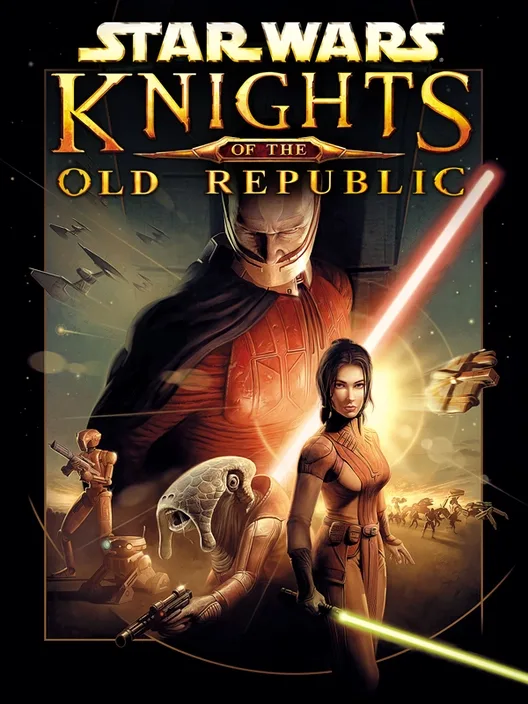
7. Star Wars: Knights of the Old Republic#
BioWare's 2003 classic builds its world not as a single continuous map but as a set of large, distinct planets, from the ecumenopolis of Taris to the desert world of Tatooine, each explored on foot with its own factions, side content, and secrets tied to the Star Wars setting rather than a generic fantasy backdrop. The light side and dark side alignment system tracks choices across every planet, unlocking Force powers exclusive to each path and visibly altering how NPCs across the galaxy react to the player, turning galaxy-spanning travel into a running moral throughline rather than isolated planetary stories. Companion party members, recruited across different planets, each carry a personal subplot that develops specifically as new worlds are explored, tying character writing directly to the open-galaxy structure. The genre-defining mid-game twist recontextualizes everything explored up to that point, a structural trick that depends entirely on the player having spent real time wandering the galaxy's early planets first. Swoop racing and pazaak, found on multiple worlds, function as planet-specific diversions that give exploration additional texture beyond the main quest. The honest drawback: several planets are noticeably smaller and less developed than the game's best worlds, and the itemization and combat systems, adapted from Dungeons & Dragons's d20 ruleset, show their age next to the writing and world design around them.
8. God of War Ragnarök#
Santa Monica Studio's 2022 sequel expands the first game's semi-open Lake of Nine hub into a genuinely explorable structure spanning all nine Norse realms, letting players move freely between Vanaheim, Alfheim, and the rest rather than the previous game's more linear realm-by-realm gating. Side content scattered across each realm, including the Lost Treasure hunts and the Ratatoskr favor questlines, is built with hand-placed puzzles and platforming challenges specific to that realm's environment rather than reused templates. The Raven collectibles and Nornir chest puzzles, tucked into corners of every explorable area, reward the kind of careful map-reading the genre's best open worlds depend on. Companion combat with Atreus, Freya, or other party members changes depending on which realm and story point the player has reached, giving the same explorable spaces different texture on a second pass. The realm-spanning structure, letting players move between all nine Norse realms rather than the previous game's more linear path, gives side content genuine variety instead of padding. The honest drawback: the main story's pacing sags in its middle act, with several long dialogue-heavy stretches between major set pieces that slow the momentum the open world's side content otherwise builds.
9. Yakuza 0#
Ryu Ga Gotoku Studio's 2015 prequel (localized internationally by Sega in 2017) confines its open world to two dense city districts, Kamurocho and Sotenbori, rather than a sprawling continent, but packs each block with an unusually high density of side content: real estate management minigames, disco dancing, batting cages, and dozens of substories that function as fully written short stories triggered by simply walking past the right NPC. Protagonists Kiryu and Majima each control the city's real estate or entertainment-venue empires respectively, turning open-world wandering into an actual economic minigame with its own progression track separate from the main story. The game's turn-of-the-1980s Japan setting gives its two explorable cities a specific historical texture, with period-accurate signage, fashion, and music that most open-world RPGs set in fantasy worlds don't attempt. Random street encounters, ranging from silly to genuinely strange, are scattered throughout both cities and reward simply walking the map rather than fast-traveling between objectives. The honest drawback: the game's open world is geographically tiny compared to most other entries on this list, and its turn-based-adjacent brawler combat, while satisfying, isn't built around the same kind of environmental interaction that defines more traditional open-world RPGs.
10. Dragon Quest XI S: Echoes of an Elusive Age – Definitive Edition#
Square Enix's 2019 definitive re-release of Dragon Quest XI expands the original's already sprawling overworld with a 2D retro mode, letting players toggle the entire game into 16-bit-style pixel-art exploration at will, a genre-first structural gimmick built directly into the open world itself rather than offered as a separate mode. The overworld map, traversable by foot, boat, and eventually a flying vehicle, gates new regions behind story-relevant unlocks in a way that keeps the sense of a world genuinely opening up over dozens of hours rather than being available all at once. Draconian Quest options, a set of optional difficulty and restriction toggles, let players reshape how punishing the open world's exploration and combat feel before starting a save file. Side quests scattered across towns reward players for backtracking to earlier regions with new abilities, a structure classic Dragon Quest games have used for decades and this entry refines with clearer signposting. The Tickington bonus dungeon, unlocked after the main story, recreates locations from earlier Dragon Quest games as explorable pocket realms. The honest drawback: the main story's back half restructures the open world in a way some players find repetitive, revisiting earlier regions under a new narrative framing rather than offering genuinely new spaces to explore.
11. Fallout#
Interplay's 1997 original established the post-apocalyptic open-world RPG template the entire Fallout series still follows: a wasteland map traveled via a simplified world-map screen, with the Vault Dweller's SPECIAL stats and skill checks determining which paths through each settlement's questlines are even available. The game's iconic 150-day (later extended) time limit to find a replacement water chip added genuine pressure to open-world wandering, a design choice later entries dropped but which gave the original's map exploration real stakes. Random encounters on the overworld map ranged from simple raider ambushes to entirely unique discoveries, including some of the series' most quoted dark-comedy moments, rewarding players who explored rather than beelined for the main quest. Junktown, the Hub, and Necropolis each function as fully realized settlements with their own factional politics, distinct enough that the game plays differently depending on which order they're visited in. The game's combat, turn-based and grid-adjacent, sits apart from the free-roaming exploration, giving the open world a distinct rhythm between careful tactical encounters and freeform wandering. The honest drawback: the game's age shows heavily in its interface, sprite-based visuals, and the amount of system knowledge required to navigate its more obscure quest failure states without a guide.
12. Mass Effect#
BioWare's 2007 original trilogy opener builds its galaxy-spanning structure around the Mako, a six-wheeled exploration vehicle that lets players drive across procedurally varied planet surfaces for optional resource-gathering and side content, an ambitious if rough structural experiment that gave the game's open galaxy a genuine sense of scale most contemporaries didn't attempt. The Citadel, the game's massive space-station hub, functions as its own explorable open area, with side quests and character-building content layered into its districts rather than confined to a single menu screen. The Paragon and Renegade morality system tracks dialogue choices across every planet visited, and the galaxy map itself gates certain systems behind story progression, giving the sense of an expanding frontier rather than a fully open galaxy from the start. Squad-based companions, recruited across different planets and story missions, each carry personal subplots that develop specifically as new systems are explored. The honest drawback: the Mako's uncharted-planet exploration, while ambitious, is mechanically repetitive across dozens of near-identical procedurally generated surfaces, a criticism BioWare itself addressed by scaling the feature back significantly in Mass Effect 2.
This ranking is a live, data-driven snapshot of how these open-world RPGs are currently rated relative to each other, not a fixed, permanent verdict. It shifts automatically as more people rate these games or as new releases join the catalog with enough reviews to be scored fairly — check back as the data changes, because it will.