 Ghost of Tsushima: Director's Cut
 Marvel's Spider-Man 2
 Assassin's Creed Shadows
 The Legend of Zelda: Breath of the Wild
 Indiana Jones and the Great Circle
This is Game Avant's own ranked list of the best adventure games right now, built from the site's combined rating data rather than picked by hand. "Adventure" on this page covers open-world traversal and narrative-driven exploration — games built around going somewhere and discovering what's there, not around a combat encounter as the point of the design — plus platformer-adventure hybrids where movement and exploration carry as much weight as any fight. It does not mean pure combat-focused action games, souls-likes, or character-action brawlers; those live on the separate action-games page, because judging an exploration-first game and a boss-rush by the same yardstick flattens what makes each of them work. Some of the best exploration games ever made sit alongside far smaller titles here, ranked by the same math rather than by name recognition.
The order below comes from blending IGDB's aggregate critic score with Steam's own user review percentage, and it moves as more people rate these games or as new ones join the catalog. That means household names sit next to games you've probably never heard of, and a handful of niche entries with a devoted but small fanbase can outscore bigger releases on raw percentage even if they're a lesser-known pick for most players. Read the write-ups for what each entry actually does well and where it falls short — the rank is a live snapshot of the current best adventure games by that formula, not a permanent verdict on which one is right for you.
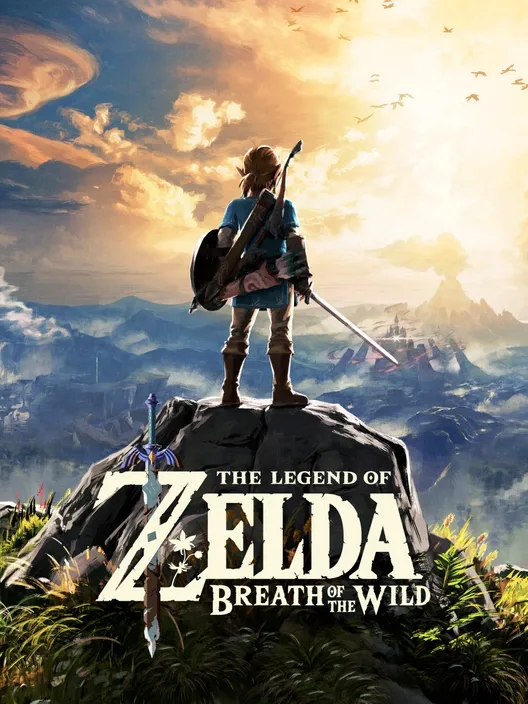
1. The Legend of Zelda: Breath of the Wild#
Nintendo's 2017 reinvention of the series is still the reference point for what an open-world adventure game can do with physics instead of a checklist. Hyrule has no invisible walls: the entire map, from the Great Plateau's opening tutorial to the summit of Death Mountain, is climbable by default, and the Sheikah Slate's four runes (bomb, stasis, magnesis, and the ice-block Cryonis) function as a toolkit that lets players solve most shrines and combat encounters in whatever order occurs to them rather than the order the designers intended. The weapon-durability system, controversial at launch, forces constant improvisation instead of a single loadout carrying the whole game, and the Divine Beasts, four dungeon-scale mechs tucked inside the overworld rather than segregated into a separate dungeon menu, fold the game's puzzle-box design directly into open exploration. Among the best exploration games of its console generation, it's also the rare open-world title where cooking, a simple ingredient-combination system, meaningfully affects survival rather than existing as a side activity. The honest drawback: durability breaks so often that inventory management becomes a running chore, and the 120 shrines, while individually clever, repeat a handful of visual templates often enough that the back third of a completionist run feels padded rather than freshly surprising.
2. The Legend of Zelda: Tears of the Kingdom#
The 2023 sequel keeps Breath of the Wild's Hyrule and adds a sky full of floating islands and a Depths layer directly beneath the surface, effectively tripling the explorable space without diluting any of it. Ultrahand, the new build-anything tool, is the real addition: strapping fans, wheels, and Zonai batteries onto a raft or a makeshift glider turns every open problem into a physics puzzle with no single correct solution, and Fuse lets Link staple a boulder to a stick and call it a weapon. Ascend, which lets Link swim straight up through solid ceilings, quietly removes more backtracking friction than any single item in series history, and the game's cave systems, an entirely new layer threaded through the surface map, give even familiar Hyrule locations a reason to be revisited. The Zonai Device dispenser system, letting players buy pre-fused sleds, wings, and turrets once discovered, means players who dislike constructing vehicles from scratch aren't locked out of Ultrahand's benefits. The honest drawback: the Depths are visually repetitive over long stretches, and the correction fluid needed to keep Zonai devices from disappearing (they despawn after a set time) adds a layer of busywork the overworld exploration doesn't need.
3. Outer Wilds#
Mobius Digital's time-loop mystery puts the entire game inside a 22-minute cycle that ends when the sun goes supernova, and then starts again with the player's knowledge intact but the solar system reset. There is no combat, no leveling, and no traditional inventory — the only real tool is a ship's log that automatically connects clues discovered on one planet to questions raised on another, turning the whole game into a single sprawling puzzle about a vanished civilization's fate. The variety of planetary hazards, from the collapsing sand pillars of Ember Twin to a black hole forming at Brittle Hollow's core, means learning the solar system's rules is the actual gameplay rather than combat skill. The Quantum Moon, a planet that only exists when nobody is directly observing it, is the single cleverest environmental puzzle on this entire list, turning a real physics thought experiment into a navigable location. The honest drawback: the controls, especially flying the janky wooden ship, are rougher than the puzzle design deserves, and losing progress toward a specific discovery to an untimely death is frustrating even with knowledge carrying over.
4. Return of the Obra Dinn#
Lucas Pope's monochrome mystery drops the player on a ship whose entire sixty-person crew is dead or missing, and the only tool is a pocket watch that replays the exact moment of each death as a frozen tableau. Piecing together who killed whom, in what order, and why from accents, uniforms, and a single frozen second per death is the entire game, and the 1-bit Macintosh-style visual style isn't a gimmick — it forces attention onto posture and context rather than facial detail. The fatal-moment puzzles interlock: identifying one sailor's fate frequently unlocks the information needed to identify three others, giving the whole mystery a real sense of a case cracking open rather than a checklist being ticked off. The soundtrack, which only plays during the frozen death-tableau moments and stays silent everywhere else, makes each new fatality feel like the game's single dramatic beat rather than one of dozens. The honest drawback: the game offers almost no hand-holding, and players who get stuck on one of the trickier identity chains can spend a genuinely long stretch stuck without meaningful new information to work with.
5. Hollow Knight#
Team Cherry's Metroidvania sets a new bar for what a two-person indie studio's opening act can accomplish: Hallownest is a single interconnected map with no loading screens between regions, and the Pale Ore-forged nail upgrades and Charm system let players build genuinely different playstyles around the same core moveset. The Mantis Lords fight, positioned as an early gut-check rather than a late boss, is the game being honest about the skill floor it expects going forward. Traversal abilities — the Mothwing Cloak dash, the Monarch Wings double jump — double as exploration keys and combat tools, so upgrading movement never feels like downtime between the parts that matter. The Godhome and Pantheon of the Master post-game boss rush, added via free updates after launch, gave the game a genuinely difficult end-state challenge most Metroidvanias reserve for a separate hard-mode release. The honest drawback: the map system requires buying a compass charm and manually marking locations with pins, an old-school design choice that some players find charmingly analog and others find a genuine usability gap against modern Metroidvania conventions.
6. Journey#
Thatgamecompany's wordless pilgrimage across a desert toward a distant mountain remains one of the tightest arguments that a two-to-three-hour adventure game can hit harder than titles ten times its length. The scarf, which lengthens and grants longer flight the more glowing symbols are collected, ties the game's central metaphor of accumulated small kindnesses directly into moment-to-moment movement rather than leaving it as subtext. The anonymous online co-op, pairing the player with a stranger who can only communicate through a musical chime, produces some of the most genuinely moving unscripted moments in adventure games without a single line of dialogue exchanged. The sledding descent down the mountain's far side remains one of the format's best pure-movement sequences, and composer Austin Wintory's score, which shifts dynamically with the player's own actions, was the first video game soundtrack ever nominated for a Grammy. The honest drawback: at roughly two hours, the whole experience is over before some players feel like they've settled in, and a second playthrough changes very little mechanically.
7. The Legend of Zelda: A Link to the Past#
The 1991 SNES entry is where the series' template — an overworld hub, item-gated dungeons, and a parallel Dark World mirroring the Light World's geography — actually crystallized, and playing it now means seeing the format's foundational ideas in their clearest form. The Light World/Dark World structure, where solving a puzzle in one often requires noticing its exact spatial counterpart in the other, is a genuinely clever piece of level design that later Zelda games still reference. Item progression (hookshot, Pegasus Boots, the Master Sword itself) gates new regions in a way that makes backtracking feel like discovery rather than a chore, since previously blocked paths reopen with real mechanical reasons behind them. The Pyramid of Power's ancient-sage backstory, doled out gradually rather than dumped in an opening cutscene, set the template nearly every subsequent Zelda game's lore-delivery pacing still follows. The honest drawback: the top-down perspective and screen-by-screen room transitions read as dated next to the series' post-Ocarina 3D entries, and some late-game dungeon puzzles rely on trial-and-error solutions a modern walkthrough-free run can find genuinely obtuse.
8. Death Stranding#
Kojima Productions' delivery-simulator-as-adventure-game is the single hardest title on this list to describe to someone who hasn't played it: Sam Bridges treks across a fractured, monster-haunted America carrying cargo strapped to his back, and the actual skill being tested is balance, route-planning, and terrain-reading rather than combat reflexes. The asynchronous multiplayer, where other players' ladders, ropes, and roads materialize in a player's own world if enough people rate them useful, turns solitary traversal into something that feels quietly collaborative without ever showing another player directly. BTs, the tethered ghosts haunting certain areas, force a stealth-holding-breath tension completely different from anything else on this list, and the exoskeleton and vehicle upgrades players unlock gradually change traversal from a careful balancing act into something closer to genuine mastery of the terrain. The honest drawback: the early hours are almost entirely fetch-quest delivery work before the story's stakes and the game's more interesting terrain open up, and that slow start has turned away players who never gave the back half a chance.
9. Firewatch#
Campo Santo's three-hour two-hander is essentially a walkie-talkie conversation stretched across a Wyoming fire lookout's patrol routes, with Henry and his supervisor Delilah's voice performances carrying nearly the entire emotional weight of the game. The mystery plot, which escalates from suspicious kids at a lake to something considerably stranger involving a government research station, uses the isolation of the setting itself as a slow-burn tension device rather than jump-scares. Environmental storytelling, reading the burned husk of the previous lookout's cabin or an old research team's abandoned camp, does more narrative work than any cutscene the game bothers with. Henry's optional dialogue choices, which shift his relationship with Delilah without ever branching the actual plot, give repeat playthroughs a subtly different emotional texture despite an identical story. The honest drawback: the ending resolves the central mystery with less payoff than the buildup promises, and at three hours with essentially no replay value once the story's known, it's a genuinely hard sell at full price.
10. A Plague Tale: Requiem#
Asobo Studio's sequel expands on the original's rat-swarm horror with a far larger sandbox: Amicia and her increasingly unstable brother Hugo travel across sun-drenched southern France, and the black rat hordes remain the game's signature threat, flooding entire screens in numbers the hardware visibly strains to render. Combat stays alchemy-and-sling-focused rather than gun-heavy, so most encounters are solved by luring rats into torchlight gaps or crafting a specific potion rather than a straightforward firefight. Hugo's slowly worsening curse, which begins triggering rat swarms involuntarily as the story progresses, ties the game's central relationship directly into its mechanical stakes rather than leaving it purely in cutscenes. The game's set pieces, including a besieged monastery and a storm-battered coastal chapter, use scale that the more intimate original never attempted while keeping Amicia's improvised, resource-scarce toolkit intact. The honest drawback: the stealth sections that punctuate the rat-horror set pieces are less consistently strong than the horror itself, and a handful of forced-failure story beats remove player agency at moments that feel more frustrating than dramatically necessary.
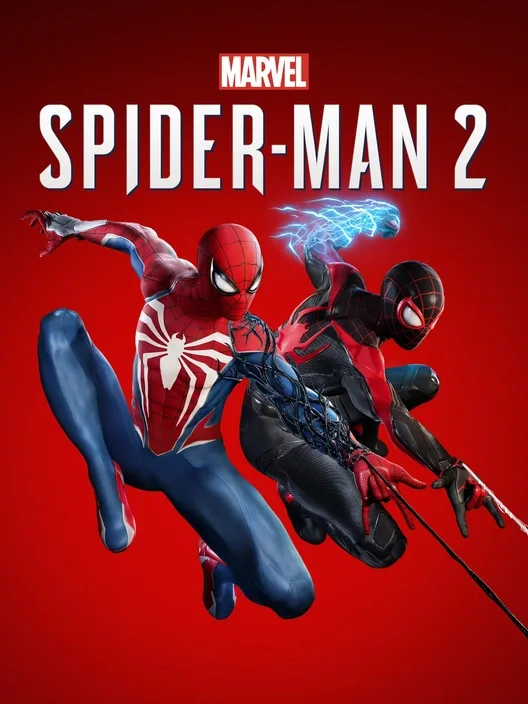
11. Marvel's Spider-Man 2#
Insomniac's PS5 sequel splits the story between Peter Parker and Miles Morales and adds Web Wings, a glide-and-boost traversal option that, combined with New York's wind tunnels, makes swinging across the city faster and less repetitive than either previous game managed. The symbiote suit sequence, where Peter fights under Venom's corrupting influence with tendril attacks layered onto the usual web-combat toolkit, is the clearest example of the sequel adding genuinely new verticality to combat rather than just more of it. Playable Venom sections, controlling Harry Osborn mid-possession with heavy melee and rapid traversal, give the back half of the game a tonal shift the first two entries never attempted. Miles Morales's bioelectric Venom powers, distinct from Peter's toolkit, keep the two protagonists' combat feeling genuinely different rather than reskinned versions of the same moveset. The honest drawback: the open world itself, now spanning multiple boroughs, doesn't meaningfully expand the checklist-style side content beyond making the map bigger, and the campaign's back half leans on a rushed final act to close out both protagonists' arcs.
12. Uncharted 4: A Thief's End#
Naughty Dog's send-off for Nathan Drake trades the earlier games' corridor-shooter pacing for larger, more open chapters, and the Madagascar segment, letting players choose a route across an open valley by jeep before the story funnels back into a linear set piece, is the clearest evidence the series learned from its own decade of criticism about being too linear. The rope-and-grapple traversal, new to this entry, opens up vertical climbing puzzles that previous games solved with simple ledge-grabbing alone. Pirate treasure-hunter Sam Drake's return, and the brotherly dynamic he brings to Nathan's usual solo-adventurer framing, gives the story more emotional stakes than any prior entry attempted. The Scotland prologue's flashback structure, jumping between a young Nathan and Sam and the present-day treasure hunt, reframes the whole series' recurring theme of family obligation rather than treating it as a late addition. The honest drawback: the gunplay, while polished, is functionally identical to the three games before it, and the slower, more deliberate pacing some praised as maturity reads to other players as the series' spectacle-per-hour ratio meaningfully dropping.
13. The Last of Us Remastered#
Naughty Dog's PS4 remaster of the original 2013 game preserves what made Joel and Ellie's cross-country trek work: scavenged crafting resources are scarce enough that every encounter with Infected or hostile survivors demands genuine improvisation rather than a stocked arsenal, and the Clickers, blind but sound-hunting Infected who can kill in one hit, remain one of the format's tensest enemy designs. The Pittsburgh hunter ambush and the University section's building collapse are still cited as high points of environmental storytelling paired with mechanical tension. Ellie's growing competence as a survivor, mirrored directly in the combat abilities she gains across the campaign, ties character growth to gameplay progression more tightly than most narrative adventure games manage. The Left Behind flashback content, bundled into this remaster, fills in Ellie's relationship with best friend Riley and gives the base campaign's ending considerably more emotional weight in hindsight. The honest drawback: the stealth AI, while serviceable, shows its age against more recent entries in the genre, and the winter chapter's tonal shift, playing as Ellie alone, slows momentum right before the story's climax.
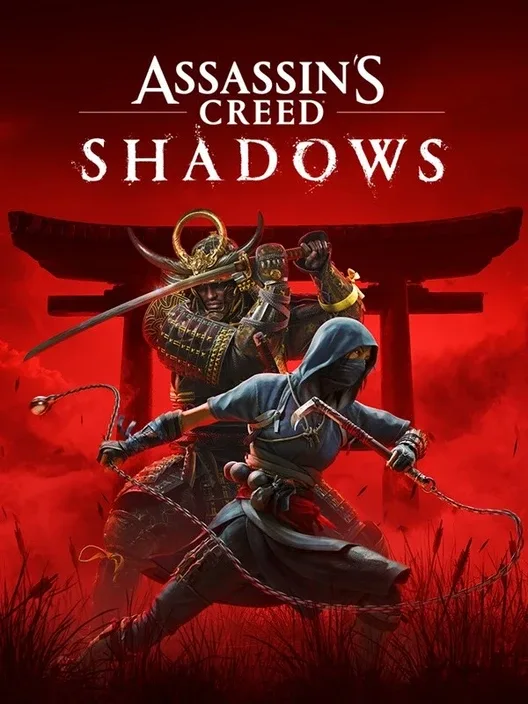
14. Assassin's Creed Shadows#
Ubisoft's 2025 entry splits its two protagonists cleanly by playstyle: Naoe, a shinobi who scales walls with a grappling hook and dispatches enemies with kunai and a chain-blade kusarigama, plays the stealth-and-parkour role the series built its name on, while Yasuke, a historically inspired samurai, is built around direct katana combat that can end most fights in a single clean hit rather than a drawn-out exchange. Sengoku-era Japan's castle towns and mountain shrines give the open world a genuinely different visual identity from the series' usual European settings, and letting players freely swap which protagonist tackles a given objective once the story opens up is a real structural choice rather than a cosmetic one. The changing-seasons system, shifting the same map's foliage, weather, and available activities across the year, gives Sengoku Japan's open world a sense of passing time few open-world adventure games bother simulating. The honest drawback: the opening act leans heavily on Naoe before Yasuke becomes fully available, and the sheer size of the open world reintroduces the same checklist-of-icons side content the series has been criticized for since well before this entry.
15. Toem#
Something We Made's black-and-white photography adventure sends a young traveler toward the mythical TOEM on foot, solving every problem along the way — a lost dog, a stuck mountain-climber, a shy monster who won't come out — by snapping the right photo rather than fighting or collecting anything. The photo mechanic itself is the whole design: framing, zoom, and timing genuinely matter, since a blurry or badly angled shot won't satisfy a quest-giver even if the right subject is technically in frame. The hand-drawn towns, each with their own small cast of quirky characters and self-contained problems, keep the game's low-stakes tone consistent from the first area to the last. The cooperative multiplayer mode, letting a second player join as a helper character with no combat purpose whatsoever, extends the game's gentle, non-competitive tone into its one social feature. The honest drawback: the puzzle difficulty rarely rises above easy, and the game's charm depends entirely on finding its whimsical tone endearing rather than slight — players looking for mechanical depth won't find much of it here.
16. Ghost Trick: Phantom Detective#
Capcom's 2010 puzzle-adventure, later remastered in 2023, casts the player as a recently murdered ghost who can possess nearby objects and rewind time to the four minutes before someone's death to prevent it. The core loop — inhabit a lamp, a fan, or a vending machine, trigger it at exactly the right moment to redirect a falling object or interrupt an attacker — turns save-a-life puzzles into genuinely clever spatial-timing challenges rather than a simple undo button. The mystery surrounding the protagonist's own death and forgotten identity ties every rescued character's fate back into the central plot rather than treating each puzzle as a disconnected vignette. The distinct visual identity of each possessable object, down to a specific animation for a desk lamp swinging its own shade, keeps a game built entirely around inanimate objects visually readable at a glance. The honest drawback: the game's central twist relies on a fairly generous suspension of disbelief about its own rules, and a few late puzzles hinge on object interactions that aren't clearly telegraphed before a good deal of trial and error.
17. Phoenix Wright: Ace Attorney - Trials and Tribulations#
Capcom's third entry, remastered as part of the Ace Attorney Trilogy, closes out defense attorney Phoenix Wright's original run by finally answering the series' long-running mystery around his mentor Mia Fey, and the courtroom cross-examination format — spotting the exact contradiction between testimony and evidence, then pressing precisely the right statement — is at its sharpest here. Splitting playable time between Phoenix and his own mentor Mia in flashback cases gives the structure a generational weight the first two games didn't attempt. The Godot rival-prosecutor arc, threaded across nearly the entire game rather than confined to one case, gives the final stretch a sense of accumulated stakes rare in the genre. Godot's own gimmick, drinking coffee whenever a cross-examination goes badly for him, is a small recurring visual joke that never undercuts how genuinely dangerous he is as an opponent. The honest drawback: the game leans hard on returning-character nostalgia that newcomers skipping the first two entries will miss entirely, and a couple of evidence-presentation puzzles hinge on logic that's clearer in hindsight than in the moment.
18. Super Metroid#
Nintendo's 1994 SNES classic is the game that gave the "Metroidvania" genre half its name, and Zebes' looping, interconnected map — no level select, no separate stages, just one world that gradually opens up as new suit upgrades arrive — is still the format's clearest founding document. The Wall Jump and later Space Jump fundamentally change how the same rooms are traversed on a second pass, turning backtracking into genuine rediscovery rather than a chore, and the moody, near-wordless atmosphere lets environmental design (Kraid's cavernous boss chamber, the flooded halls of Maridia) carry tone that dialogue never has to. Samus's isolation, reinforced by the game's near-total lack of NPCs or exposition, makes Zebes itself feel like the actual antagonist. The final self-destruct sequence, forcing a timed sprint back through the entire explored map to an escape ship, turns the game's own geography into a closing exam on everything learned across the run. The honest drawback: without a map-marking system or clear signposting, several sequence-breaking dead ends can leave a first-time player wandering without knowing what they're missing.
19. OneShot: World Machine Edition#
The 2024 re-release of Little Cat Feet's 2016 original rebuilds the entire game on new tech — a fresh engine, a genuinely reimagined desktop-style interface for the game's fourth-wall-breaking tricks, and added content like a character-profile gallery — while keeping the core premise untouched: Niko, carrying a literal light bulb meant to replace a dying sun, must cross a decaying world guided by messages the game addresses directly to the player, not a character. The fourth-wall mechanics, which reference the player's actual computer files and desktop, remain some of the format's most genuinely unsettling uses of the trick rather than a gimmick played for a single joke. The World Machine Edition's music player, letting the game's own soundtrack be browsed and replayed from inside Niko's in-fiction desktop, is a small addition that fits the original's diegetic-interface conceit rather than bolting on a menu from outside it. The honest drawback: the puzzle design is secondary to the narrative and atmosphere by design, so players expecting the mechanical depth of a traditional adventure game puzzle chain will find this thinner than its reputation suggests.
20. Öoo#
Tsuyomi and NamaTakahashi's exploration puzzle-platformer, subtitled "A Bomb Caterpillar's Big Adventure," builds its entire two-to-three-hour runtime around a single premise: a small round creature trailing a live bomb behind it, which can be detonated to destroy obstacles, boost movement, or solve environmental puzzles that require precise timing between the creature's position and the blast radius. The game's commitment to that one mechanic, rather than layering in a second or third gimmick, keeps the puzzle logic legible even as the environments get more elaborate. A handful of secret, harder puzzle rooms tucked away from the main path reward players willing to backtrack once new bomb-timing tricks are learned, and the almost entirely wordless presentation means the whole adventure reads clearly regardless of the player's own language. The honest drawback: the short runtime means the mechanic barely has room to overstay its welcome, but also that players wanting a longer adventure game experience will find it over before it fully develops.
21. Ena: Dream BBQ#
Joel Guerra's first-person surreal adventure follows the recurring character Ena through a nightmarish, hand-animated cityscape built from exaggerated character designs and dreamlike logic, solving environmental puzzles and navigating maze-like areas that shift rules from one screen to the next. The game's visual style — heavily filtered, distorted first-person animation closer to a fever dream than a conventional adventure game's clean presentation — is inseparable from what it's actually testing, since several puzzles require reading visual information that a more legible art style would make trivial. Character interactions lean on absurdist, unsettling comedy rather than straightforward dialogue trees, giving the whole experience a tone closer to outsider animation than a traditional narrative adventure. Ena's own established fanbase, built originally around free browser episodes before this standalone release, gives returning players specific callbacks that first-timers will read simply as more of the game's baseline strangeness. The honest drawback: the deliberately disorienting presentation is a genuine barrier for players who want clear puzzle feedback, and the surreal tone can obscure whether a given screen has an actual solution or is meant to be experienced rather than solved.
22. Faith#
Airdorf Games' pixel-horror adventure, later expanded and republished as FAITH: The Unholy Trinity, casts the player as a young priest performing exorcisms across desolate 1980s American forests, abandoned churches, and cult hideouts, using a holy crucifix both as a light source and a ward against approaching threats. The intentionally crude, 8-bit-inspired visual style is a deliberate choice rather than a technical limitation — sudden, blocky enemy sprites appearing at the edge of low-resolution vision produce a specific kind of dread that higher-fidelity horror games rarely replicate. Exploration and puzzle-solving across each chapter's small, dense map matter as much as the horror set pieces themselves, since finding the right ritual object is usually the actual solution rather than confrontation. The game's branching structure, where certain choices lock off entire alternate chapters on a replay, gives its short campaign more reason to be revisited than most horror-adventure games of similar length. The honest drawback: the deliberately retro presentation and slow, methodical pacing is a hard sell for players who expect modern horror's production values, and the game's biggest scares lean heavily on jump-scare timing rather than sustained dread.
23. Enigma of Fear#
This investigation-driven horror-adventure blends pixel-art environments with 3D character models, casting the player as a detective piecing together a supernatural mystery through deduction rather than combat. Clues are gathered by examining crime scenes and interviewing witnesses, and connecting them correctly — rather than simply finding every item — is what actually advances the case, giving the mystery-solving a genuine investigative weight closer to a detective procedural than a typical point-and-click. The pixel-art presentation, paired with fully modeled 3D character close-ups during key interrogation moments, gives the game a distinct visual identity that splits the difference between retro adventure games and modern horror presentation. The case-file system, which compiles gathered evidence into a browsable dossier rather than a simple inventory list, mirrors the structure of an actual cold-case investigation more closely than most detective-adventure games attempt. The honest drawback: the deduction logic occasionally requires connecting clues in a specific order the game doesn't clearly signal, and the small, still-growing profile means less third-party guidance exists for players who get stuck than for better-known detective-adventure games.
24. Shipwrecked 64#
Cogware Games' puzzle-platformer follows Bucky the fisherman after a shipwreck strands him on the mysterious island of Nulla Terra, where his friends have been rounded up by a pack of wolves for disturbing the peace, and freeing them means working through a chain of island-wide fetch-and-favor puzzles rather than a single linear path. The N64-inspired collectathon structure — an open island hub, scattered characters each gating a small self-contained puzzle, and a boat that needs repairing piece by piece — leans deliberately on late-90s 3D-platformer design rather than modern adventure-game conventions. The game's central mystery, tied to its own in-universe backstory as a rediscovered "lost" 1997 release, gives the presentation an extra layer of meta-narrative most straightforward platformers don't attempt. The animal-inspired cast, from the wolf-pack antagonists to Bucky's fellow fisherfolk, leans into a cartoon-mascot visual language that keeps the tone light even as the fetch-quest structure grows more elaborate. The honest drawback: the puzzle logic occasionally requires backtracking across the whole island for a single item, and the deliberately retro camera and controls take real adjustment for players used to more modern 3D platforming.
25. Bad End Theater#
NomnomNami's visual novel puzzle game tracks four characters — a hero, a demon lord, a princess, and a priestess — through a set of interconnected fairy-tale-adjacent stories where nearly every combination of choices ends in someone's death, and the actual goal is engineering the one path where everyone survives. Toggling which character's story plays out in what order reveals how each individual "bad end" connects to the others, turning what looks like a straightforward branching visual novel into a genuine puzzle about narrative causality. The morbidly comic tone, treating each grim outcome with darkly cheerful presentation rather than played-straight tragedy, keeps repeated failure states from feeling punishing. A built-in flowchart tracking every ending discovered so far turns what could be a confusing tangle of branches into a genuinely readable map of the story's own causality. The honest drawback: as a largely dialogue-driven, low-interactivity format, it offers far less traditional gameplay than most other entries on this list, and the appeal rests almost entirely on finding the branching-narrative puzzle satisfying rather than the moment-to-moment mechanics.
26. MOLE#
Off Black Creations' first-person horror-adventure puts the player inside a monstrous, Slavic-folklore-inspired drilling machine descending deep beneath the earth, tasked with keeping the vehicle's failing systems running while following the voices of the dead deeper into the ground. The tactile, hands-on interface — physically flipping switches, patching failing systems, and manually operating drilling controls rather than navigating menus — ties the game's themes of obsession and faith directly into the moment-to-moment mechanics rather than leaving them purely in narrative text. Puzzles are built around the machine itself: diagnosing what's actually failing and fixing it correctly under mounting psychological pressure, rather than a traditional inventory-and-combination puzzle chain. The sound design, layering groaning metal against the machine's own labored breathing-like hum, does most of the game's horror work without relying on jump scares to land the dread. The honest drawback: at around four hours, the game is on the shorter side for the genre, and the deliberately oppressive, claustrophobic pacing that defines its atmosphere won't appeal to players looking for a more traditional open-world adventure game pace.
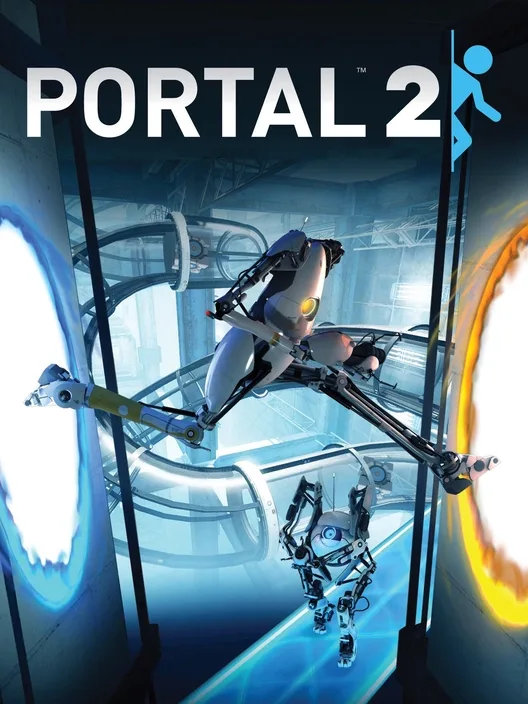
27. Portal 2#
Valve's 2011 sequel to the 2007 original expands Aperture Science's portal gun into a considerably larger toolkit while keeping the core mechanic unchanged: firing linked orange and blue portals onto any flat, light-colored surface to redirect momentum, sightlines, and objects through space. Three new gels — Repulsion Gel, which bounces anything that touches it into the air; Propulsion Gel, which builds sprinting speed on contact; and Conversion Gel, a white paint that makes non-portalable surfaces portalable — layer entirely new categories of puzzle onto the original's formula, and Excursion Funnels, tractor-beam-like tunnels that carry objects (and Chell) along a fixed path, combine with Aerial Faith Plates and hard-light bridges to turn later test chambers into genuinely three-dimensional physics problems. Wheatley, voiced by Stephen Merchant, replaces GLaDOS as the primary companion for roughly half the campaign before the story pivots, and Cave Johnson's pre-recorded PA messages, voiced by J.K. Simmons, deliver most of the game's backstory through incidental audio rather than cutscenes. The separate co-op campaign, starring robots Atlas and P-Body, hands each player two of their own portals and strips out voice proximity chat in favor of a ping-based suggestion system, forcing genuine coordination on puzzles no single player could solve alone. The honest drawback: the extended Old Aperture flashback section in the campaign's middle stretch slows the pacing considerably compared to the tighter, more claustrophobic original, and puzzles built around the new gels occasionally telegraph their solution so clearly that the challenge becomes execution rather than genuine discovery.
28. Resident Evil 4#
Capcom's 2023 remake rebuilds the 2005 original's Spanish-village survival horror from the ground up rather than simply re-texturing it, keeping Leon Kennedy's search for the president's kidnapped daughter Ashley Graham while overhauling nearly every system underneath it. The new parry mechanic lets a correctly timed knife block deflect an incoming attack and stagger most enemies, but the knife itself now carries a durability meter that wears down with every parry and stab, forcing regular trips to the Merchant's "what're ya buyin'" shop to repair or upgrade it rather than treating it as an infinite-use tool. The attaché-case inventory, a grid where every weapon, herb, and treasure has to be physically rotated and arranged to fit, returns from the original and remains one of the series' most distinct resource-management puzzles. Crafting, new to this version, lets players combine gunpowder and other components into ammunition or grenades on the fly instead of finding rounds pre-made, and Ashley's AI has been substantially reworked so she can be commanded to hide from enemies rather than requiring constant escort babysitting. Stealth takedowns, absent from the original, let Leon eliminate unaware Ganado with a single knife strike before a fight even starts, giving cautious players a genuine option the 2005 version never offered. The honest drawback: the parry timing window is generous enough that experienced players can trivialize most standard encounters well before the campaign ends, and a handful of the original's more theatrical set pieces, including parts of the island's mutant-heavy finale, were trimmed or reworked in ways longtime fans consider a step down from the source material.
29. God of War#
Santa Monica Studio's 2018 reboot recasts Kratos as an aging, weary father, pairing him with his son Atreus while restaging the series' combat and camera from scratch. The Leviathan Axe, thrown at enemies or environmental targets and recalled back to Kratos's hand with a press of a button, replaces the old Blades of Chaos as the primary weapon and turns simple combat and puzzle-solving alike into problems of trajectory and timing. The entire game, cutscenes included, plays out in a single continuous take with no cuts or loading screens, an approach director Cory Barlog insisted on despite the technical difficulty it created for the team. Atreus functions as a controllable second combatant, firing arrows on command and eventually gaining elemental and stunning shot types that can be assigned separately from Kratos's own combo tree. Spartan Rage, filled by dealing and taking damage, lets Kratos discard his weapons entirely for a short window of bare-handed, high-damage brawling, best saved for finishing off a staggered enemy or an emergency when Atreus is in immediate danger. The Lake of Nine, a semi-open hub connecting the game's Norse realms, is navigated by boat and gradually opens up new rowing routes and locked doors as the story and side content progress, giving backtracking an actual sense of the world expanding rather than repeating. The honest drawback: the fixed over-the-shoulder camera that makes the single-shot presentation possible also limits peripheral vision in crowded fights, making it easy to eat a hit from an enemy that never entered the frame, and the endgame Valkyrie superbosses gate some of the game's best gear behind a difficulty spike considerably steeper than anything the main story asks of players.
30. Super Mario Galaxy#
Nintendo EAD Tokyo's 2007 Wii platformer sends Mario across dozens of small, spherical planetoids, each with its own localized gravity that lets him walk fully around a tiny world's curved surface and jump seamlessly from one planetoid's gravitational pull into another's. The spin attack, triggered by shaking the Wii Remote, doubles as a combat move against enemies and a way to activate certain switches and objects, tying the console's motion controls directly into core platforming rather than bolting them on as a gimmick. Star Bits, small star-shaped particles scattered across every galaxy, are collected with the Wii Remote's on-screen pointer and can be fired at enemies to stun them or fed to the small star creatures called Hungry Lumas, who transform into entirely new galaxies once satisfied. Launch Stars fling Mario across gaps or between planetoids in a fixed arc, while Pull Stars let him grab and slingshot between paired gravity points, and both mechanics turn traversal itself into as much of a puzzle as any individual level's platforming challenges. A second player can join at any time in Co-Star mode, controlling the pointer independently to collect Star Bits and briefly stun enemies without ever taking direct control of Mario himself. The honest drawback: the shake-based spin attack occasionally misreads a mistimed flick during precision platforming, causing an unwanted spin mid-jump, and the Comet Observatory hub connecting the galaxies is considerably smaller and less explorable than the series' other 3D hub worlds, offering little reason to linger between missions.
The ranking above blends IGDB's aggregate critic and user rating with Steam's own user review percentage, and only for games with a real sample size behind the score rather than a handful of early ratings that can swing wildly. Nothing on this list was hand-picked for inclusion or placement — the order is a direct output of that combined score, which means it shifts automatically as more people rate these games or as new releases join the catalog with enough reviews to be scored fairly. Treat it as a live snapshot of the best adventure games worth playing right now rather than a fixed, permanent verdict, and check back periodically — a solid open-world adventure game released last month may not have the review volume yet to rank where it eventually will.